(I posted this post a few years ago; I thought I would revive it for the Christmas season.)
Every Christmas, we get the token churning out of Frank Capra’s classic It’s a Wonderful Life (1946). The question is: Why has It’s a Wonderful Life become such an enduring cherished classic – why is it still relevant – while other (Christmas) classics have faded?
George’s Early Investment of Self in Others
To begin, the film is not the overly sentimental film that some like to paint it; actually, it has a rather unsettling dark edge that I suspect appeals to people living in today’s dark times. Take an early moment in the film, when druggist Mr. Emil Gower (H.B. Warner) beats young George Bailey (Robert J. Anderson) for not delivering a customer’s medication. Young George notices that in a fit of drunken grief over the loss of his son, Mr. Gower has incorrectly mixed the prescription (putting in an ingredient that we later learn would have killed the person) and thus George refuses to deliver it. George’s good deed prompts the grieving Mr. Gower to beat George to such an appalling degree that George’s ear bleeds. After explaining the situation, a sobbing Mr. Gower breaks down and embraces young George to redress his mistake. The whole scenario is shattering because it brings together in the most dramatic fashion the two extremes of life, the painful loss of loved ones and no matter the cost the compassionate desire to help those in pain.
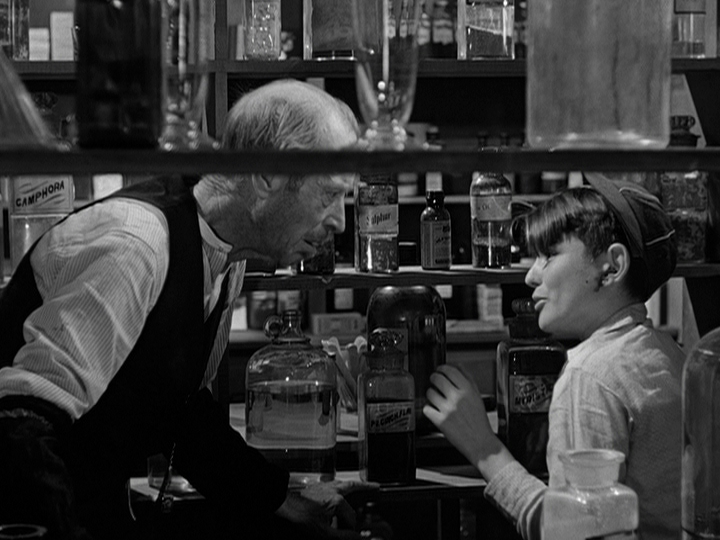
Mr. Gower viciously assaults a young George, bloodying George’s ear
Connected Versus Disconnected Humanity
Moreover, what this moment with Mr. Gower encapsulates is the profound thematic in the film of how connectivity between people – family, friends, community – and selflessness is indispensable for people to maintain their humanity and the humanity of a community. That is, the twin pillars of the film begin here: humanized Bedford Falls, where people are generous, empathetic, self-sacrificing – in other words, inextricably connected – and de-humanized Pottersville, where people are indifferent, self-centered, insensitive, callous – in other words, inextricably disconnected. Mr. Gower’s loss is partially compensated by this courageous, loving gesture by young George, who, in turn, apparently becomes something of a surrogate son to Mr. Gower (we later see Mr. Gower surprise George with a suitcase for his dreamed of travels and be there for him at the end when George’s life is in distress).
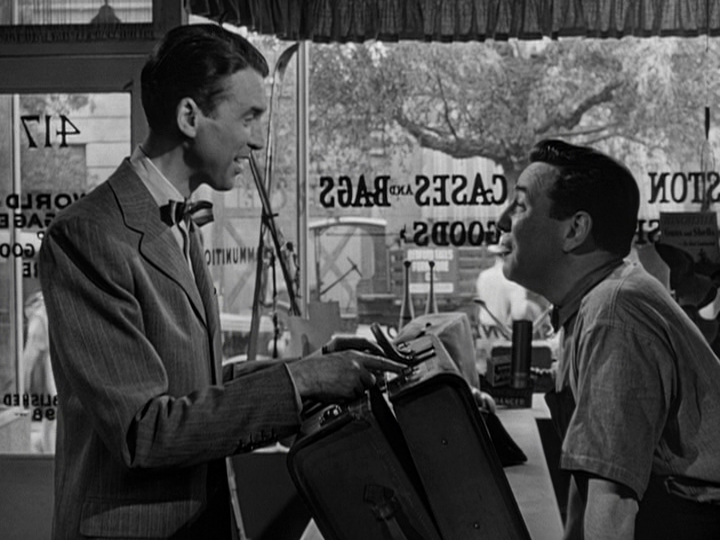
Mr. Gower’s gift, a gift that underlines his knowledge, investment in, and desire for George to fulfill his dream of traveling
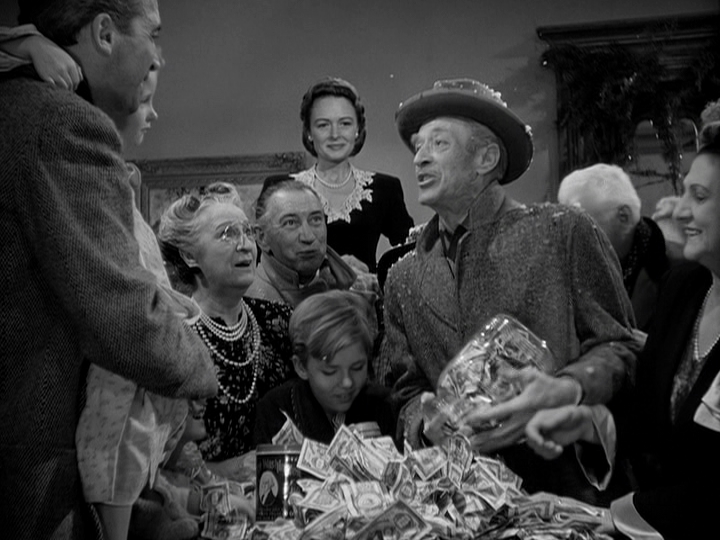
Mr. Gower reciprocates George’s youthful gesture and sacrifice of Self
George’s Loss is All Too Familiar
George’s selflessness only begins with Mr. Gower. George’s story is one for the ages, seminal because it mirrors the many others who lead selfless lives. Moreover, it reflects a desired humanity not found in a society that has become more and more self-absorbed. That doesn’t mean George’s selflessness isn’t painful to watch! Again and again, George loses his dream, a dream embedded from youth (he was already getting National Geographic, a magazine that offered a window on the world that George yearned to experience). He loses it when his father dies and he must decide between his dream and keeping his father’s labor of love – and the town’s soul and heartbeat – The Bailey Brothers Building and Loan Association. He loses it again when his brother comes home from college, wife and job opportunity in hand. He loses it yet again when there is a run on the Building and Loan and he must sacrifice his honeymoon money (and honeymoon!) to save the company and hence save the community from being completely owned by Potter. After that, he settles down into marriage and family and his dream is left in the dustbin of lost dreams. Time and time again, George sacrifices his dreams for the betterment of loved ones and community. On the surface, George seems to accept his lost dreams but the surface hides an underlying bitterness.
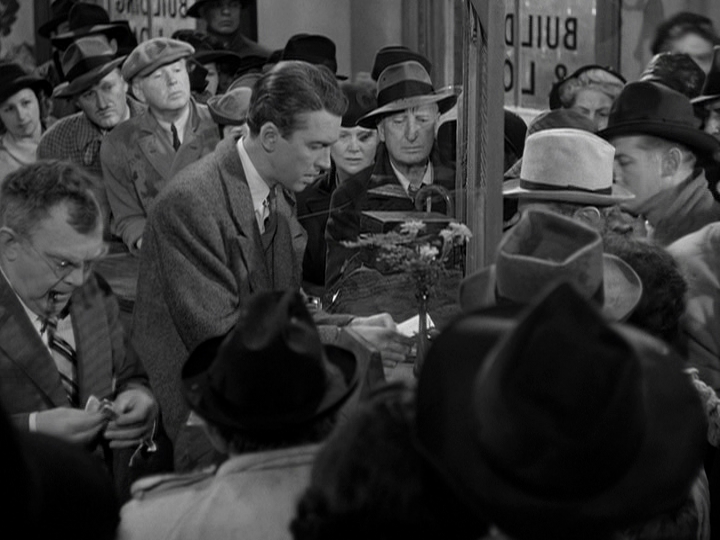
George gives his own money (and thus another chance at traveling) for the good of his community (for the continuance of its utopic sensibility); compositionally, George — and what he embodies, the altruistic, egalitarian Bailey Building and Loan — is placed in the center of the frame, punctuating that he/it is the heart and soul of this community’s body
George’s All Too Authentic Humanity
We see this pain (and that dark edge again) when George melts down several times. For example, during his courtship with Mary, in finally relenting to his love for Mary, his voice shaking, he forcefully grabs and shakes her, hysterically declaring, “Now you listen to me! I don’t want any plastics, and I don’t want any ground floors, and I don’t want to get married to anyone ever, do you understand that?!? I want to do what I want to do….” Later, after sweet, bumbling Uncle Billy loses the $8,000, George, manhandling Uncle Billy, violently screams, “Where’s that money, you silly, stupid old fool?!? Where’s that money??? Do you know what this means? It means bankruptcy and scandal and prison. That’s what it means. One of us is going to jail, well, it’s not going to be me!” And then finally at home, George becomes unhinged to wife, to kids and especially to a poor unsuspecting teacher! Even seemingly unflappable Mary has had enough and screams for George to get out. But what these moments give us is a very human George, another reason why people relate to George so much. Like George, too often we sacrifice (or lose) our dreams for situations beyond our control, often situations stemming from the Potters of the world, greedy power brokers who care more about their gain then those under them. And with that understanding, it becomes easier, and indeed perhaps cathartic, to also relate to George’s suppressed rage rising to the surface in a flood of violent emotions and his later desperate suicidal act.
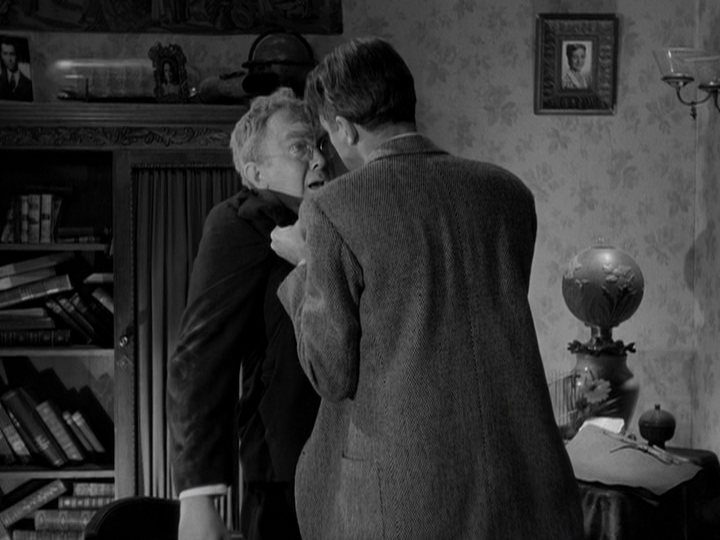
A violent and unhinged George, the weight of his sacrifices and concurrent bitterness exploding to the surface
Bedford Falls Versus Pottersville
George’s crisis leads to the most famous segment of the film, and the most profound statement in the film. When George is given a chance to see what life would have been like had he never existed, we see an alternate version of Bedford Falls. In short, It’s a Wonderful Life gives us two versions of society, a good (altruistic) version and a bad (self-centered, self-indulgent, hard-hearted) version. In the George-existed “good” version, Bedford Falls represents a deeply connected community where community and people are put before profit and greed, which, in turn, informs a benevolent, empathetic community, while in the bad version, “Pottersville” reflects the nature of Potter himself, greedy, indifferent to how his actions affect those around him, his only desire being to consume others (he is described as a “spider” at one moment), resonating our transnational corporations today. Indeed, throughout, Potter is revealed to be a throwback to lords and dictators who saw people as disposable things, again, evoking many of our corporations today. Potter rides in a “courtly” coach, moves in a wheel chair that looks like a thrown, and lives in a space that is strikingly devoid of the warmth of other spaces. Moreover, his indifference to the plight of people is reiterated by his grim reaper status: He dresses in black and is signified by figures (a Napoleon sculpture is seen in the background of his home office) and objects (especially check out the skull on his office desk!) that signify his loss of humanity.
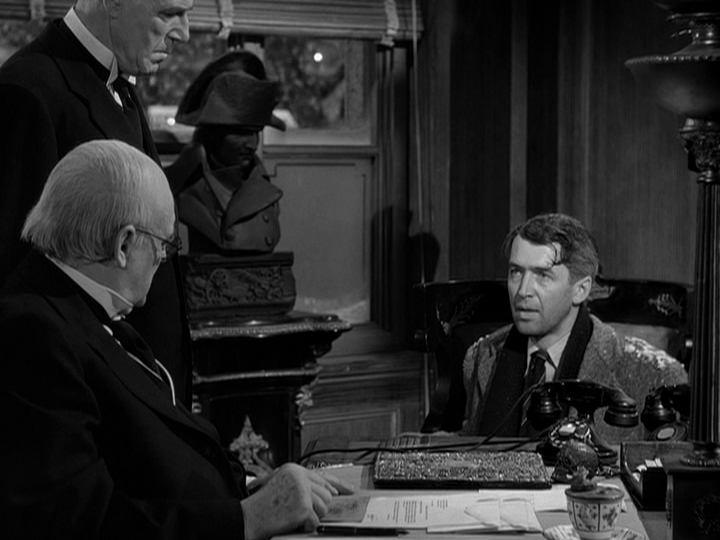
Napoleon bust signifying Potter’s “conquering,” predatory sensibility
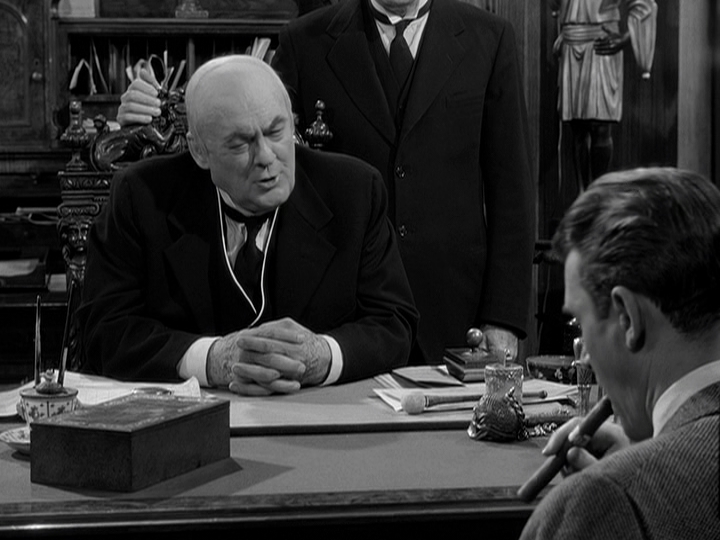
Potter on his “thrown” talking down to his subjects
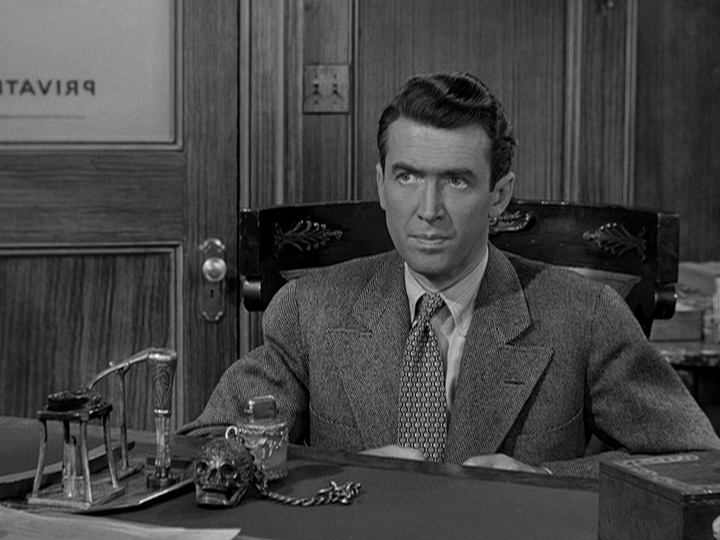
Skull on desk signifying Potter bringing “death” to George/community
More pointedly, in “Pottersville,” we see a nightmare landscape we inhabit today: Main Street littered with bars, pawn shops, strip joints, and so on, a striking sea of dysfunction and stimulation fixes, modes of being that reflect a fall from small town connectivity and purpose.
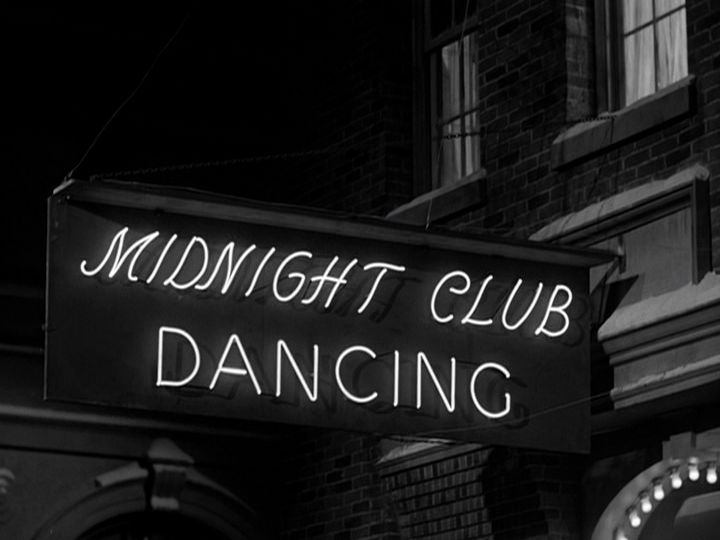
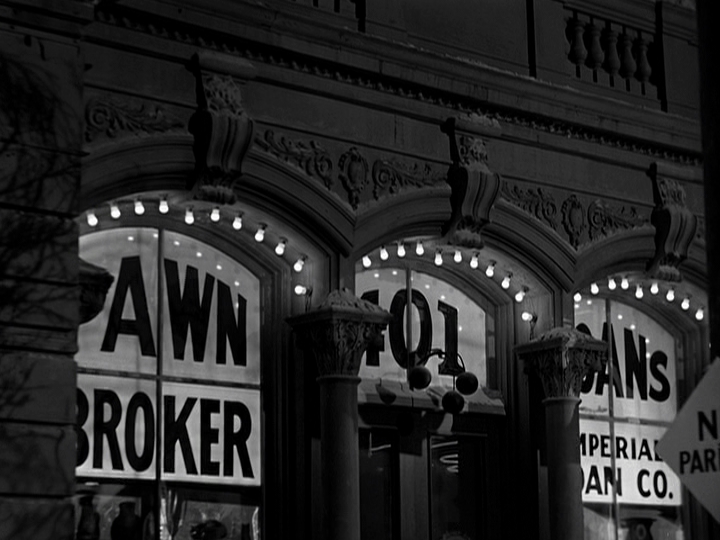
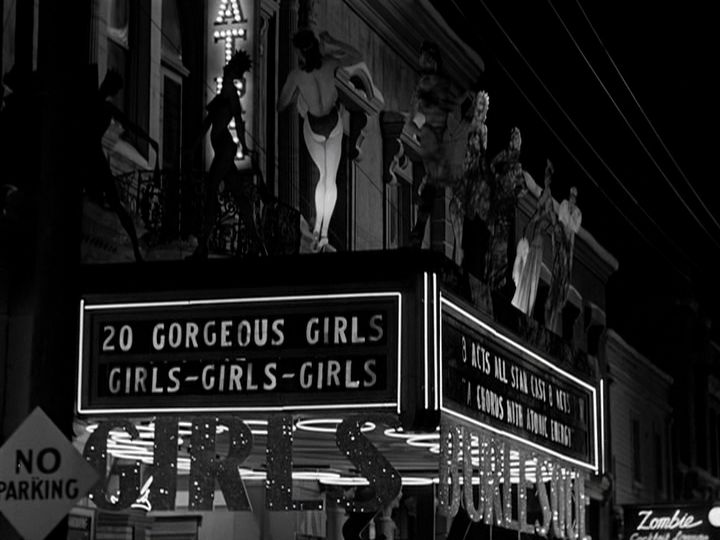
Pottersville, an all too familiar mercenary (soulless) consumerism/capitalism
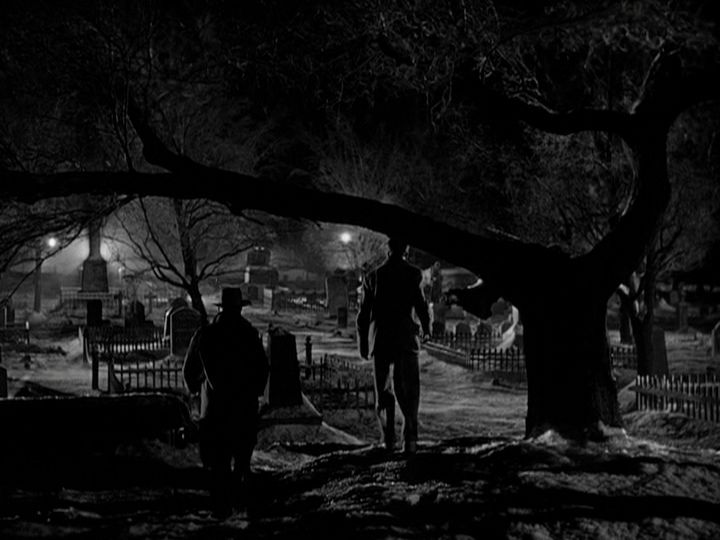
Pottersville signifies the death of Bedford Falls (utopia)
Two Worldviews for Us Today
The ending of the film does pour on the sentimentality but to my mind, it is an earned sentimentality. For most of his life, George put his family, friends, and community before his life and dreams, but when the time came to reciprocate, family, friends, and community came through for George, which in turn completes the picture of what our world should be versus the self-absorbed world it is. Indeed, though Potter apparently isn’t punished for not giving George and Uncle Billy’s $8,000 back, his loss is profound: He not only loses yet again his drive to rid himself of the Bailey Building and Loan, more profoundly, he also loses the contest of world views, his Darwinian dog-eat-dog, “survival of the fittest” world view versus George’s more altruistic, humane one. And that is why It’s a Wonderful Life is still relevant today, because it gives us a window on our own desires and anxieties, a desire to live in a world with more Georges, and a world that looks more like utopia leaning Bedford Falls, and an anxiety that instead we live in “Pottersville.”
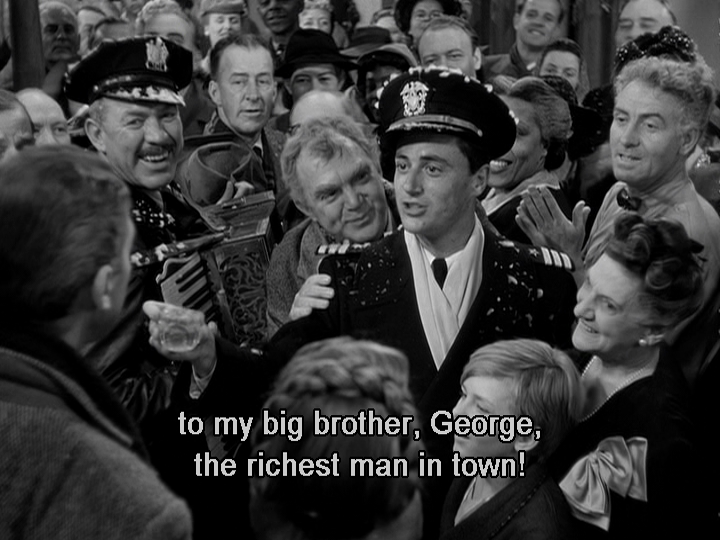
Harry: “A toast to my big brother George, the richest man in town.”
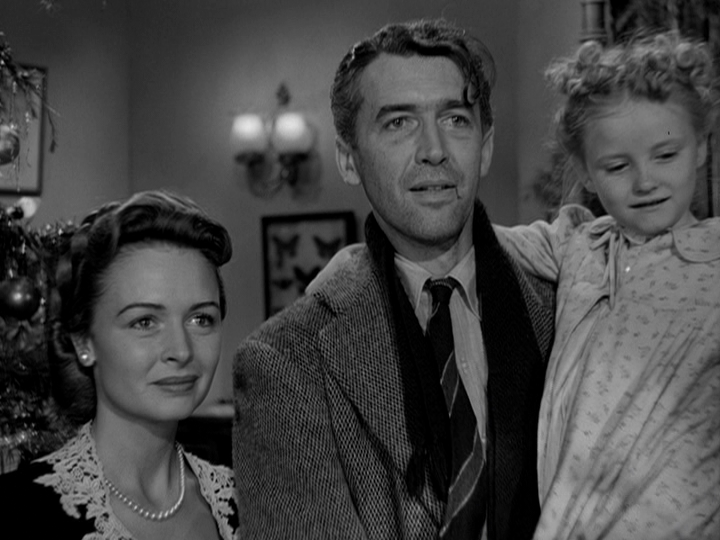
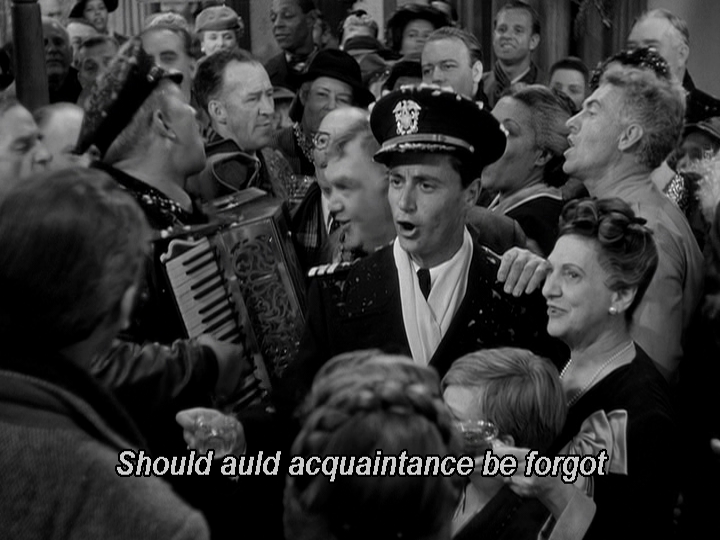
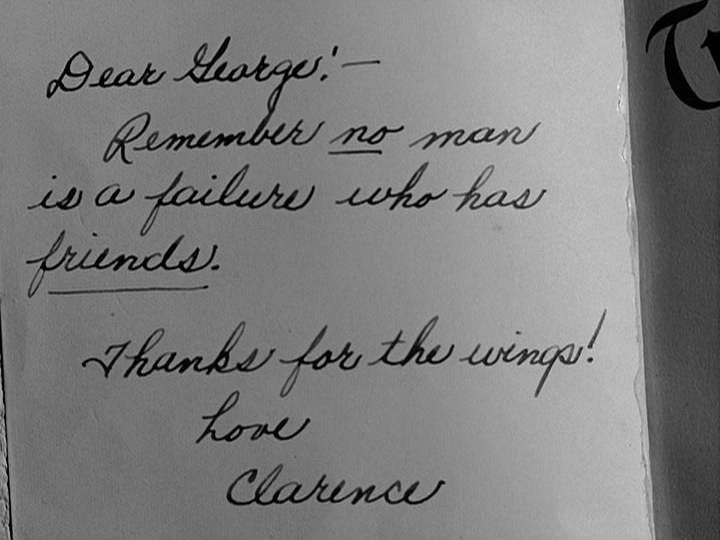
One of the most utopian moments in all of cinema

 reagan@yourfilmprofessor.com
  Chip Garrison
  Michael Acas