Like my interest in films overall, my taste in horror films – one of my very favorite genres – also tends to be more cerebral, as I think my blurbs below reflect. As is also reflected below, my interest in the horror genre is especially informed by Robin Wood’s seminal essay “An Introduction to The American Horror Film” (for one place to find this essay, see Planks of Reason: Essays on the Horror Film) not only for its specific focus on the “return of the repressed” but also by his general contention that the horror genre is potentially a “revolutionary” genre, a contention that I think is furthered informed by other scholarly work on the horror genre , including Julia Kristeva’s theory of abjection. My analyzing of horror films is further informed by my various interests including Marxism, post-Marxism, feminism/women’s studies, masculinity studies, and how horror is just so ripe for allegorical readings. In short, through the many tropes of horror and the many ways it can explore the human condition in all its complex capacities, my ultimate hope for this list is just to see how the potential for the horror genre is so much more than we typically use it for.
And let me stress, this list is focused on “deep horror films,” and so a lot of important horror films are left off. Had I made my focus say historically important horror films or scariest horror films, the list would look much different!
Categorizing the Horror Film
In terms of how I categorize a film as a horror film, I have to say that I take a very broad view of the horror genre, including films that many horror fans might not consider horror films, especially some films that focus on mental illness and films that rupture (identity) boundaries in disturbing ways. For me, the limits that many horror film fans place on the horror genre – that it must be scary and/or graphically shocking – is just too limiting for the numerous films that offer us psychological (identity disintegration) forms of horror, a focus of the human condition that to my mind the horror film explores so well in so many different ways.
Having said that, I admit that some of the films I choose for this list are arguably not horror films, films that may stretch the horror genre too far for some. For reasons I explicate for these films (see below for more), I decided to include them for now. I say “for now” because I may change my mind as I continue to think about them and this list and listen to anyone who vigorously objects to my inclusion of them.
TV Shows?
I have also cheated in another way, including three horror TV series. I’ve included them because, well, two of them were made to be single season series and the third is only one season so far, which, for me anyway, makes them feel like just long movies. More generally, I may at some point expand this list to just include TV shows.
Criteria
My criteria for choosing the films on my list is simple, do they have a deep (cerebral) focus — do they speak to the human condition in one way or another — and are they reasonably “good.” I don’t think the former needs explaining — and if it does, I think reading through my choices below will make this focus clear — but saying “good” may need some explication. I thoroughly understand that determining whether a film is “good” (well-made) is entirely subjective, so let’s just say that “good” for me means what I think is a “good” or well-made horror film. If a film for me is lacking in some regard, that lack in it (too many contrivances, messy filmmaking, etc.) may not be disqualifying but it will probably sink the film a bit for me. For me, the main thing is deepness, weak filmmaking or weaknesses in the plot, etc. are secondary. I should add that a film may not be as high as it might be on other types of lists if its horror credentials are questionable and if the film is problematic in one way or another, which will also come through below.
A Fluid and Ever Changing List
I really want to stress that I see this list as a beginning. I know there are deep horror films I have missed and of course a whole lot of important deep horror films I still haven’t seen. That’s where you come in! I would love it if you gave me deep horror films that I need to see, help me find those missing films I need to add to this list. And I am certainly open to hearing your thoughts on the films on the list, which may influence me to move a film higher or lower or even drop it. My bible so to speak is critical thinking and so I will always be open to inputting new ways of thinking about a film that might change my view on it.
Very Long Entries…Deep Films Deserve Deep Analysis!
As you get deeper into the list, you’ll see very long entries for many of the films. Honestly, I am not sure if this is going to work for a list format, but I decided to try it for now. For me to really explicate why a film is deep, I just need to say what I need to say and not worry too much about length. If I get a lot of push back on this, I may end up changing this format, just creating full length blog posts for most of these films and then linking to them.
One Note Cerebral Horror Films
Another minor dilemma I encountered were horror films that had a deep element in them but how that deep element was just a small element in the film. I decide to exclude these films. So, for example, I love Jaws and Alien, but the one deep element for both of these films is how moneyed interests (the mayor in Jaws and the corporate element in Alien) put profit before people, the film overall isn’t really about that important issue.
Trigger Warnings
I must stress that sometimes my analysis necessitates posting images or descriptions that might be triggering.
***Spoilers***
To really drill down to the deeper elements in the films below, I often need to discuss the film in its entirety. If you haven’t seen a film below, and you don’t want the plot of the film to be spoiled for you, you’ll need to scroll through that particular film analysis.
The Films
(Because this list became so long, I had to break it into 4 parts. Part 1: Films 83-54)
(82) The Substitute (2007, Ole Bornedal)
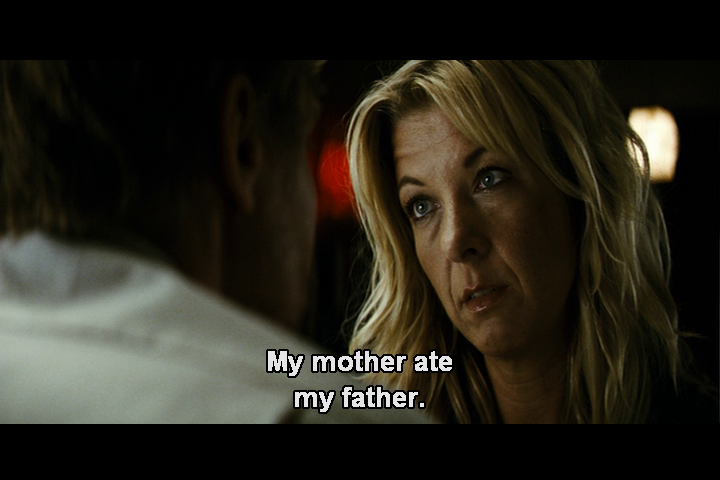
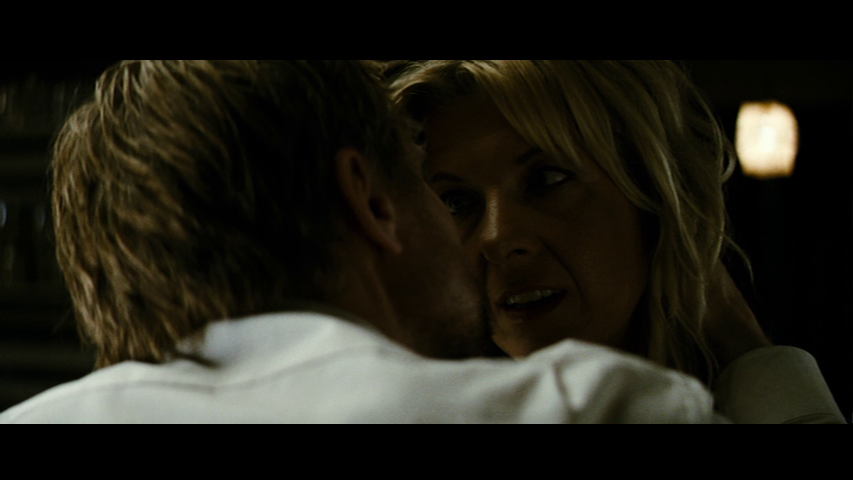
The Substitute isn’t the best made film — it has too many contrivances and is at times poorly edited — and I’m not wholly sold that the film takes its deep premise seriously enough, but I decided to include it because its focus on empathy is just so unique and important. In my view, empathy is the absolute key for our species to evolve ourselves to a better way of thinking and being. The premise of the film is just such an interesting one, an alien species has no empathy, no ability to love. They are a violent, warlike species who are literally destroying themselves because of their inability to love and have empathy. This species desperately sends one of their own, Ulla Harms (Paprika Steen, playfully playing this role to the hilt!), to Earth to try and figure out how to get what humans have, the ability to love and have empathy for each other. In terms of playing out this vital thread of why empathy is so vital for our species, the scene where Ulla gets the children to empathize with Carl’s (Jonas Wandschneider) plight (she coerces him to climb a rope even though he has a fear of heights) is a really important one, as not only the children empathize with Carl but presumably we do as well. More pointedly, the “return of the repressed” of Ulla and the species she represents informs a crucial point for our species, humanity. That is, if we lose our ability to empathize with each other – and I would make a case that this is happening – like the dead end violent alien species killing itself, that could be us as well. One other thing: I just love how the filmmakers give us smart kids, and kids who can put their potent differences aside to work with each other, and, yes, empathize with each other, support each other when faced with the trauma of a monster trying to do them harm.
(81) The Fog (1980, John Carpenter)
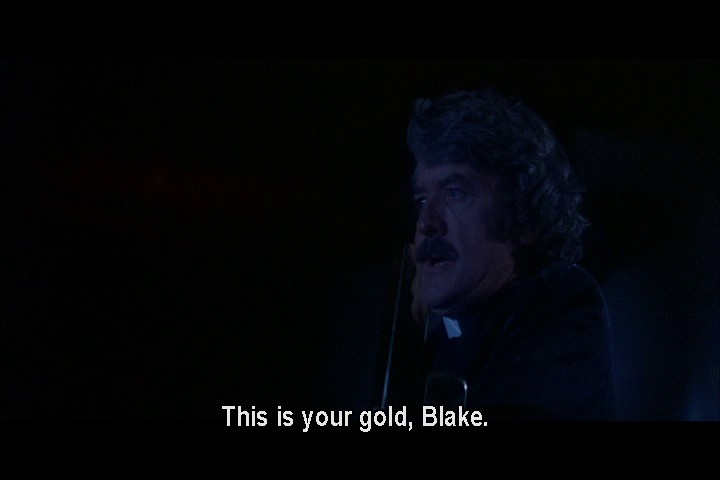
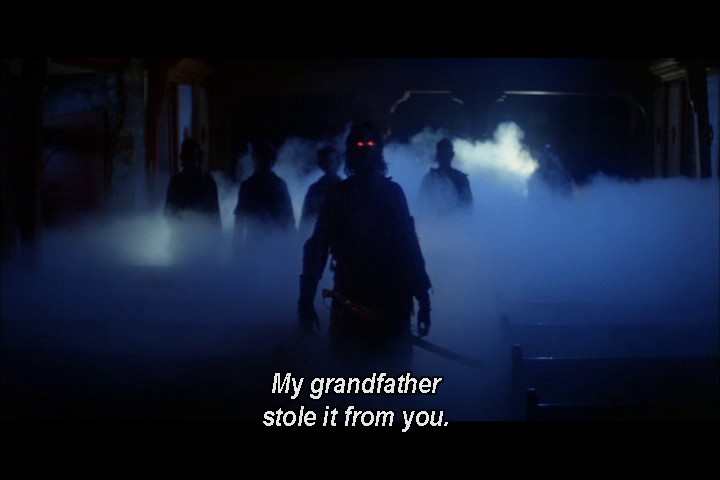
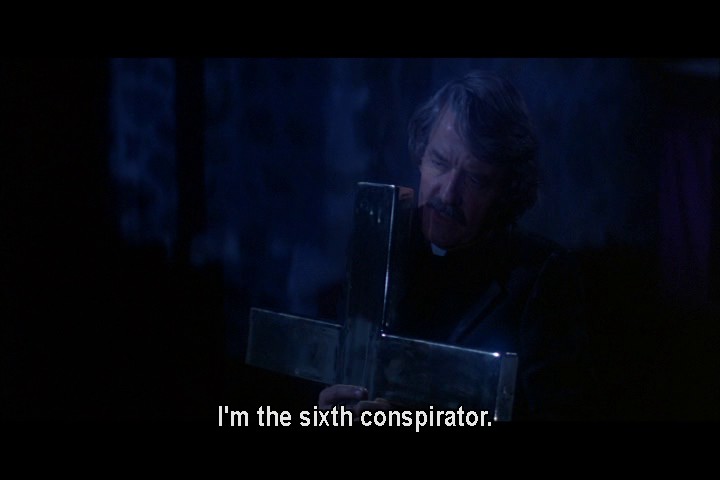
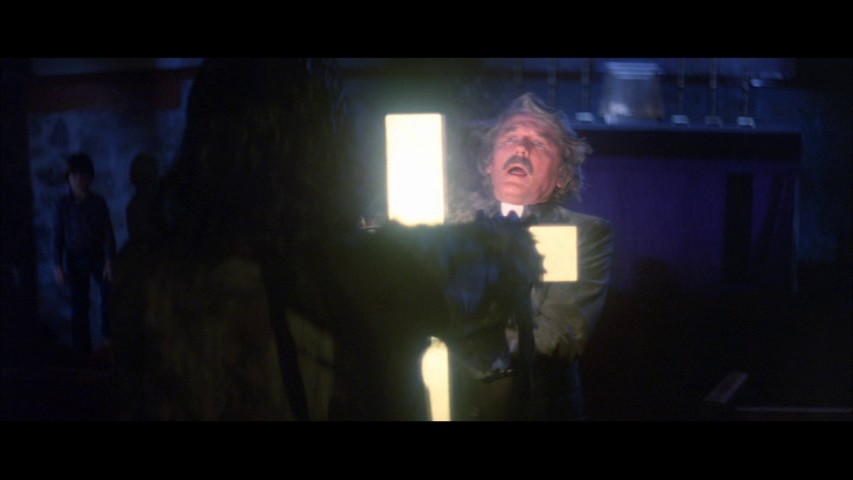
I placed The Fog so low because it has just too many contrivances and always feels a little lacking whenever I watch it. In terms of the contrivances, I really don’t like the limitation on just six killings, which then effectively takes the towns folks off the table for being in any danger. I mean we see the deadly fog roll into the town, where the towns people are celebrating the centennial of the town, which would seem to place them squarely in line with the entities (are they actually ghosts?) in the fog, but this seeming collision never takes place or is explained. Moreover, the randomness of who is killed seems to undercut the importance of this specific number. In other words, either create six targeted individuals or just make the ghost entities’ vengeance extend to the whole town. The other contrivance is how most of our key players conveniently end up at the church, when it looks like they could have just driven out of town! And why melt all that gold into a giant cross and then just stash it away behind a wall??
In any case, I still want to include the film because, well, it is still a well made horror film overall (that amazing score!), and, more to the point, I think its deep point is a really important one, how towns like Antonio Bay are built on atrocities by their ancestors. In the case of this film, the founding ancestors, including the church, murder a leper colony and steal their gold, an allegory for how Others have been ground under for centuries because they are seen as abject and not just because of a disease but because of other ways to Other (dehumanize) human beings, e.g., race/ethnicity/indigeneity all seen in this way at various points in history for various dominant social orders. Of course entailed in this is how Otherness has also been an excuse to rob an Other of their “wealth” whatever that might be, gold in the film but it could be land or labor as well. In this way, the film can be seen as an allegory for the many times this has happened throughout human history. For America, the allegory could be how America built its civilization on the genocide of Native Americans and theft of their land and the enslavement of Blacks and using them as free labor. Oh, and that cross of gold is striking, a way to further condemn the church throughout its history and the way it too has hypocritically been as much about accruing wealth as anything reverent.
(80) Invasion of the Body Snatchers (1978, Philip Kaufman)
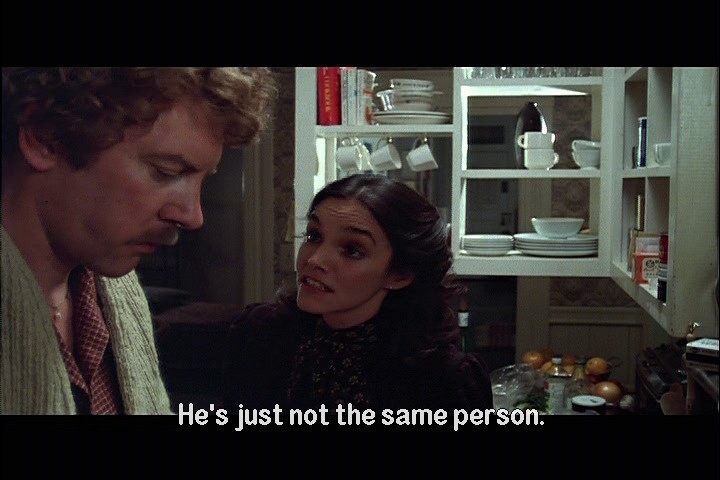
I wasn’t going to include this film, only because while I think the original was clearly allegorical (see below), I couldn’t really get how this version could be, since in 1978 there wasn’t I don’t think the same depth of a fear of conformity/loss of self. Instead, initially, the film feels like to me just taking this takeover of the self premise and make it about suspense and horror, not really deepness though still a very entertaining and effective ride. Having said that, something really struck me while watching it now, which I did for this list, how perhaps the film does something that is just so generally telling, how the film reflects a general anxiety of loss of self, for one’s self but especially for friends and family. I say that because of what we are experiencing so palpably now, friends and family getting sucked into the vacuum of conformity movements, most prominently including the MAGA movement (and just getting sucked into the bubble of right wing propaganda/alternative realities) and other cult groups such as QANON. Having said that, this anxiety of a loss of self could also include extreme religious beliefs or even consumerist self-help dogma or other consumerist indoctrination (being obsessed with unnatural body image or celebrity culture, etc.), which the film loosely touches on with the mindless adulation of Dr. David Kibner (Leonard Nimoy) and his shallow self-help pap.
(79) The Changeling (1980, Peter Medak)


The Changeling has always held a special place for those who love ghost stories, because it is both sad and yet still spooky. Though not as common as ghost stories about malevolent ghosts, ghost stories about tragic victims who haunt the living are not uncommon (see more below). In this case, the ghost is a young boy who haunts a man, John (George C. Scott), who has tragically and traumatically lost his wife and daughter. The film seems to suggest that his attempt at solving the little boy’s haunting is part of the healing of his own incomprehensible tragedy. The deep part of this film stems from why the little boy was murdered, because of his disability and a frail constitution that made it unlikely he would reach the age of 21 and thus not inherit a large fortune from his late maternal grandfather. What makes this scenario all the more horrific is that the father replaces his murdered disabled son with a healthy boy. The deeper point that the film makes is a powerful one, how this penchant for power and privilege means making Others disposable, even one’s family members, a disturbing aspect of the human condition. The film doesn’t go any deeper than this I don’t think — thus making it more of a symptom film than a root cause film — but just using the ghost trope as a way of creating a specter of past crimes against humanity is a powerful way to use the ghost story.
(78) The Fly (1986, David Cronenberg)
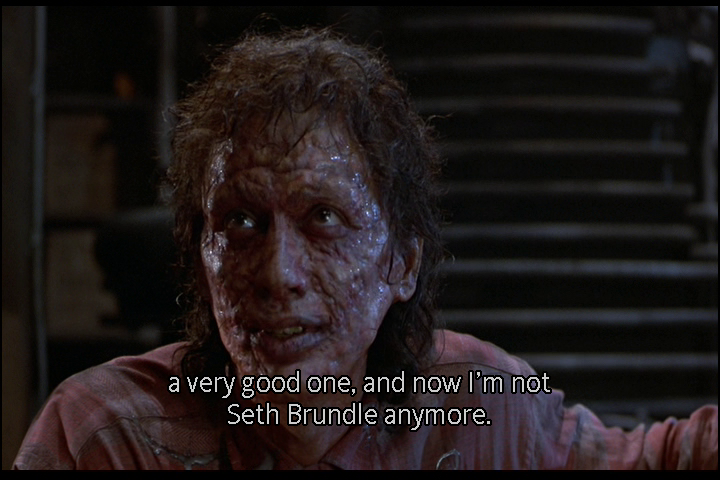
Like many of David Cronenberg’s early body horror films, The Fly explores the disintegration of the human body, an allegory for the many ways the body can break down and become abject, whether we are talking about aging or disease (AIDS was prominent when The Fly was made). At one point, Seth (Jeff Goldblum) says this: “I’m diseased and…might be contagious somehow. I wouldn’t want to infect you. And it’s accelerating. It’s unrelenting. Every day there are changes. Every time I look in the mirror, there’s someone different, hideous, repulsive.” From there, we get other references to how this “disease” is turning Seth into something different, not Seth. In this exaggerated way, Cronenberg reflects the toll on the psyche when one’s body break downs. Indeed, this issue of when the self isn’t the self due to bodily (or cognitive) breakdown is an existential question that we all must wrestle with.
(77) Dawn of the Dead (1978, George A. Romero)
I must confess that rewatching this film decades after I had last screened it proved to be just a tiny be deflating, only because some of the scenes were weakly done (such as that early scene with the swat guy who goes crazy, e.g., it felt awkward and overdone), the make-up of the zombies was off-putting, the slow moving zombies don’t really work for me anymore, and what seems to me like a contrivance of why so many zombies just mysteriously just keep showing up in one place, which seems necessary to make them menacing since making them so slowing moving would otherwise negate them as a threat.
Having said that, the film still has power, both in terms of its human connection moments and its deepness. In terms of the latter, the film surprised me a bit, being a little more deep than I remember it being.
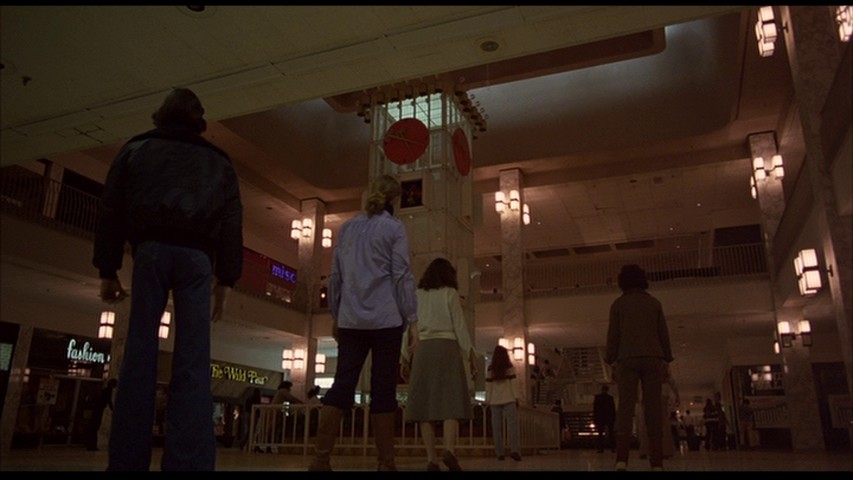
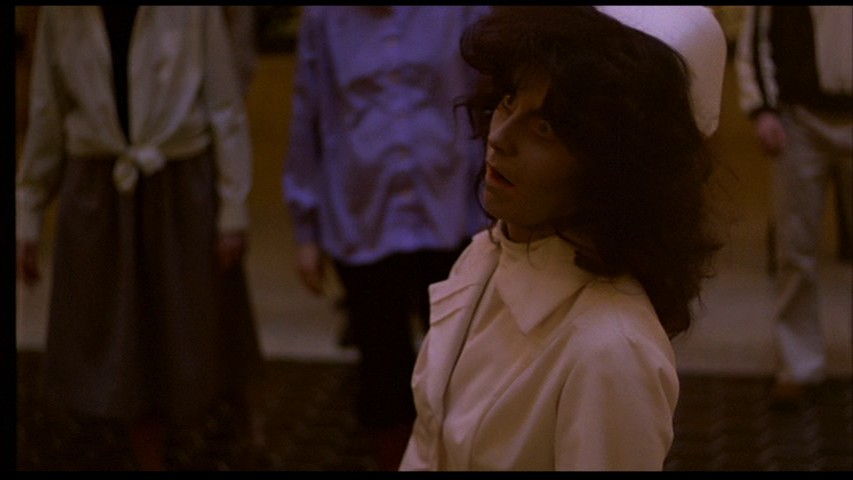
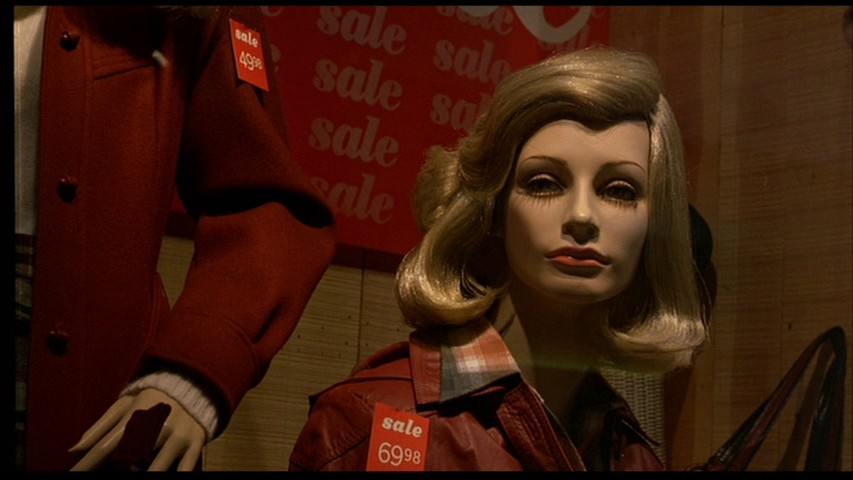
This deepness in part stems from one famous element in the film, Romero hilariously giving us zombies roaming a shopping mall, the suggestion being that some lingering memory exists that still moves them in routines from their lived life. The deeper point here is how Romero makes the zombies more than just a monstrous element trying to kill our heroes, but an allegory that says something about the human condition. That is, the deeper point seems to be that consumerism makes us all “zombies” to one degree or another, living just to consume materialistic commodities instead of something more purposeful and meaningful.
Romero expands this idea to focus on our protagonists doing just that, thinking living in a shopping mall is a kind of utopian existence, with money and material goods free for their unfettered consumption. But what Romero shows us, albeit perhaps in a less than complex way, is that this way of being gives our characters no real meaning and purpose and thus they too succumb to this con about being good consumers leading to happiness when all it really does is makes us (turn them into) in effect emptied-of-meaning “zombies.”
Further, this idea of just being mindless all consuming “zombies” (the zombies in effect “live” to just consume people) becomes allegorical in another sense, the many ways that Romero reveals how people seem to relish violence, relish (in effect) “consuming” Others, whether it be the militia folks making the killing of zombies a party or the biker gang who make killing a part of their psychopathic identity. Again, I think later filmmakers do more with the allegorical potential of the zombie trope, but this allegorical deeper meaning really began with Romero, or, well, at least in its more in-depth exploration, e.g., the formative zombie film White Zombie (1932, Victor Halperin) does gives us an incredibly profound allegory of zombies as the working class, an extraordinary allegorical deep point that isn’t really realized in the film overall.
(76) Malignant (2021, James Wan)
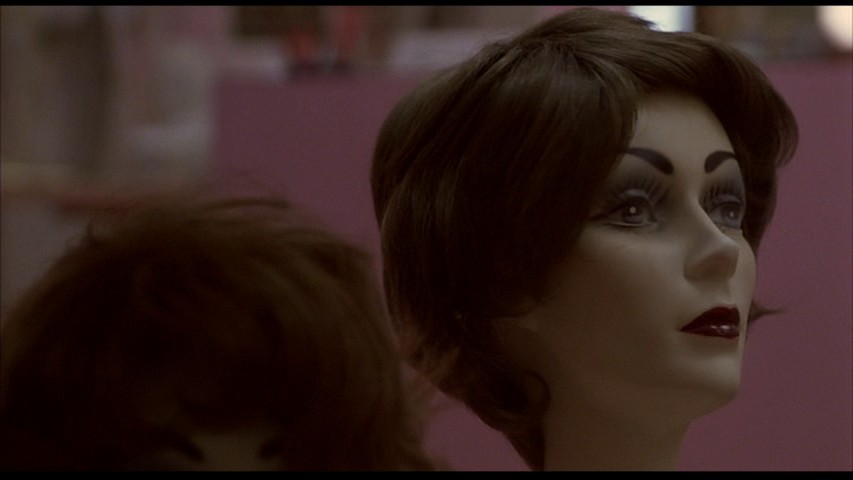
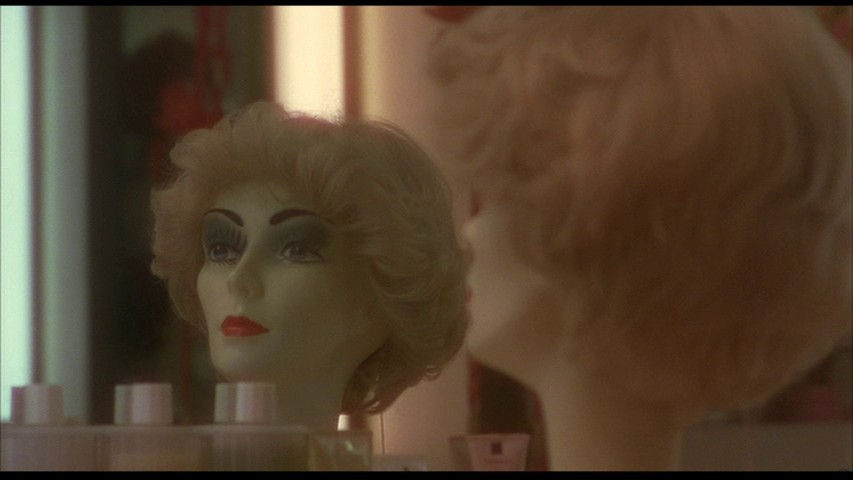
Okay, so, yeah, the silly meter is high for this crazy horror film, not just in terms of the whole premise but in terms of how Gabriel can’t take a single cop but can then go on to wipe out a whole police station!! Having said that, staying on a more shallow level of commentary here, I must say that I had a lot of fun with this film, filmmaker James Wan giving us a lot of nice touches, including both how he creates that psychic link between Gabriel and Maddie/Emily (Annabelle Wallis) and two wipe outs, including that aforementioned wild attack on a whole platoon of police officers. Still, I understand if people find the film too silly to be taken seriously.
If you’re still with me on this film, here is the core part of why I think there is a very interesting deep element in the film:
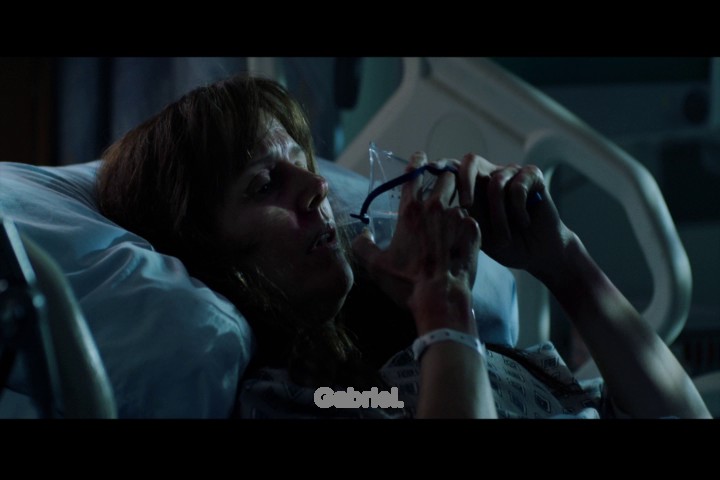
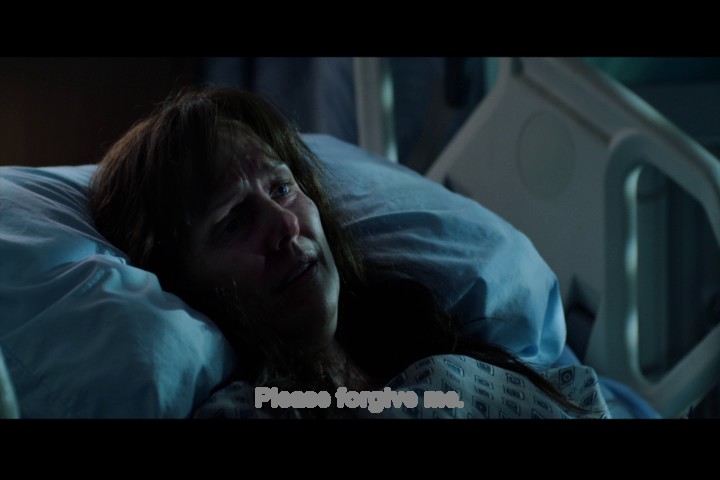
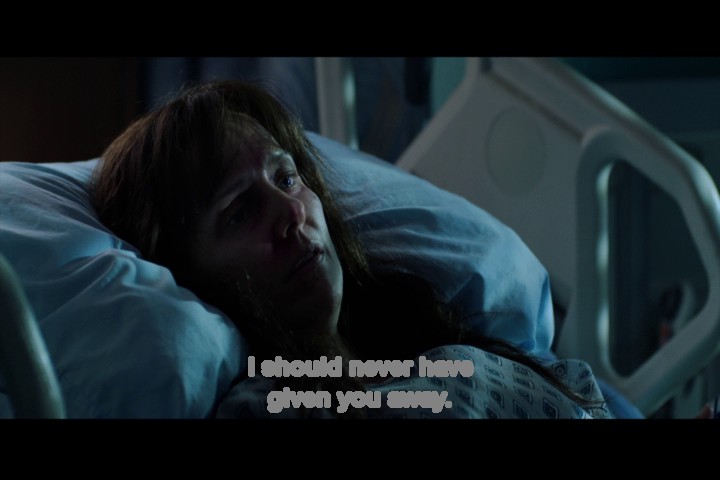
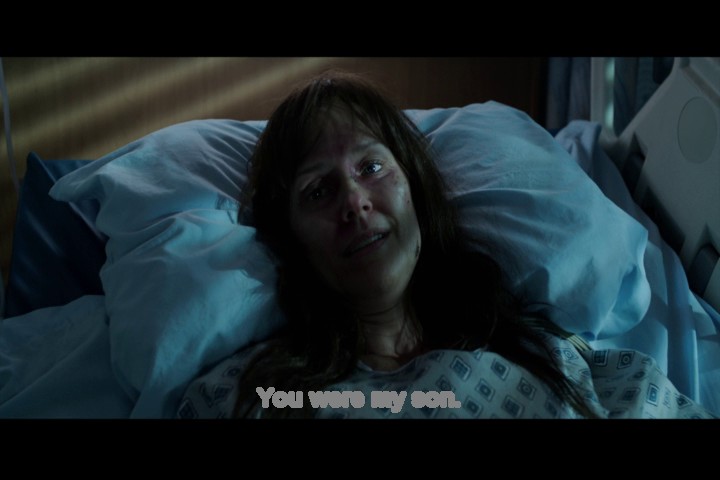
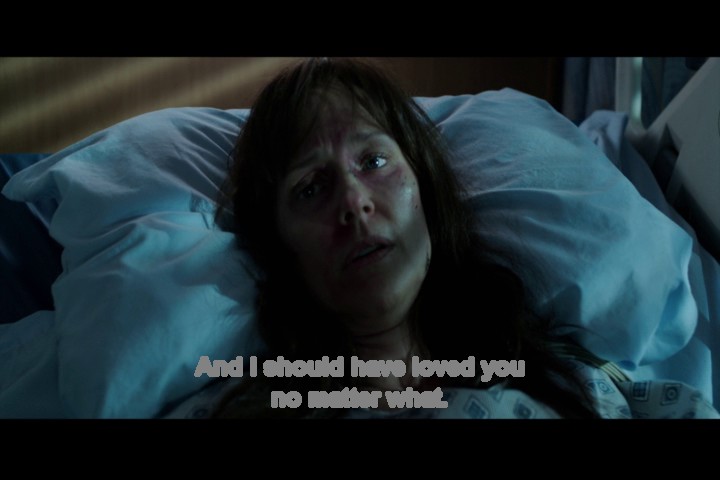
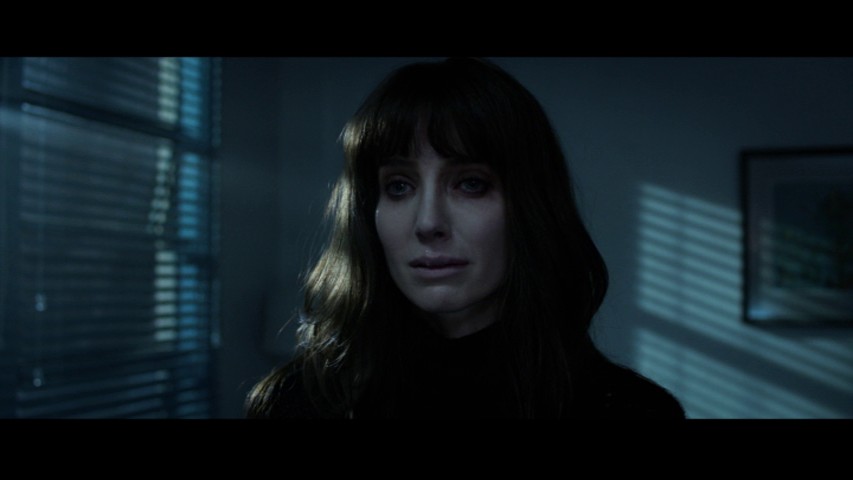
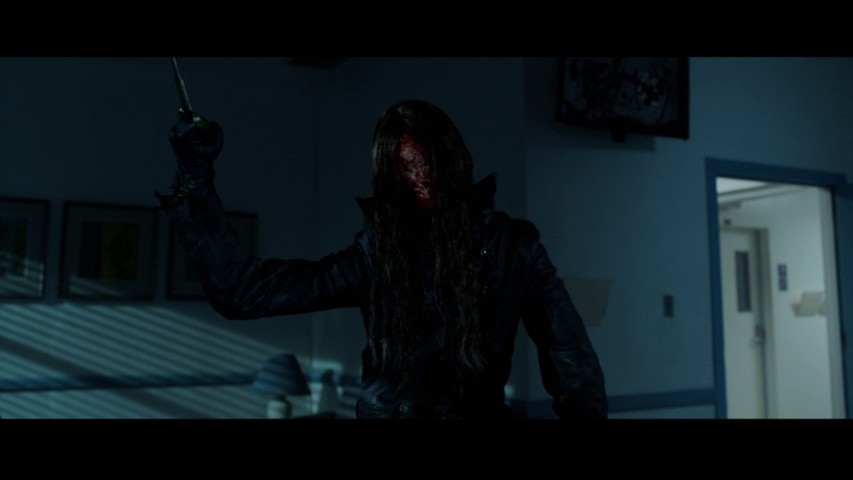
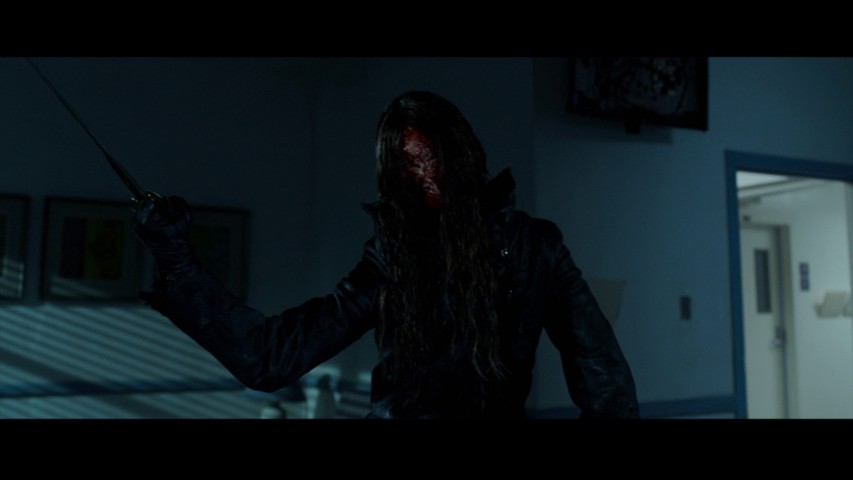
For me, there are two moments in the film that stand out as genuinely surprising me with some deep content. The first one is that moment I highlight above when Gabriel is about to kill his birth mother, Serena May (Jean Louisa Kelly) and she expresses what seems to me sincere regret for giving him up, Wan visibly stressing a marked pause by Gabriel, him lowering his weapon, as if he is nonplussed by this unexpected but I think authentic and sincere testimony. What is so deep about this remarkable moment is in making what up until now is a seemingly unredeemable and purely evil abject entity to something akin to being, well, approaching sympathetic. The even deeper implications is in how abject Wan makes Gabriel, Gabriel being a truly repulsive and monstrous entity. That he is ultimately referred to as “parasitic” and “cancerous” adds to our dismissal of him as anything but something that needs to be “cut out” or destroyed. But in this moment and that striking pause by Gabriel, I think we must consider a couple of interesting and deep points.
First, had the birth mother given Gabriel the unconditional love that all children should get, would he have been as “evil” as his abject state seems to make him? And, second, going along with this, is it possible for us to actually see past our reaction to something SO abject to accept it as anything but monstrous? This second idea has been with us for centuries, our instinctive reaction to anything that seems “abnormal” is to turn away, or worse, remove the source of our discomfort, which has come in many forms of immorality, from putting such people away in institutions or to force them to stay in a sheltered space or even kill them.
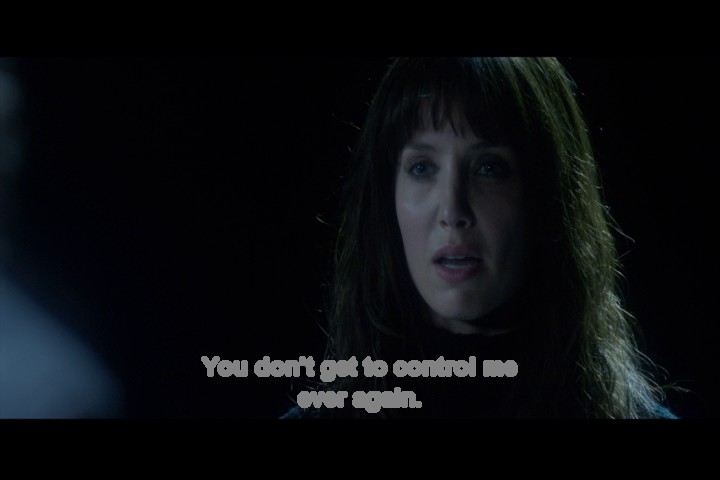
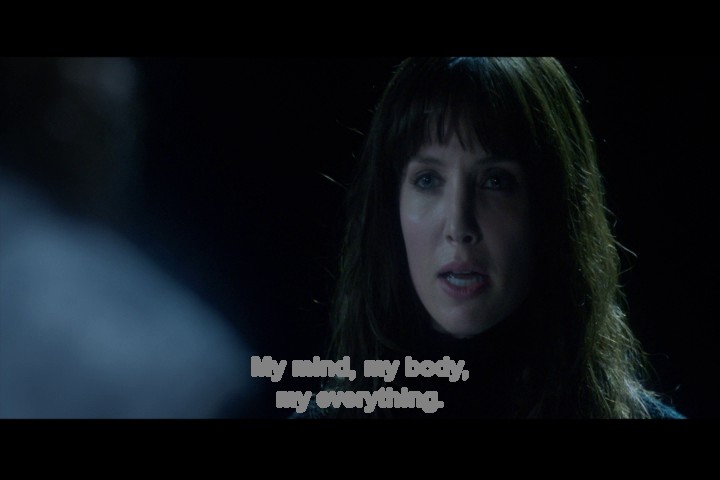
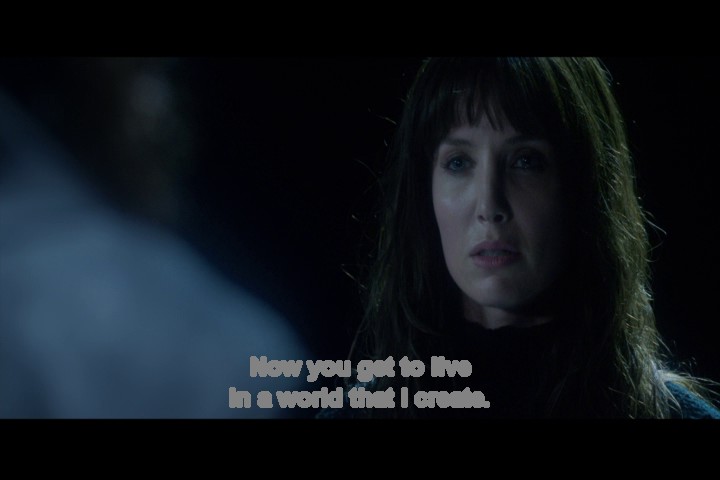
The other interesting deep point the film makes stems from the provocative ending moment, when Maddie takes back control of her self and in effect “locks” Gabriel away deep into her psyche, the allegorical analogies rife with possible readings, from how we must do this in the real world to family members who are toxic in our life, not just cut them out of our life but create real coping devices to the lingering psychological tolls they take on us.
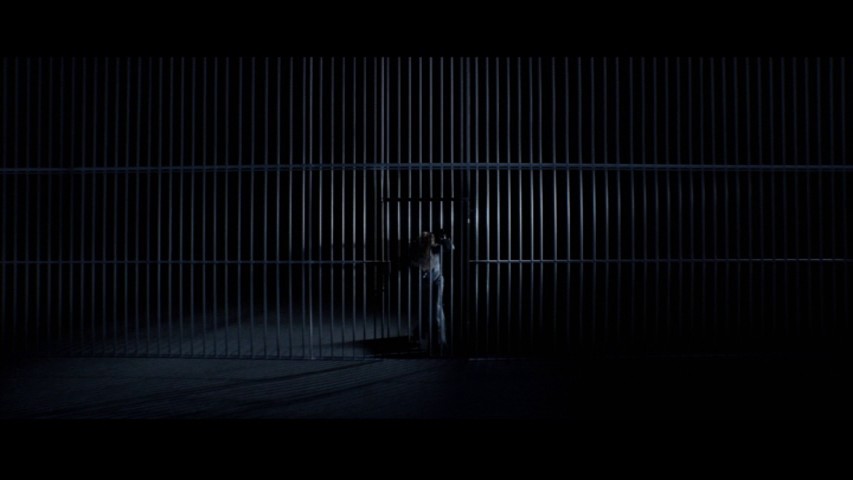
(75) The Masque of Red Death (1964, Roger Corman)
So I wrestled on whether to include The Masque of Red Death, for a couple of reasons. First, it has a cringe worthy racist scene in the film, when Juliana (Hazel Court) has a kind of dream sequence during her ritual to cement her supplicancy with Satan. During her vision, we get these non-Judeo Christian (people of color) figures who seem to faux accost Juliana, Corman thus using exotic Others (Asian, African) to bizarrely be aligned with evil!! Second, as do all of the Roger Corman adaptations of Edgar Allen Poe works, the film gets silly at times, and here I’m especially thinking of the moment when a raven attacks Juliana and inexplicably kills her, which then Prospero says, “She just married a friend of mine.” Set aside the silliness of a single bird killing an individual, it is odd that Satan would just kill her!
I ultimately decided to keep the film because, well, it was made when such sensitivities to racism were largely absent and because the film does something so well and so deep and that is where the weight of the film lies. Oh, and in terms of the silly moments, I would just say that I grew up loving these Corman-Poe adaptations — all starring the incomparable Vincent Price — and so I tend to see the silly moments as part of what makes these films endearing!
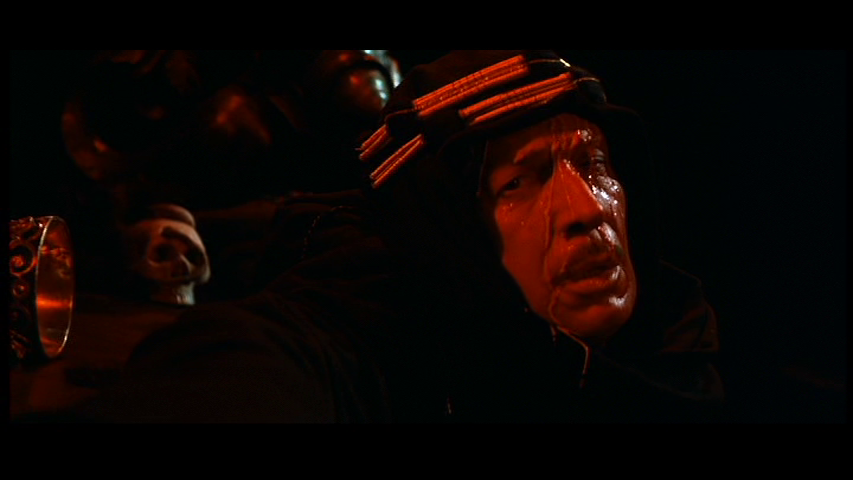
In terms of what makes this film deep, I would stress a couple of remarkable elements in the film. The crucial point that the film focuses on is its focus on royalty or wealthy (aristocratic) elites. As well as any film has done, Corman gives us the REAL of them, which gets unpacked in a few different ways. First, we see how they think their wealth and power can even protect them from a plague. Yes, part of this protection stems from Prince Prospero’s (Vincent Price) belief that his worship of Satan means Satan protecting him and his followers from the plague, but the deeper implication is that he can remove himself and his subjects to his castle and that will somehow keep the plague out. That Prospero and his wealthy aristocratic subjects indulge their hedonistic appetites and desires in the castle while the plague ravages the country side also informs this point, that not only do they need not fear it since their wealth and power has always made them feel invulnerable, but that they can continue to live their hedonistic lifestyle despite the horrors happening all around them. But then that is part of the power of this film, how it levels the playing field so to speak, reveals that the rich are not superior to other (“low”) individuals but, indeed, they are just like every other human, just a human being with the same vulnerabilities as any other human. When the “red death” does hit them, turning them all “red” speaks to this point, that when we strip away all else (wealth endowments), we are all the “same,” human beings.
The “red” moment at the end — so strikingly done, both in the use of color and the macabre “dance of death” — speaks to another point that Corman powerfully stresses, how when one becomes so rich and powerful, it turns human beings into something dehumanized (spiritually dead), the “red” speaking to how “death” had always defined these (spiritually) dead rich elites even before the “red death” took them. Corman stresses the REAL of these emptied of meaning hedonists before this, stressing how extreme wealth and power ironically turns them into a lower life form, two moments in the film informing this motif, Prospero coercing his rich followers to be “animals” and then the worst of the bunch, Alfredo (Patrick Magee) dressing up as a gorilla.
Of course, the surface commentary we get with wealthy elites is all too palpable in the film as well, the rich aristocratic elite (royalty) seeing Others as disposable and that which they can use for their sadistic-hedonistic desires. When DEATH comes for them, we get the cathartic need to see them reduced to the lower life forms they have become, especially Prince Prospero, who becomes the allegorical ultimate evil, a wealthy elite whose lost (satanic) humanity infects us all.
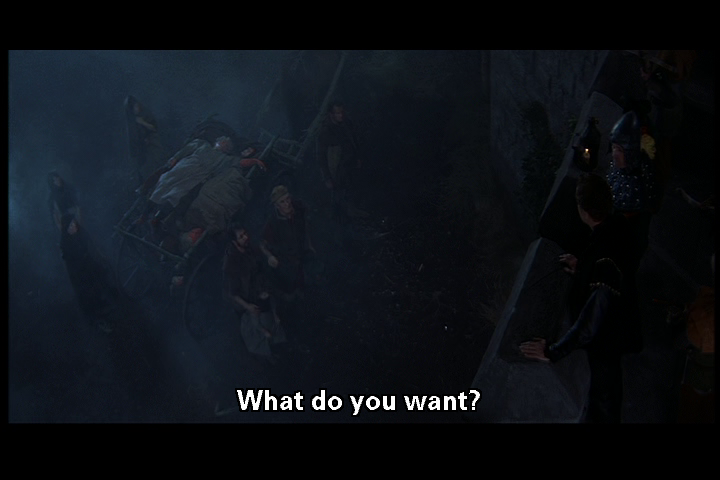
(74) The Addiction (1995, Abel Ferrara)
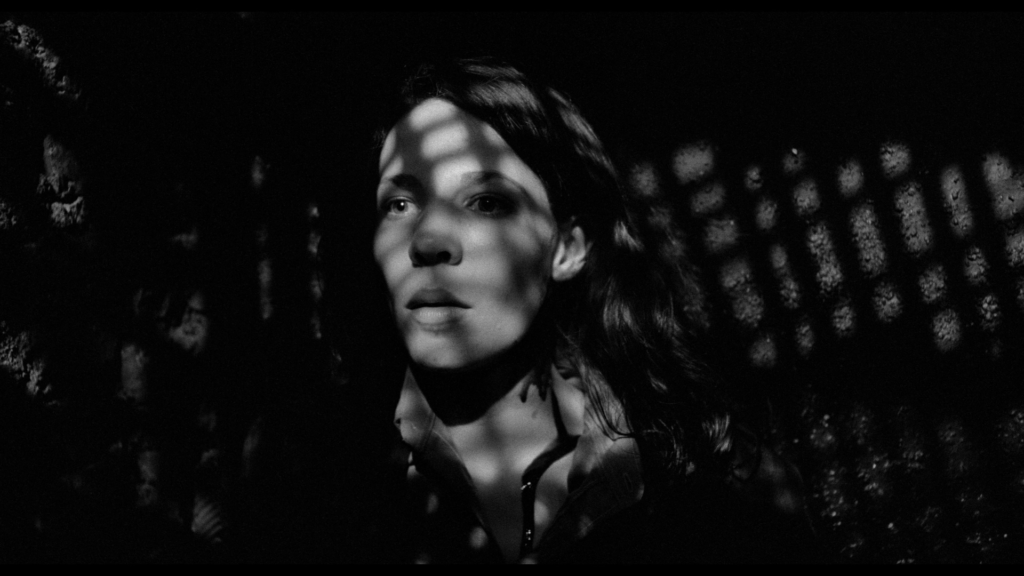
The Addiction is perhaps the most difficult horror film for me to evaluate. For a long time, I thought the film was one of the deepest horror films ever made. But upon recent rewatches, I have largely changed my mind about the film. That is, the film still has some deep elements to be sure, but in my view, the film’s surface deepness hiding a shallow core.
As I read the film, Abel Ferrara takes us on a kind of human odyssey of wrestling with our essential human nature. Of course, he does this through the allegorical character of Kathleen (Lily Taylor) but he also does it through philosophical thought and the human history of just unfathomable crimes against humanity atrocities, including the Holocaust.
I think Ferrara’s core focus could be summed up as a determinism versus free will disquisition. On the determinist side of this equation, Ferrara uses vampirism as an allegory for what does seem like humanity’s constant capacity for “evil” acts, the Holocaust being the most unspeakable horror of humanity’s potentiality for dehumanized acts. In this way, Ferrara wants to suggest that humanity’s horrific capacity for “evil” is akin to an “addiction,” the “addiction” though being less a drug or some other exterior stimulant but rather something innate (“determined”) in us that drives us to do such heinous acts. The vampire metaphor then becomes Kathleen’s self-journey of first accepting (being determined by) her “evil”/addictive new way of thinking and being, which includes rejecting feelings of “guilt” and morality, but then coming out the other end rejecting her compulsion to consume people and exert her “free will” to choose a different (moral) path.
My issues with the film – why I don’ t think the film is as deep as it seems – stems from a couple of elements. First, the metaphor of vampirism to humanity’s history of crimes against humanity acts is way too simplistic I think. Why people do these horrific atrocities is a very complicated thing, too complicated for me to unpack here. To just reduce these complexities to “determinism”/a vampire “addiction” seems problematic to me. Indeed, I’m not even sure the “addiction” metaphor works at all, since it seems clear to me that like all other vampire narratives, taking the blood of humans seems to be about feeding themselves, not getting some “high” fix. (Peina does say that he doesn’t need to drink blood but he also says that taking Kathleen’s blood from her will make her feel something like starvation.)
Second, I must say that I really don’t like how the film ends. After what seems like Kathleen “overdosing” on human blood, Kathleen is wheeled into the hospital and we hear an Asian language, which may harken back to the Vietnam War Mai Lai massacre, and that makes sense coming on the heels of the “massacre” Kathleen has just participated in. Such a reference may suggest the guilt that seems to be invading Kathleen’s cognition. Her guilt seems to emerge even before the blood feast “massacre,” Kathleen encountering a missionary (Michael Imperioli) proselytizing the gospel of Christ, this encounter seeming to trigger something in her when she gets home, her “I won’t submit” rants seeming to suggest her resistance to “submitting” to her “guilt.”
Later in the hospital, when she seems to have been stabilized, she says to a nurse to let her die, which is then followed by her looking up to the crucifix on the wall, all the while “hearing” a child singing (there is a recurring “innocence” motif throughout the film).
Again, this whole ending sequence suggests the overpowering feeling of guilt overtaking her. She asks for the blinds to be opened; she wants to feel pain, to punish herself for what she has done. Casanova (Annabella Sciorra) intercedes and echoes what we have already heard and what Kathleen has also vocalized, they are evil and thus should not try to fight their innate (“determined”) nature. Then we get the juxtaposition of Casanova (“evil”) and the priest (becoming an allegorical “good” counterpoint), Kathleen wanting to confess. She then asks: “God forgive me,” and the priest gives her absolution.
From this, Kathleen accepts Christ and says “Amen.” (Add in here the problem of giving absolution to someone who has slaughtered so many people!) Punctuating all this, it seems to me, is her attire at the end. She is wearing conventional white clothing, which contrasts to her wearing black throughout the film. She says: “To face what we are in the end, we stand before the light and our true nature is revealed: Self-revelation is self-annihilation of self.” In other words, or at least as I read it, her previous (“determined”) self is “annihilated,” because she saw herself for what she was, “evil.” Her acceptance of Christ’s pain and praxis (juxtaposing Christ to philosophers who only philosophized) moves her to a different plane and a different existence, presumably a “moral,” perhaps “reborn” Christian path, punctuated with the last image of the gigantic looming Christ sculpture.
Two moments offer insight to this ending moment: When Peina (Christopher Walken) says, “It takes a special person to see pain…I’m not that person,” that suggests to me that “seeing” pain is the same thing as (thus) feeling guilt, which Peina clearly doesn’t while he indifferently watches Kathleen’s suffering. Moreover, Peina is an important figure, because he offers an alternative to an “addiction” to “evil” (consuming people), even if his example is not a Christian one. In short, the film is about redemption, about the overpowering, crushing weight of what we are (metaphorically explored through vampirism) and what it takes to overcome our own “evil” nature, “free will” superseding “determinism.”
And I suppose the Peina moment could be Ferrara giving us an alternative to the Christian redemption/absolution conclusion, but Peina turns out to not be a savory figure and so I’m not sure if he is really a viable alternative model for a redemptive vampire-humanity.
In short, Ferrara seems to both want to complete the “addiction” metaphor – how many addiction treatments use a “higher power”/God to help addicts recover – and perhaps even more troublesome, at least for me, essentially give us a Christian film. I especially say this because of a quote from Kathleen’s professor (Paul Calderón) early in the film:
“One aspect of determinism is manifested in the fact that the unsaved don’t recognize the sin in their lives. They’re unconscious of it. They don’t suffer pangs of conscience because they don’t recognize evil exists. This is because they’re all predestined to hell and therefore never brought to the light of metanoia, or conversion, which is a work of grace only in a believer’s life, so when considering the salvatory aspect of facing guilt, suffering is a good thing. We should all hope to feel guilty, to feel pain, so we can seek pardon and ultimately freedom. Guilt is a sign that God is working out your destiny and it’s a foolish person who refuses to acknowledge this.”
Now this may just be the professor playing devil’s advocate and playing out one philosophical-theological belief system, but there is something in the way he says it, and the way that the film plays out that suggests to me that this may be the core belief of Ferrera, again, making this then a Christian film, which, for me personally, is problematic, only because this line of thought suggests that only through Christianity or some other God based belief system, can one be moral or have a “conscience,” or, in the specific language of the film, resist our baser (“evil”) nature and exert our “free will” of pursuing the good. I should add, that for me, this is also Kathleen going from one “determined” way of being (vampirism) to another way of being “determined,” Christianity being pretty dogmatic in dictating its doctrine, not to mention believing in a higher power that dictates being in general.
Having said all that, I have decided to at least tentatively leave the film on my list, for two reasons: First, the film is just so dang thought provoking, a film that deserves deep thought and deep debate. Second, more importantly, I do like how Ferrara uses vampirism as a metaphor for the baser part of our nature, revealing how at least many humans are not unlike vampires, living to consume Others. Again, it is too simplistic to say that is the only or even just the main reason why some (many?) people do this – one would at least have to work in our toxic ideologies as well – but at least it does reflect one part of the equation.
(73) The Purge: Anarchy (2014, James DeMonaco)
This first sequel to The Purge, The Purge: Anarchy, feels like it changes genres — from horror-sci-fi to action-sci-fi-horror — my change of genre order on purpose. With the introduction of the Frank Grillo character (Leo Barnes), the creators of this film introduce an action actor who turns the second half of the film into as much an action film as a horror film, and one, I might add, that works, the film becoming a high tension, satisfying action film! Still, this second entry in The Purge series retains the truly horrific premise of the original, especially in the first half of the film. I will come back to the deeper implications of this premise with my blurb below on the original film.
For this entry, I want of focus on what makes this film deep, its powerful focus on class. In this context, I would argue that this first sequel does the class focus better than the first film. The whole “purge” premise is in itself generally, largely, dictated on making the lower class disposable for upper class consumption, an allegory for what is in the real world, in whatever form that takes, whether that be in terms of how the lower (working) class is exploited for upper (wealthy elite/corporate) gain or whether that be in terms of how the lower class is literally seen as disposable, this latter point figuring in how the upper class have no problem when it comes to the repercussions of how they enrich themselves, whether that be ravaging the environment (creating toxic environments that literally kill people), trafficking bodies, child labor, creating unsafe work spaces (especially in largely unregulated global south work places), and so on. Anarchy allegorizes this facet of real world “purges,” especially in two sequences in the film. The first comes early on when the black father/grandfather (Papa Rico/John Beasley) sacrifices himself for his daughter and grand daughter (they struggle with the cost of his health issues, another real world context), giving himself to wealthy elites for their own murderous consumption desires. The second sequence is even more powerful, when our heroes get captured by wealthy elites, literally used as objects for their consumption pleasures, e.g., they are placed in a “game playing” scenario where they are hunted. There are other deep elements in the film — a fascinating thread on the Grillo character using the “purge” for his own traumatic experience — but I’ll leave it at that for now. I may come back and do a longer blog post on this interesting film at some point.
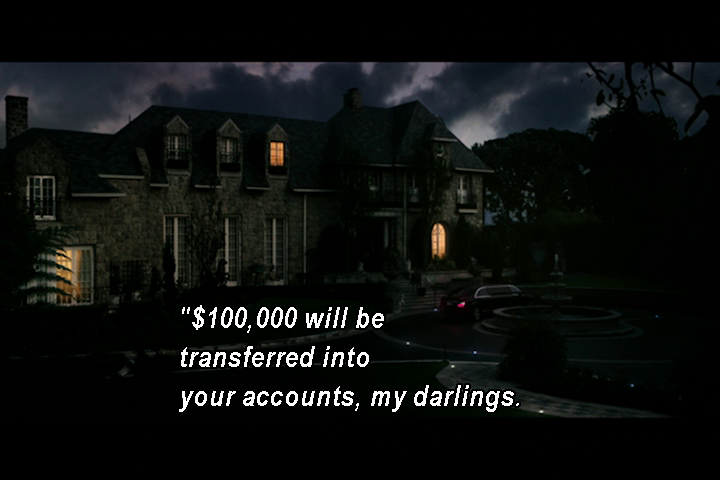
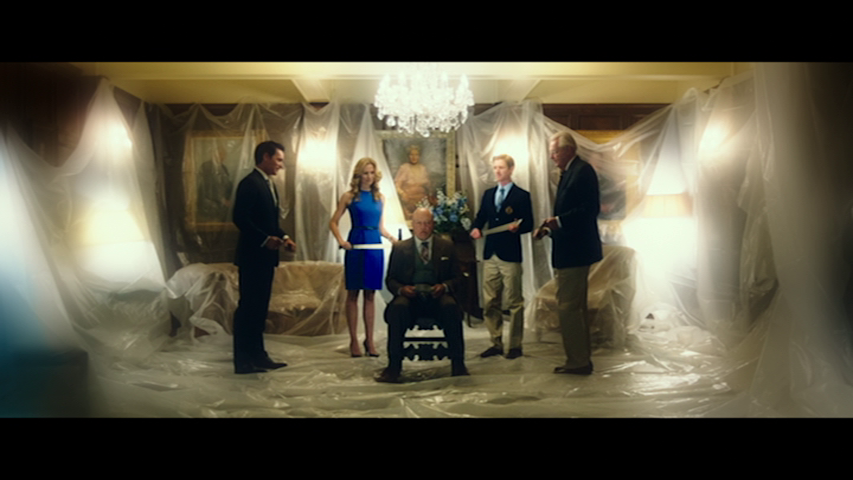
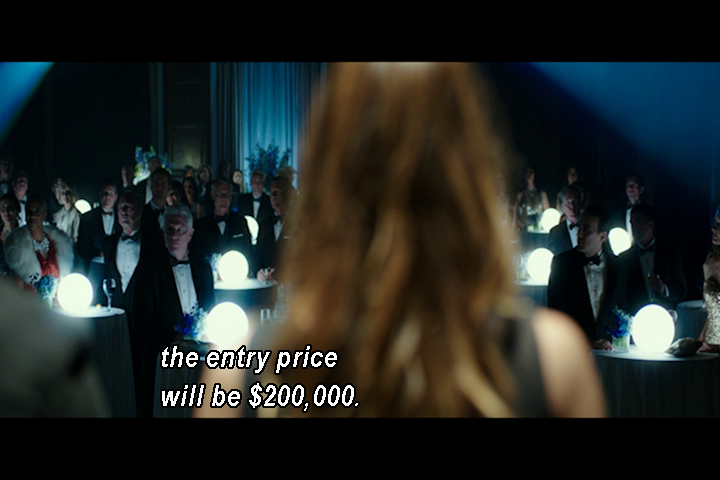
(72) Dracula (single season series; 2020, Mark Gatiss, Steven Moffat)
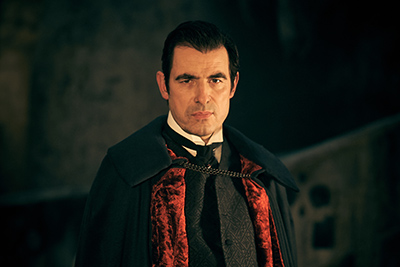
I will be the first to admit that this adaptation of a much adapted Dracula narrative is a bit of a hot mess and flawed to say the least, but my goodness, give me this interesting and inventive rendition over the extremely disappointing by the numbers Dracula narrative Nosferatu (2024, Robert Eggers) or any other adaptation for that matter. In terms of deepness, this series is rich in just so many ways to read it, not to mention the twists it takes giving us progressive updates to the stale old narrative. For one thing, I love this version of (Sister Agatha) Van Helsing (Dolly Wells), a woman taking on the role, but that isn’t the end of the story for this deeply empowering choice. The choice of Sister Agatha is just such a refreshing one, as her bite and wit match her intelligence as she becomes a worthy foil for our titular villain Count Dracula (Claes Bang). This story becomes as much her story as Dracula’s story. The riches in this story don’t stop there, we also get with Sister Agatha a nun who is at least agnostic, if not atheist, which informs not just her jaded view of how to be in a dark world, but also informs her strategies for defeating Dracula, her knowing that it won’t be God who will help her to defeat a demonic entity but her and her alone.
We also get a pansexual Dracula (admittedly not new but never really exploited in most adaptations). Most importantly, we get a class focus, with the “Count” (actually playing off his royalty title) becoming a stand-in for wealthy elites who “feed” on Others. The way that the creators of this series have Dracula refer to his victims — as “bottles of wine” — really punctuate this point of how the wealthy elites (historically and still today) objectify Others, though in this he seems to prefer upper class victims, another way to punctuate the class focus in the film. Finally, I just must mention the outstanding, deeply provocative ending, Van Helsing taking on almost sympathy for what has by this time become an endeared rival, Dracula not having anything to live for, since he has lost the fear of dying, necessary for any individual needing that edge to a warrior way of being, and now just lives to hedonistically consume. In short, Dracula has become that which he eschewed in a previous lifetime, an emptied of meaning and purposeless hedonist, a fascinating commentary on hedonism itself and the utter lack of meaning and purpose such a way of being entails, which is the lifestyle of wealthy elites, a throwback to emptied of meaning royalty.
(71) The Night of the Hunter (1955, Charles Laughton)
So The Night of the Hunter is one the films on my list that one can debate is not a horror film. Film noir? Yes! Fairy tale? Maybe the greatest ever! Thriller? Undoubtably! But horror film???
For me, I lean horror because the film offers up a truly nightmare scenario for children and it does it in what is perhaps the closest rendition to the original very dark fairy tales of old.
In the case of The Night of the Hunter, psychopath (faux) “preacher” Harry Powell (Robert Mitchum) “hunts” two children, John (Billy Chapin) and Pearl (Sally Jane Bruce), his desire being $10,000 hidden in Pearl’s doll, but the suggestion is that he will kill the children if he catches them. Moreover, in the process of getting to this point, Harry has already murdered the children’s mother, Willa (Shelly Winters), and we learn that he is a serial killer, having murdered many “widows,” the mob at the end dubbing him a modern day “Bluebeard.” This latter dubbing fits with the overall fairy tale sensibility of the film, with the children discovering the REAL of Harry and fleeing for their lives. In this way, the film then becomes a disturbing coming of age narrative, the children experiencing the dark world we inhabit.
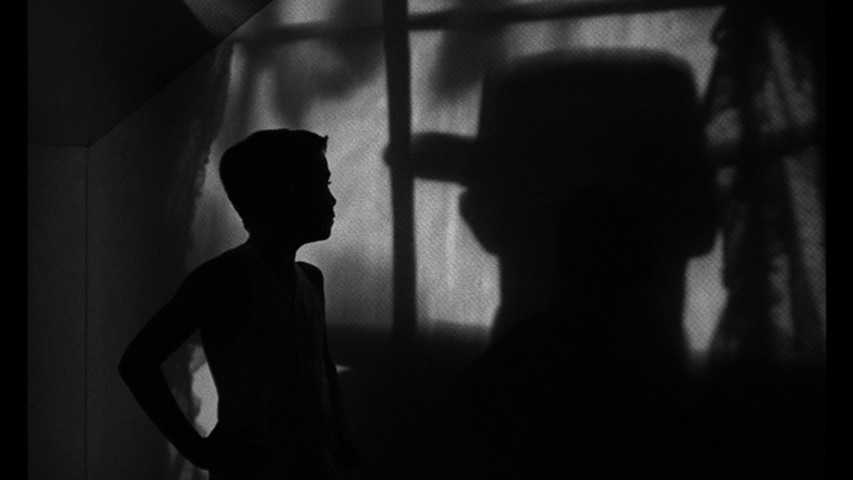
More particularly, in one of his best performances, Robert Mitchum gives us one of the most menacing demonic characters in film history, a character who isn’t just “evil,” but arguably embodies the dark reality of the world itself. I say this for two reasons: First, because director Charles Laughton makes this film a fairy tale, there is an exaggerated sense of dark versus light, evil versus good, Harry thus representing the archetype of the shadow self and Rachel (Lillian Gish) representing the angelic nature of humanity. In terms of Harry, Laughton exaggerates Harry out of all proportion, creating over-the-top shadows of him (see below), attaching a crescendo motif for him, and even giving him animalistic characteristics, e.g., at times he growls and screeches!
Where the film really gets deep is in the allegorical representation of Harry, who spews toxic Christian/toxic masculinity dogma to justify his actions. At one point he says to God that “your book is full of killings” and he thinks he is doing God’s work by murdering women, women to him embodying the misogynistic “Eve” narrative, how she was the “temptress” that led to the fall of “Adam”/humanity. Harry invokes this “Eve” narrative a couple of times, which we especially get when Willa says “help me to be clean,” which, in turn, informs how toxic Christianity/toxic masculinity has done this, unnaturally mold women to an unauthentic way of thinking and being. Of course, Rachel becomes the counterpoint to all this, representing good Christianity and representing an empowered woman who doesn’t allow herself to be molded by anyone, as Harry tries to do to her when he does what he does so well, manipulate her.
Lots more I could unpack here but I’ll leave it at that for now. For a really good analysis of the film, check out David George Menard’s “Charles Laughton’s Uniquely Noir Night of the Hunter (1955).”
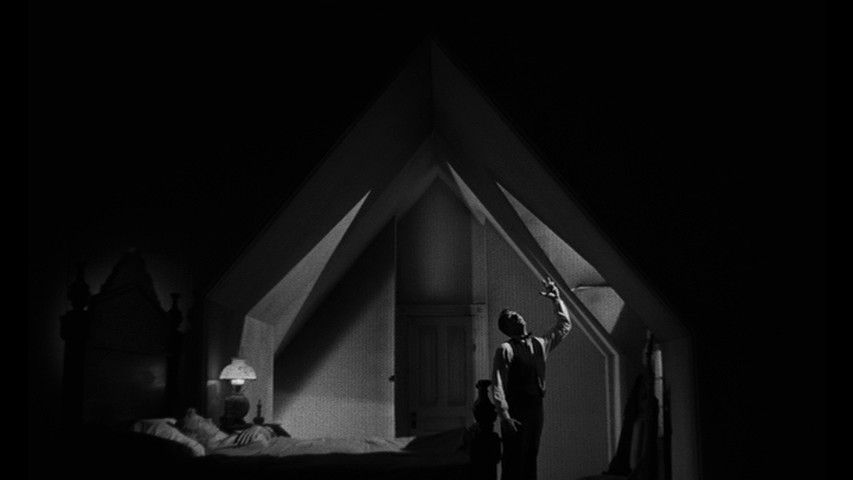
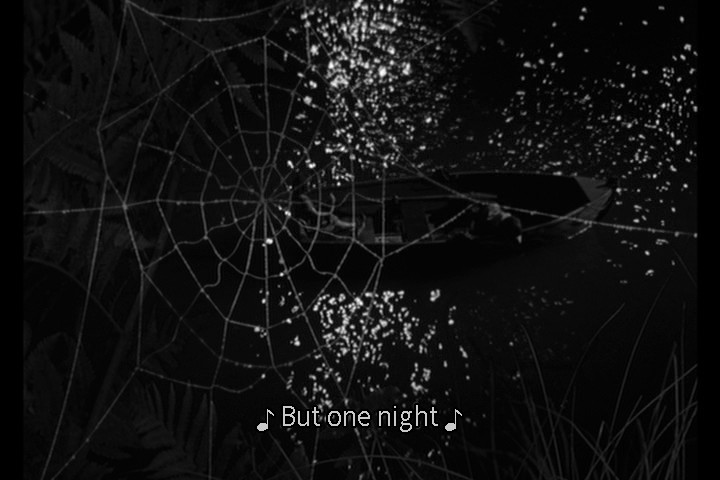
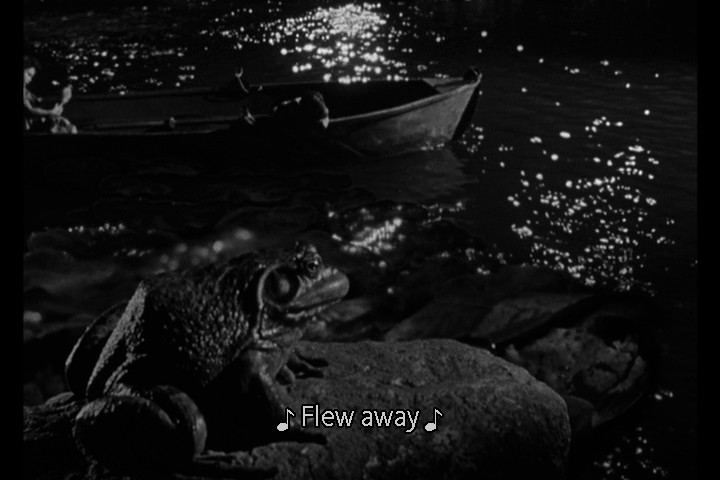
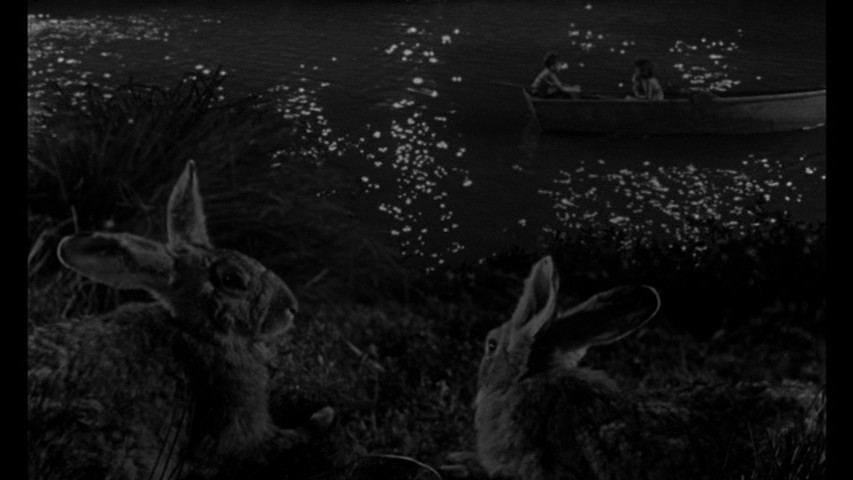
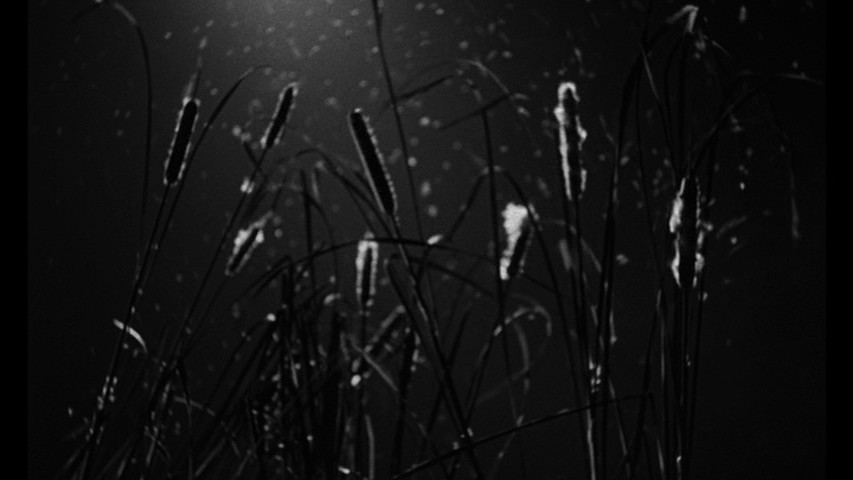
And I should stress here that while there are deep elements in the film, the film is really famous for its many striking compositions, the few I post below just being a sampling of the rich imagery in the film!
(70) Invasion of the Body Snatchers (1956, Don Siegel)
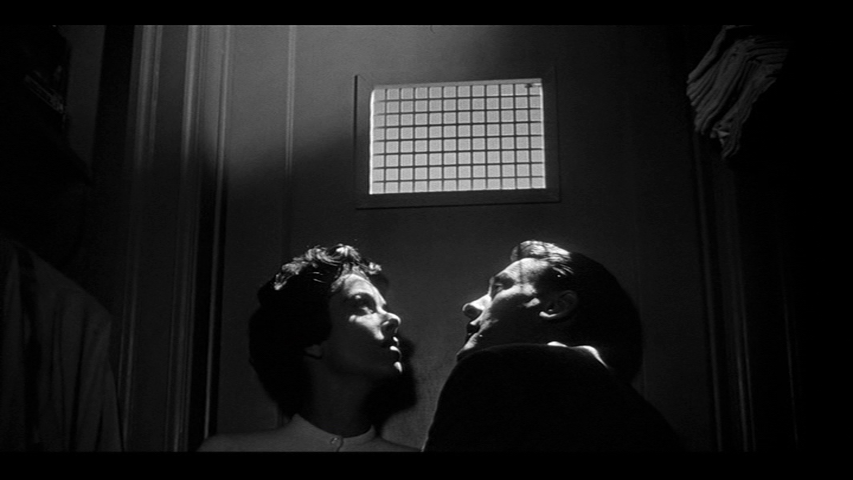
Since SO much has been written on this important (classic) film, I’m not going to say a lot about it here. In short, the greatness or deepness of the film resides in its rich — and famous — allegorical layers. Most pointedly, in the ensuing years after it was released, the film has become a model of “conformity” commentaries, in whatever root cause that happens. The original Invasion has often been seen as the fear of a communist (“Red Scare”) takeover of the country, communism in this context being seen as entailing a loss of individuality, everyone made the same. However, I would argue that the greater thrust of the film is just how it puts a finger on the pulse of America at the time of the film’s release, both the rage and paranoia of McCarthyism (coercing people to conform to a “witch hunt” that destroyed lives) and more so the homogenization of Americans in a 1950s culture that was all about coercing people to be all the same. The 1950s is often romanticized as some lost utopian “golden era,” but it was anything but that for how it coerced people into a homogenized way of thinking and being, and one need only think about this in terms of work (assembly line, etc.), dress, gender/sex norms, housing (cookie cutter housing), entertainment, and so on.
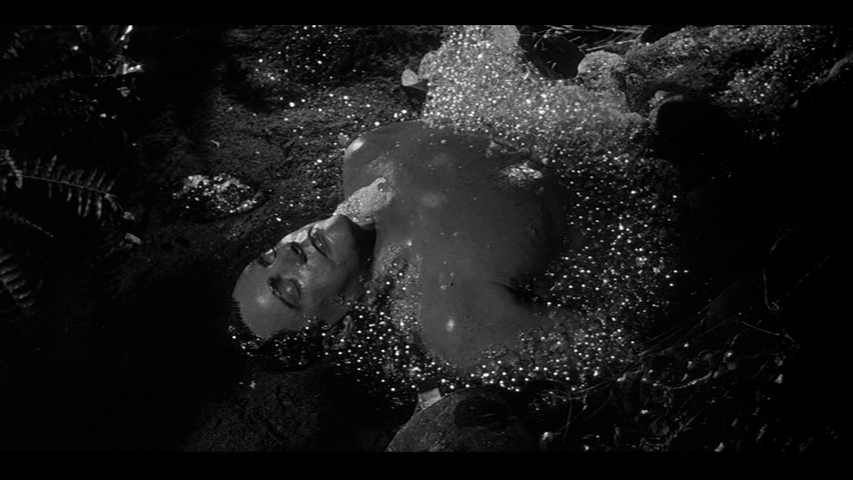
(69) 1BR (2019, David Marmor)
So, I know that 1BR (2019, David Marmor) essentially telegraphs what’s to come in the first 20 minutes of the film, but I must admit that I find well-done films about cults irresistible! Moreover, despite the predictable direction of the film, I think there is some deeper meaning in the film. For one thing, the stress on a “gated community” and a cult philosophy based on some bizarre definition of “community” and what it means to be “good” and the pretense of some fake (happy, “family values”) community – hiding psychopathy — give the film an echo of real world (think QAnon, MAGA, Christian fundamentalism, etc.). More particularly, the film reflects a real world phenomenon of at least many people susceptible to being controlled, which we get from Sarah (Nicole Brydon Bloom) even before she is controlled by the cult as she runs from her dysfunctional father and allows her boss to exploit her. This latter moment is starkly contrasted to her co-worker and budding friend Lisa (Celeste Sully) standing up to the boss and not let herself be controlled. There even seems to be suggestion that some people desire to be controlled, which we get hints at from the cult members, especially Brian (Giles Matthey), a veteran who came back from serving messed up and needing this kind of controlling patriarchal power. In terms of the cult itself, we get how patriarchal these cults or religions are, the focus on punishing disobedience and rewarding conformity being the principle way people are indoctrinated into accepting being controlled.
The “return of the repressed” in the film is also fascinating, as we get a “community” that mirrors what we would like to have in the world, people connected to each other in a meaningful and purposeful way of thinking and being. This is part of what makes this cult and cults/religions like it so seductive, because it does fill a void and desire in all of us. But what the film makes clear is not that we should ever consider joining such a cult or religion to get this desired way of thinking and being but rather because we don’t have that utopian way of thinking and being, that means many people are vulnerable to such lures as a cult that seems to give them this.
What the film also does so well is give us a character arc that allows us to both understand how any individual could cave to such indoctrination but who ultimately refuses it. Interestingly, we get this with Sarah even before Lisa brings her back to her self when she stands up to her father. Yes, she must do this otherwise her father will be killed and yes her response to what seems like a genuinely repentant father is horribly cruel, but the gesture suggests the potential that was always there for Sarah to be stronger willed than she had been.
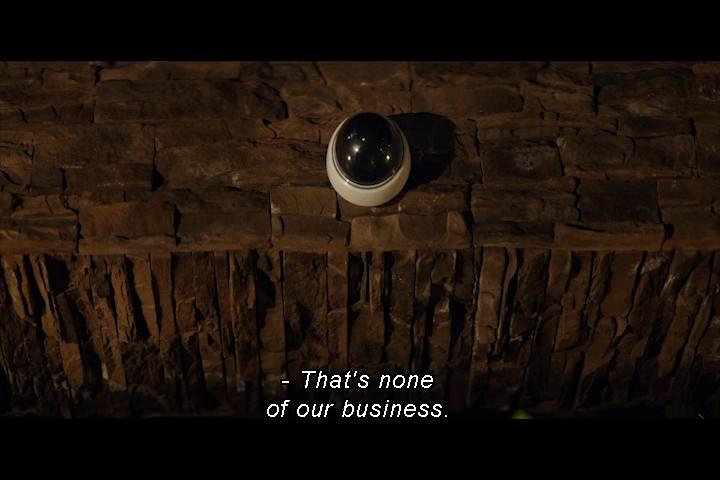
Finally, the surveillance element in the film registers the surveillance society we presently live in. The specific use of surveillance in the community specifically reflects Michel Foucault’s panopticon, where everyone is observing everyone, with even those doing the principle surveillance being surveillanced! This form of surveillance is the ultimate form of control and though it takes on a blunt form in the film, we also get echoes of how we are all now surveillanced by an exterior power, which is also nicely allegorized in the film. In terms of the latter, by creating an unknown controller, the similar omniscient power that surveillances and reins over our lives (capitalistic entities such as corporate power, Big Tech, wealthy elites, etc.) is registered as well.
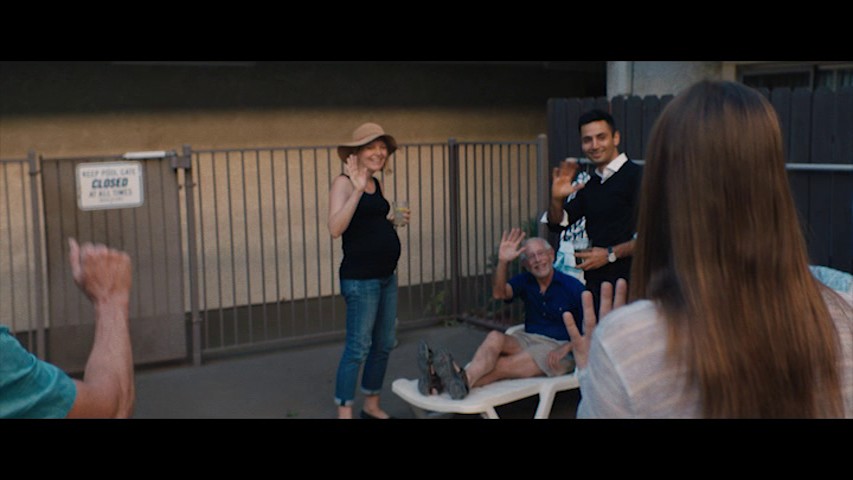
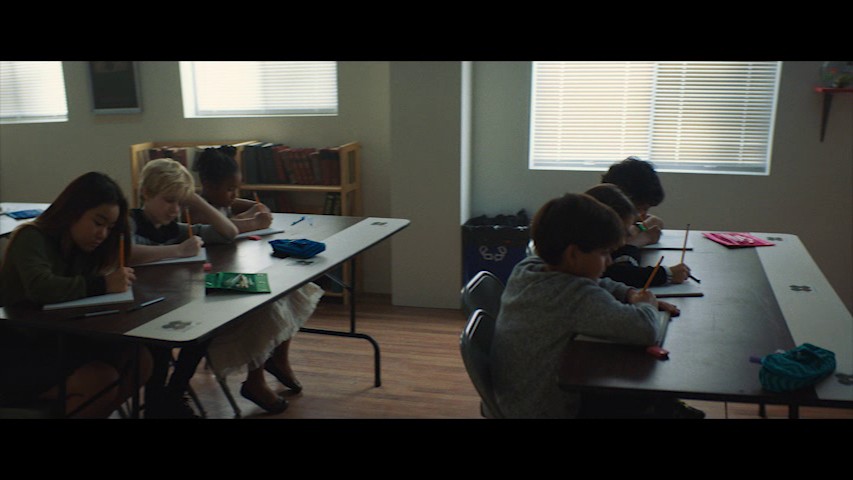
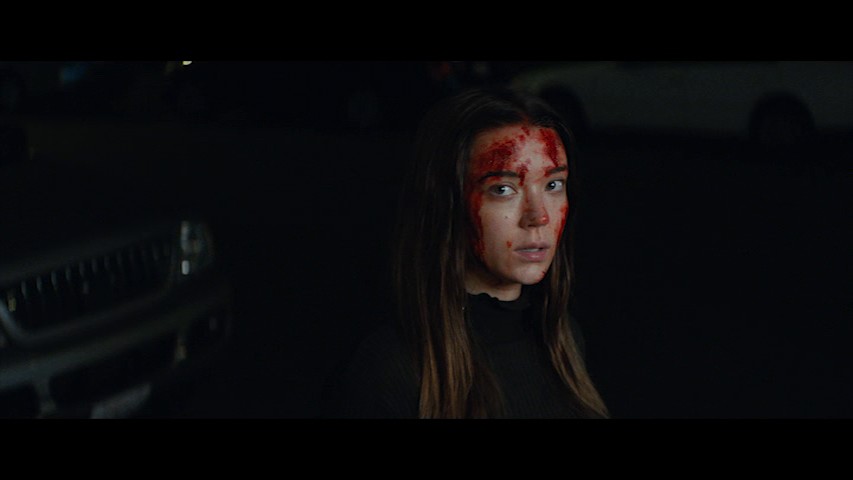
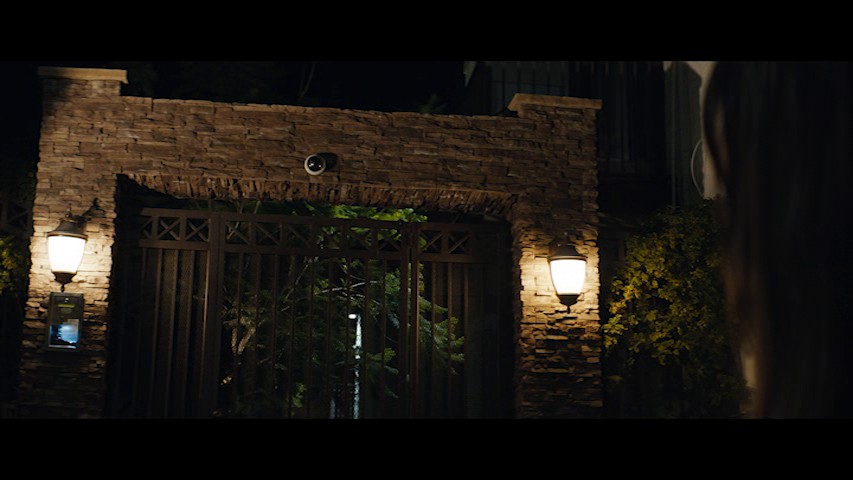
(68 ) The Tall Man (2012, Pascal Laugier)
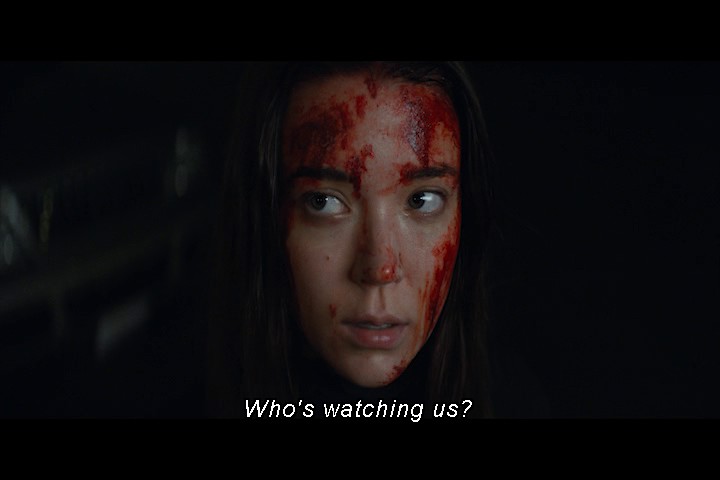
The Tall Man is another film that is arguably not a horror film. More precisely, the twist ending of the film utterly negates all of the horror tropes that come before. I debated long and hard whether to still include this film on my list and finally — tentatively (still may take it off!) — decided to keep it on because for most of the film, it plays like a typical horror film. To this point, I remember having my daughter watch this film with me and as it was playing, she would look at me with anxiety, wondering why I was having her watch the film, her feeling that the film was heading in a very disturbing direction. I told her to trust me, it is actually doing something quite different than what it seems to be doing. After the film ended, she was as stunned by the ending as I was and determined like me that the film is just so deceptive (deceptive in a good way!) in what it seems to be and what it is. And, so, it is the feeling of horror that the film instills for most of the film that largely makes it still within the arena of horror. I should add here, that the twist ending and what it entails IS disturbing, perhaps more disturbing than most actual horror film scenarios!
In terms of this latter point (and, again, the pleasure of watching this film is not knowing what is coming, so stop right here and watch the film before reading on!!), the final denouement of the film is truly deep and powerfully thought provoking!
Again, the ostensible premise of the film suggests a typical slasher type horror film, an entity called the “The Tall Man” is disappearing children and doing who knows what to them. However, it turns out that “The Tall Man” is really just a front for an “Underground Railroad” type movement, where a group of people are kidnapping children from at least poor family situations — in at least one case we see, a deeply dysfunctional family situation (e.g., a boyfriend sexually molesting his partner’s daughter) — and placing them in situations where they will presumably get the love, attention, care, protection, and opportunities that are denied them in the situation they are born into. The creators of this film don’t make this a slam dunk, however, giving us at least one poor mother who clearly loves her son dearly and will do anything to get him back (see below).
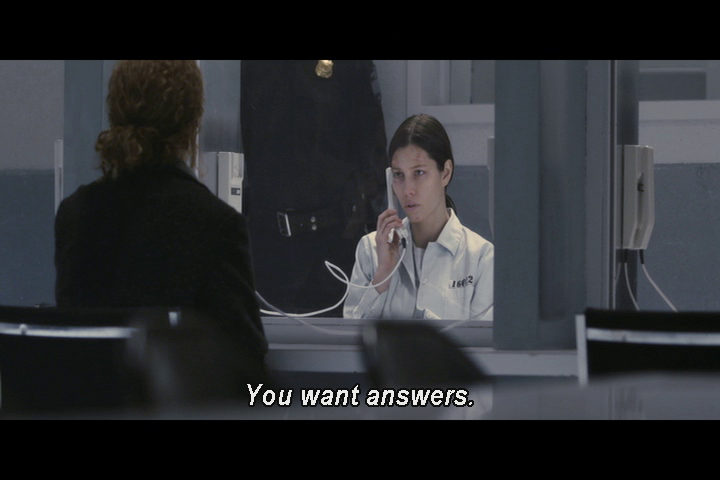
The crux of the film comes in Julia’s last spiel:
“It’s just the same everywhere…it’s a cycle. The system is broken. It doesn’t work. There’s nowhere to turn. There’s no support. I’ve seen it all over the world. It’s just easier to give up…. It’s not a matter of being a good person or being a bad person. It’s about how you cope. We’re so limited. But the eyes of every child are filled with potential and hope, and we should embrace and nourish that potential but we don’t. We continue to make the same mistakes. We continue to let the children grow up broken and lost, just like their parents. We have to break the cycle. It has to be a priority, but it’s not. That’s what I’ve been trying to do. That’s what I’ve done everywhere. And what did I change? Nothing. Yes, I cared, I helped, I cuddled, thinking I was bringing change, thinking I was making a difference, but when we asked for real change, all these bureaucrats said, ‘No, you can’t do that. There’s a process.’ Every time we questioned the politicians, and the system that makes poor people poorer, and the children suffer, they said, ‘No, you can’t do that. There’s a process.’ So the cycle goes on, and goes on and goes on, and the children continue to suffer, and no one does anything about it, and the world will never change.”
In sum, the creators of the film posit two profound points: The first point is not debatable, that we have created environments where children/young people are both abused (and here I’m including neglected) and born into environments where they are not given the resources to flourish and be happy and be everything they could potentially be. The second point is much more controversial, that these children would be better off in environments — presumably with upper income parents — where they would be treated well, with love and attention, and allowed to realize their potential, whatever that might be. For me, the film’s denouement is less about a scenario to be taken seriously — of course we can’t just take children away from destitute parents — and more about (A) to create this provocative scenario as a way to discuss it and (B) in this context understand that all children should be given a healthy environment where they can get the opportunities that realize whatever their potential is. In this context, the creators of the film set up this extreme depreciation of a community by giving us a scenario that is all too typical, a mine closes, the lifeblood of the community, and with it the community dies, which makes the film’s point even deeper, that our lives cannot be dictated on capitalistic interests, which we can lose at any time and with such a loss, so too we lose that which is necessary to flourish and raise a family, all children to realize their potential.
(67) The Brood (1979, David Cronenberg)
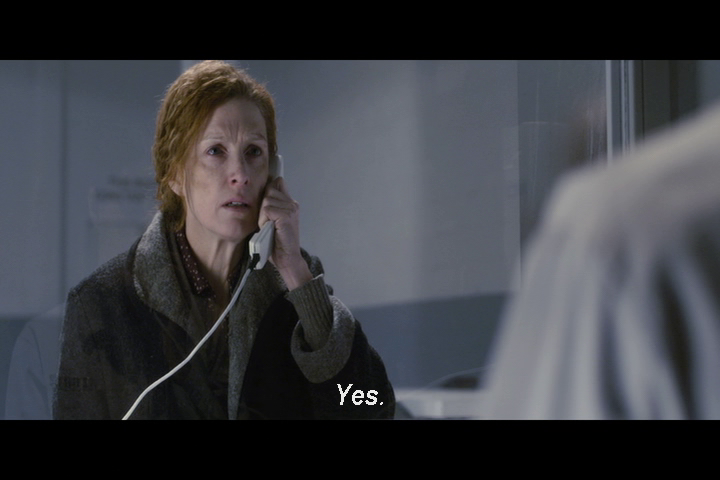
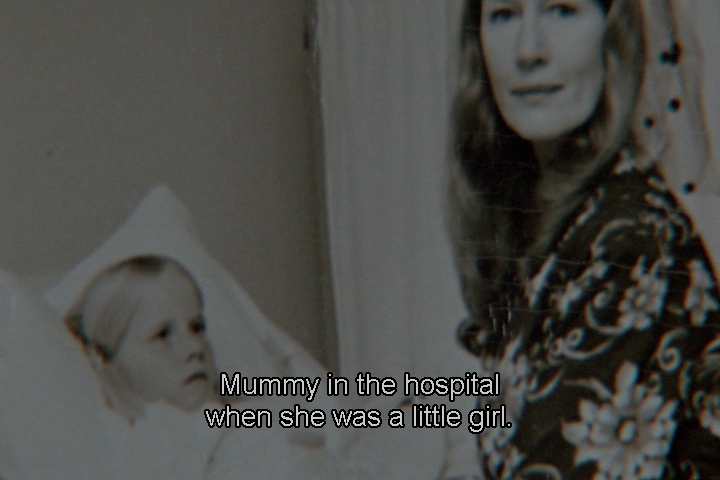
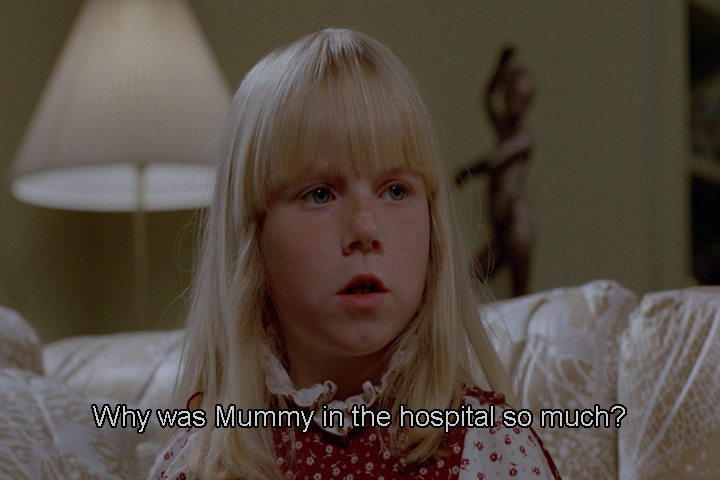
To my mind, David Cronenberg’s “body horror” films are most deeply realized in two films, Videodrome (see below) and The Brood. What Cronenberg did so well in The Brood is use “body horror” tropes to create powerful metaphors of mental illness, in this case, physically materialize how deeply traumatic experiences in our lives impact us. We get this through Dr. Hal Raglan’s (Oliver Reed) patients but especially through the narrative of Nola Carveth (Samantha Eggar) and how her rage gets materialized through the abject “birth” of abject “children.”
More particularly, we learn in the course of the narrative that Nola was abused by her mother (Nuala Fitzgerald), beaten, “scratched,” “thrown…down…stairs,” and psychologically and verbally abused. Moreover, her father (Henry Beckman) just let it happen, pretending not to know about, a form of abuse itself. At one point, we learn that as a child, Nola was in the hospital a lot, which the mother excuses as some ailment whose symptoms were “bumps” all over her body, which apparently is her attempt to deny what she did to her daughter. Even before we understand the depth of Nola’s trauma and rage — manifested not just through the abject children but through her therapy sessions with Raglan — we learn from Frank (Art Hindle) that Nola at least married him in part because, as Frank says, she hoped his “sanity” would rub off on her, further reinforcing Nola’s mental illness. In this way, we can see how horror has the potential to powerfully explore mental illness and the enormous impact it can have on us and loved ones.
I should add one other deep tidbit. First the film touches on how Raglan is less a caring psychologist than a opportunist seeking fame and fortune and how this is a commentary on a real problem in our capitalistic society, people exploiting mental illness for gain.
For a really good piece on the film see: “The Brood: Separation Trials”

(66) Suspiria (2018, Luca Guadagnino)
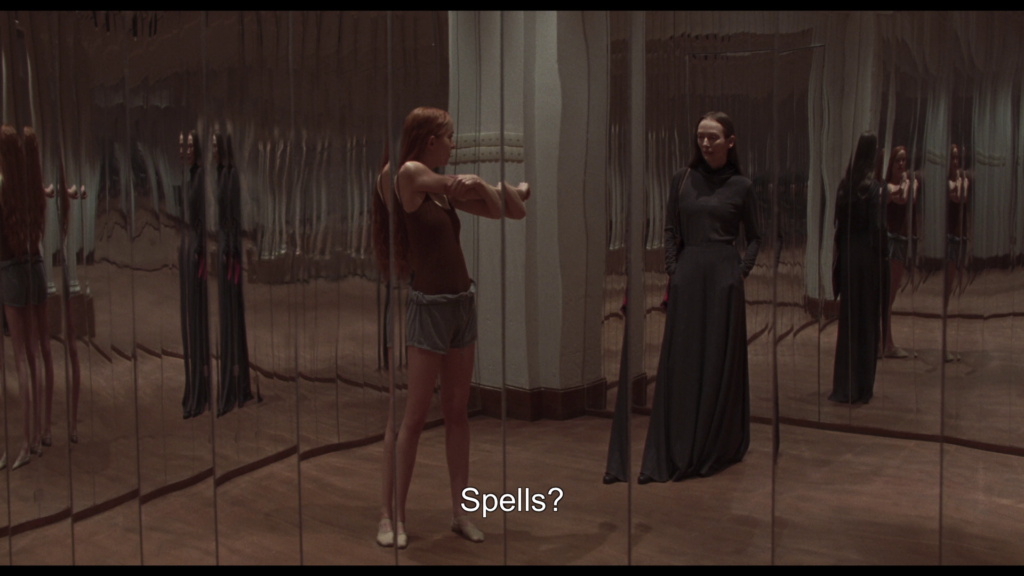
So, while I do love the original Suspiria (1977, Dario Argento), to my mind, Luca Guadagnino took the core concept of the simple original premise and blew it up to make a much more deep and interesting film. I should add here that I don’t think the film always works, some of the editing is not very good and it gives us what seem like deep touches that are really seeming to be just for effect. However, in the final analysis, Guadagnino tried to create a truly original (and incredibly ambitious!) vision and a deep one at that. For that alone, the film needs to be on this list.
To get at what makes the film deep, I want to stress at least five different threads in the film:
*The RAF (Red Army Faction) element: Throughout the film, we get references to this extreme militant group, especially them taking hostages (with the desire to exchange the hostages for RAF incarcerated members) and murdering individuals. This RAF reference sprinkled throughout the film relates the real life group who participated in not just kidnappings but bombings, assassinations, bank robberies, and killings.
*It is referenced that psychotherapist Josef Klemperer (Tilda Swinton) has survived Nazi Germany, though as we later learn his wife Anke died at the Theresienstadt concentration camp. In addition to this main thread, we get at least a couple of other references to Nazi Germany and the Holocaust.
*Our main protagonist, Susy Bannion (Dakota Johnson), comes from a Mennonite community and we get a few hints that her life there was not pleasant, with a mother who seems to see her daughter as a shameful birth, and I think a dream sequence that seems to suggest Susy was punished (slamming her hand with a clothes iron) for doing something taboo in a closet space, presumably (I think) masturbating.
*There is also a “mother” motif in the film. In addition to the “Three Mothers” (Mater Suspiriorum, Mater Tenebrarum, Mater Lackrymarum), Markos (Tilda Swinton) is called “Mother Markos,” and the coven “teachers” are all seen as “mother” figures to the students, especially Madame Blanc (Tilda Swinton). We also get repeated references to Susy’s mother, especially in her abject pre-death state, giving her a sinister quality. Finally, when Susy becomes Mater Suspiriorum, she apologizes to Dr. Klemperer for what her “daughters” did to him.
*Finally, we get the coven itself, a coven of witches who seem evil through and through.
What all these threads have in common is that they are all patriarchal-fascist in nature. That is, they all reference entities (RAF, Nazis, the Mennonite religion, and the mothers and coven) who use some facet of a patriarchal-fascist ideology. For the RAF it is using their “communist” ideology as a reason for violence, or, more particularly, using violence as a means to an end. For Nazism of course, it is about controlling, dominating and destroying Others. For the Mennonite religion, it is about controlling, dominating, and oppressing members of their own community, forcing them to act in accordance to arbitrary ways of (unnatural) thinking and being, and if they get out of line, they are severely punished. For the coven, they do all of the above. And since most of the “mothers” in the film, at least up until Susy becomes Mater Suspiriorum, are part of either the coven or the Mennonite community, this element too is part of the patriarchal-fascist threads in the film (patriarchy is NOT about masculinity per se but rather a way of thinking and being that infects everyone, including women).
In terms of the main focus of the film, the coven and Susy’s entry into its “politics” (Mother Markos versus Madame Blanc), this is where the film is really interesting. At the end, when Susy becomes Mater Suspiriorum, we see how Guadagnino seems to give us an alternative to the above, a “mother”/witch who eschews her coven’s evil (patriarchal-fascist) ways, seemingly ready to choose instead a kinder and gentler path, one of helping Others instead of controlling and dominating and punishing them. We see this with her tenderly giving mercy to the suffering and beyond help Patricia (Chloë Grace Moretz), Sara (Mia Goth), and Olga (Elena Fokina), and in bringing to closure and kindness to Dr. Klemperer. In this way, I think Guadagnino wants to give us what should be with covens, that they not be a mirror image of a patriarchy (fascist, authoritarian) ideology that can only Other people, but rather create their own alternative matriarchal-maternal way of thinking and being that gives us a healthier model for humanity.
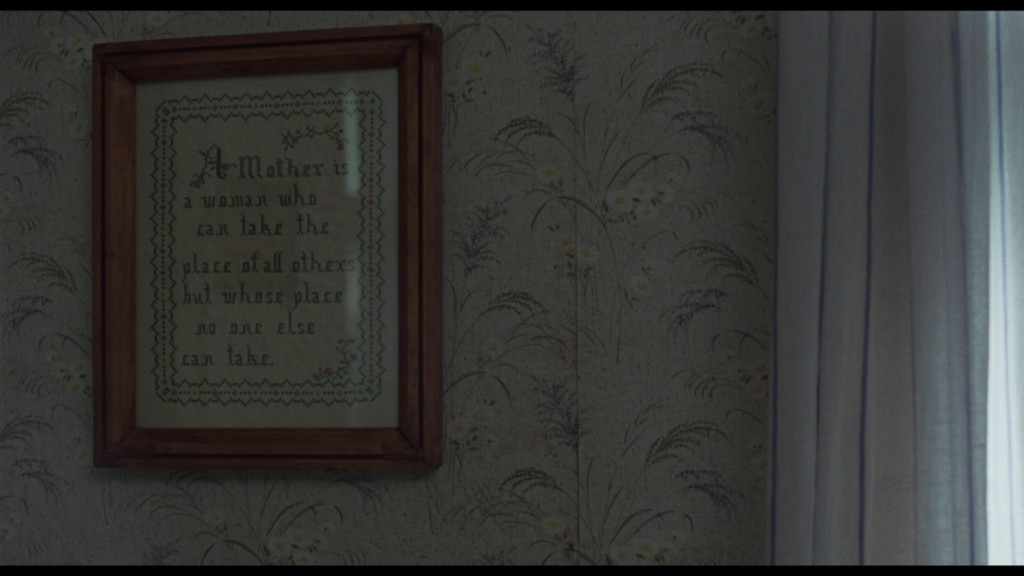
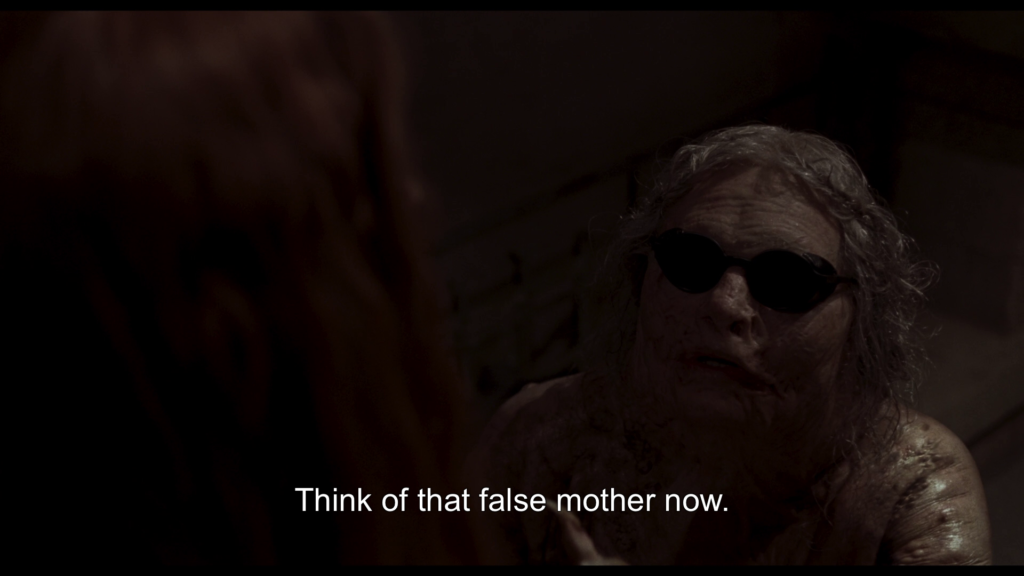
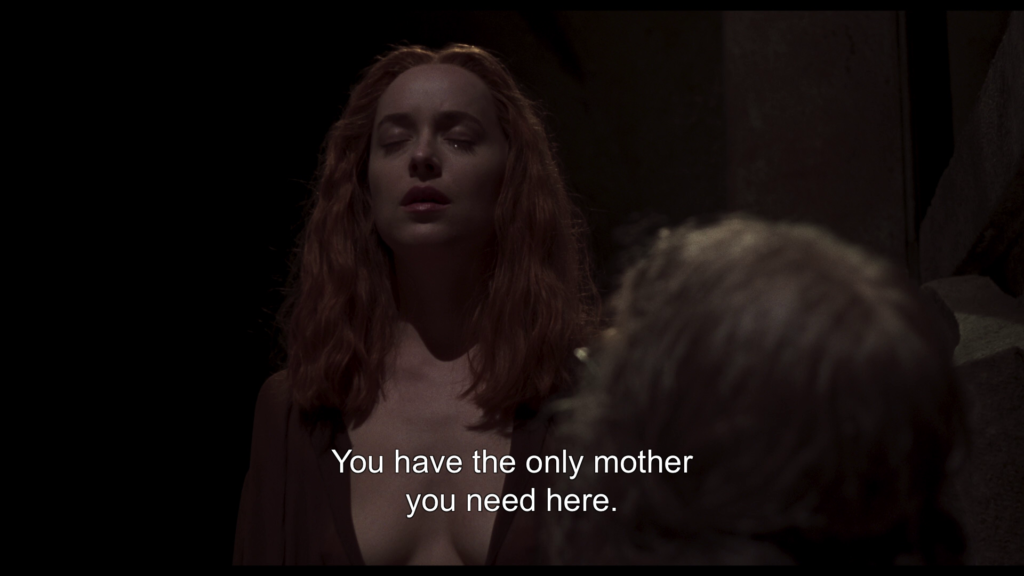
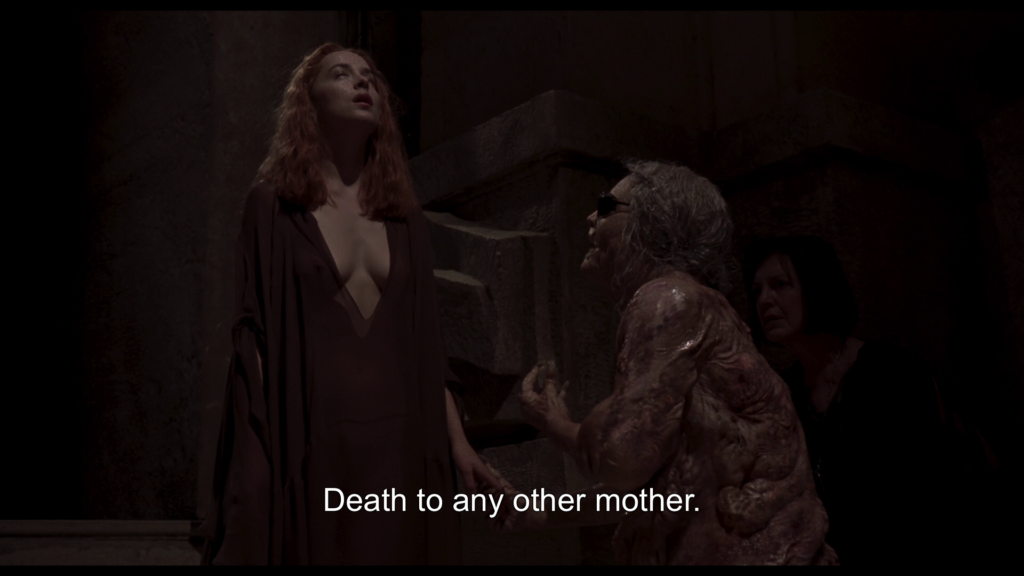
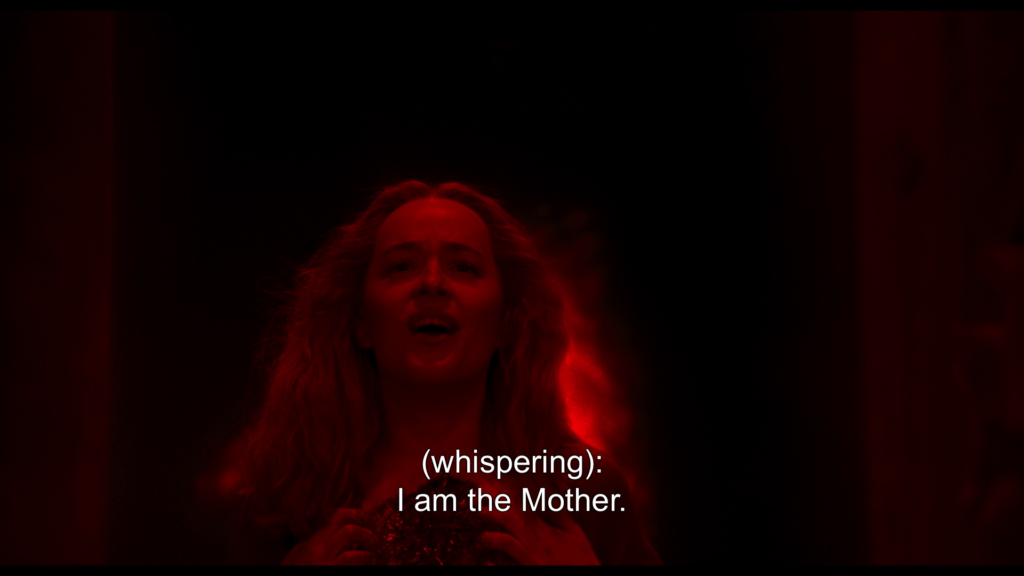
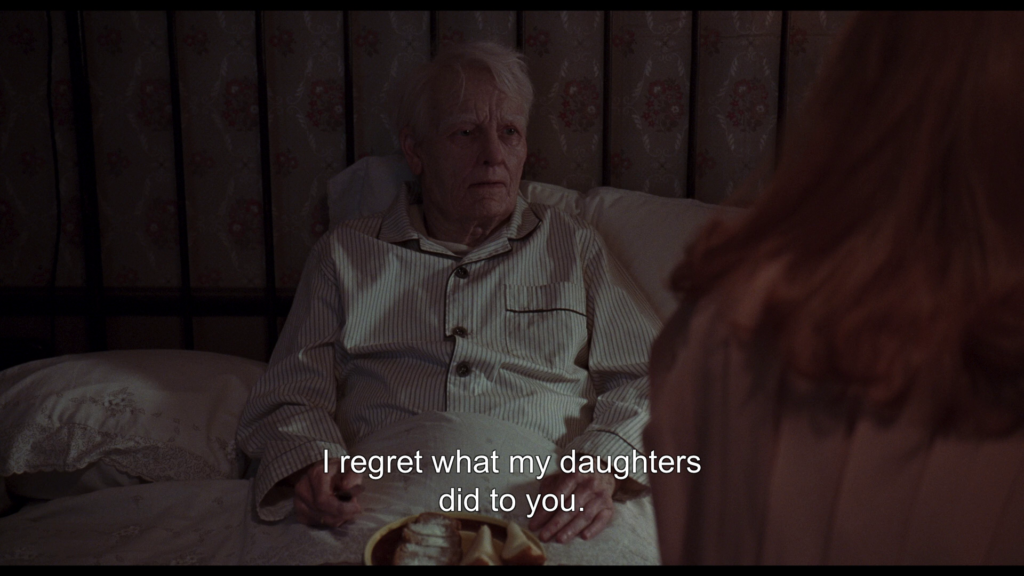
For an interesting analysis of Suspiria, check out this video essay, “How Suspiria is the Best War Film of 2018.”
(65) Pan’s Labyrinth (2006, Guillermo del Toro)
Pan’s Labyrinth is another film that is debatably a horror film. It is usually classified as a dark fantasy/fairy tale film. And while I would agree that’s its main classification, I would also argue that it has enough horror elements to loosely categorize it as horror. Of course, the obvious horror element is “The Pale Man,” a terrifying horror creature if there ever was one! But I think the giant frog that is keeping a tree from growing and the root creature that is used to try and save Ofelia’s mother also have macabre resonances. Even the Faun that guides Ofelia at least seems like a figure from a horror film. Of course, in the real world representations, Captain Vidal (Sergi López i Ayats) is so over-the-top evil that he almost takes on a fairy tale monster quality. Even the use of color (drab) and the setting (ruins and decay and what looks like a castle) give the film its horror resonances.
The real question for me is whether the film is deep or not. Of course, the backdrop of the film is the authoritarian Franco regime and the rebels who resisted it, a built in deep facet of the film. But, for me, the real deepness is in whether there is a tangible connection between the fantasy elements in the film and the realism part of the film. In my view, there are at least two deep connective threads in the film. Many writers have suggested that “The Pale Man” represents Vidal, and I do think that resonates. For one thing, “The Pale Man” kills and consumes babies, not unlike how Vidal viciously kills Others for his own consumption needs. (One could do a psychological study of Vidal, but that would take up too much space for my present purposes; suffice to say, that he definitely has some pent up daddy-anger issues, as well as deep insecurities that make him need to measure up to his respected father.) Even the enormous frog has symbolic figurations, as like the frog lives to consume and prevent life from flourishing, so too does Vidal.
I would just add that the enormous feast fits into this thread as well, the stress on only being able to look at the prodigious feast but not touch it, speaks to how fascist regimes often do this, live a life of luxury while the (working class) can only observe such luxuries, not experience them.
The other way to make this connection is in Ofelia (Ivana Baquero) herself. She enters a very grim world, one she has no control over, has no ability to actually act on it. By creating a fantasy world, she can then have some control over it, act on it, empower herself to advance her own interests, even defeat the monsters, or at least escape them. Interesting too to think about how the film becomes a kind of coming of age film, the key character development being how Ofelia goes from thinking only of herself to sacrificing herself for her brother. In terms of the former, despite being repeatedly warned, Ofelia eats the feast of “The Pale Man,” which leads to two fairies getting horribly murdered. At the end, we see her growth by how she refuses to give the Faun her baby brother, instead sacrificing herself to save him.
One last point: For me, the ending of the film is just so sad and tragic and yes horrifying, Ofelia getting murdered by monster Vidal. But, by doing this, the film stresses that fantasy will always give way to the grim realities of the world. And while I understand why some people want Ofelia’s fantasy world to be real, for me, the film becomes much more powerful if her fantasy world is just that, a fantasy or escape from reality. The final message of the film is that while it may be understandable why Ofelia felt the need to escape into a fantasy world, the final message is that in the real world, there are no fantastical escapes from those who suffer the horrors of the world, including of course children. And that’s why we MUST strive to create a better world for our children, so they don’t have to ever suffer these horrors.
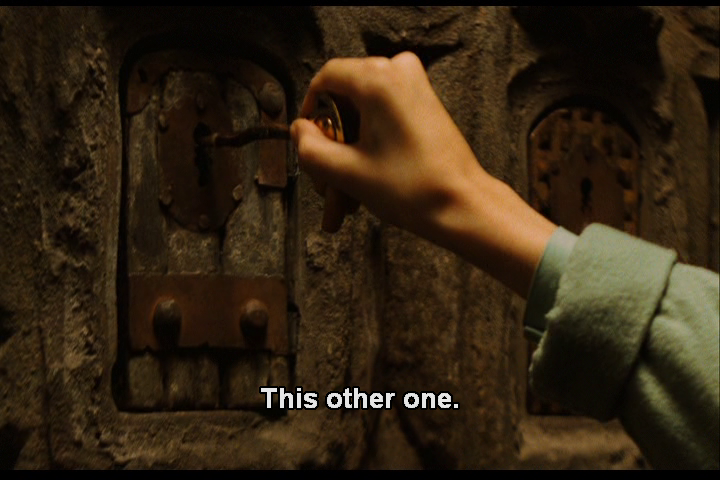
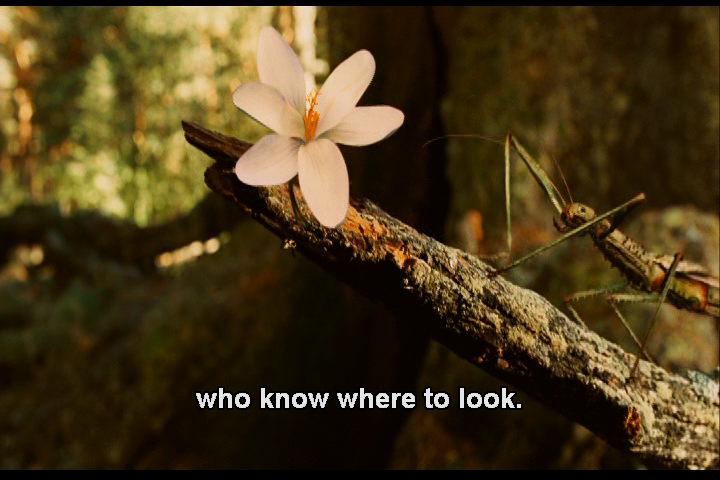
(64) The Body Snatcher (1945, Robert Wise)
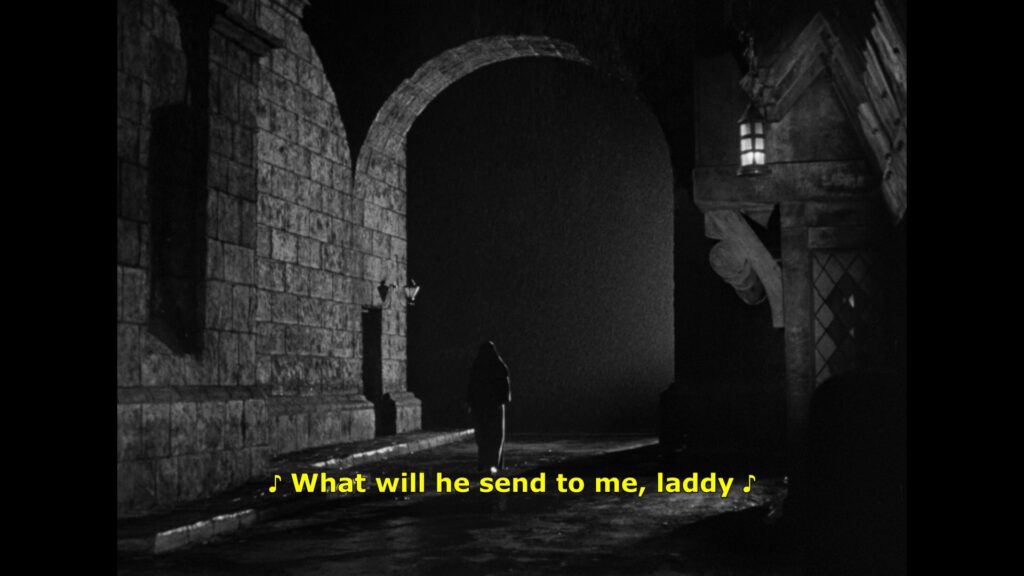
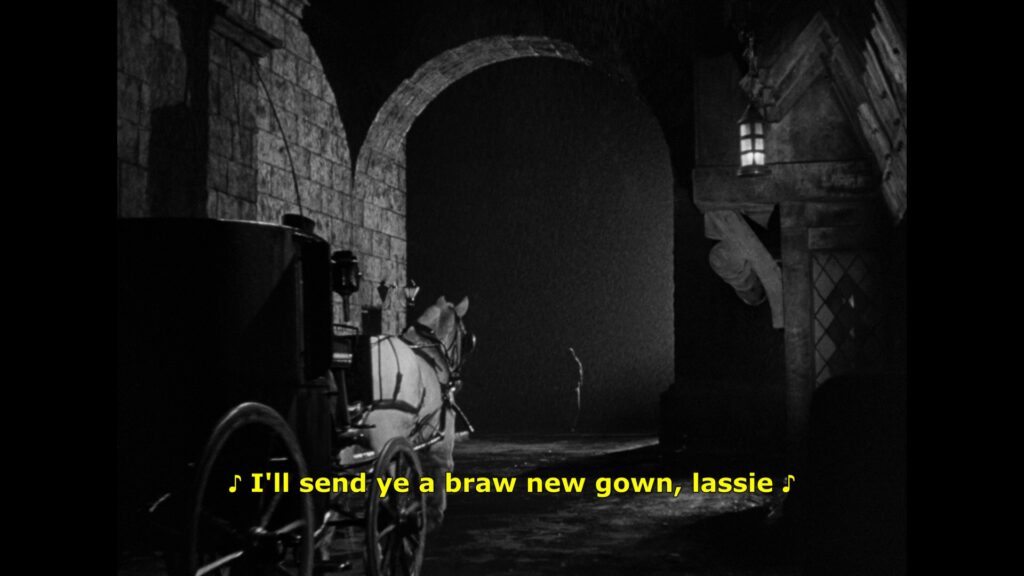
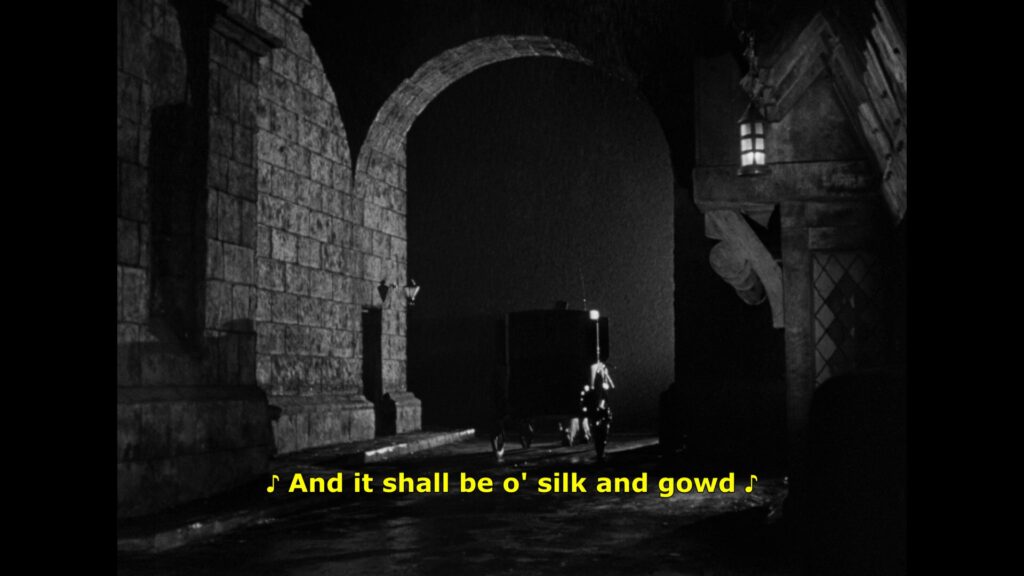
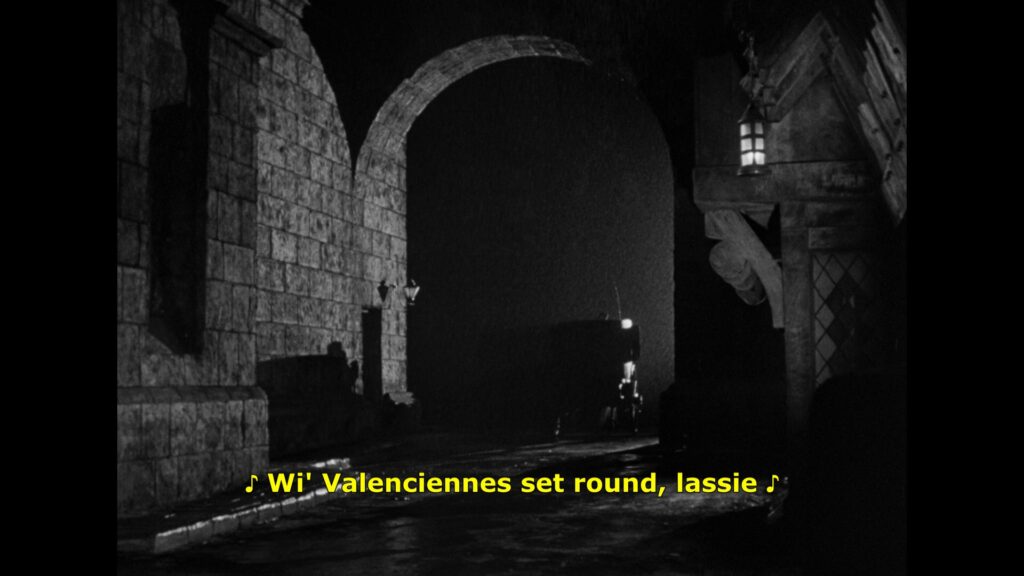
Most of Val Lewton’s films register the yawning darkness of the human condition, but perhaps none more so than The Body Snatcher. This element is most summed up in the film’s most famous scene: From the beginning, we get a young girl (Donna Lee) singing her angelic song, defining her as the personification of innocence and purity. The creators of the film make her the angelic (good) counterpoint of the corruption in the film. In a truly disturbing and painful sequence, we see her walk into a black maw/emptiness, followed by her specific evil counterpart, Gray (played so wonderfully-deliciously by the always precious Boris Karloff!). As Gray’s carriage enters the black void, the girl’s lingering singing (coming now from the impenetrable darkness) abruptly ends and we know she has been murdered by the evil Gray.
This moment punctuates the ripple effect of the film’s focus on corruption and immorality, the larger plot thread involving a doctor, Dr. Wolfe “Toddy” MacFarlane (Henry Daniell), paying Gray to sacrilegiously rob graves of freshly interred bodies. When that avenue dries up, Gray turns to murder, which MacFarlane goes along with. In this context, Macfarlane becomes a deeply ingrained allegorical figure, representing those elite figures who think that the ends justify the means, in this case seeing ordinary Others as inconsequential and even disposable. In this context, the film becomes a class consciousness story, revealing how wealthy elites see the poor, objects to be used for their own self-interests, whether that be money or prestige.The main crux of this thread is a young doctor, Donald Fettes (Russel Wade), the allegorical personification of an individual becoming a doctor for the right reasons, to help others, including the poor. Fettes becomes the classic case of being torn between maintaining his integrity and ethics and accepting a kind of Faustian bargain, selling his soul for him reconciling that the ends can justify the means, the “means” in this case being a child who needs dead bodies – fresh dead bodies – to cure her crippling disability. For a while, Fettes keeps reconciling going along with Macfarlane’s immoral actions, until he importantly breaks from this dehumanizing path.
(63) Interview with a Vampire (1994, Neil Jordan)
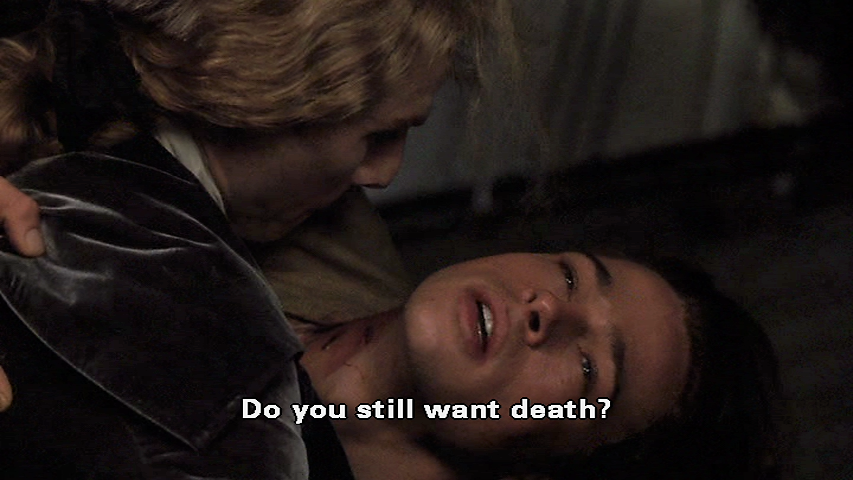
Okay, so we don’t actually get this queer element above as much as we should (I hear that the new series adaptation of Interview with a Vampire, which I haven’t seen yet, explores this element in the depth that it is just begging to be explored!) but it is there, between Louis (Brad Pitt) and Lestat (Tom Cruise) and and how they create a “family,” then later slight hints between Armand (Antonio Banderas) and Louis, part of the power of this provocative vampire film in general. That is, the “return of the repressed” elements that come through via the vampire film in general include sexuality in general (especially during more censored times and especially women’s sexuality) and still taboo desires, such as homoerotic desire. Vampirism has always been seen as a metaphor for sex (penetration, sucking, orgasmic reactions, exchanging of blood) and so when same sex interactions happen, it is by definition queer.
But I also think the film is thoroughly delicious in its various explorations of the dark side of humanity and especially in its gothic art direction — there are some really striking compositions and imagery in this film — which reflects and informs the film’s dark exploration of humanity. Most fascinating is how the film explores various complex aspects of the human condition. Via Louis’ tormented state of being, we see how he tries to resist a self-erasing hedonist way of life and try to understand what constitutes a human self, a self existing for life enriching meaning, purpose, direction, fulfillment. In this way, Lestat becomes the plumb hedonist constantly trying to lure Louis into giving into his Id, those appetites and desires that dehumanize us. In his torment over his desire to feed and kill — feeding on humans becoming the allegory for our own desire to indulge our appetites at the expense other people — we cannot but help to be Louis and thus understand better what it means to be a moral human being. Louis wrestling with his regrets and guilt also make him a powerful allegorical figure, his torment becoming a stand in for all of our own regrets and guilt over our own primal/hedonist choices. Of course, that Lestat is at least initially coded as an aristocrat, we can also see how the wealthy see Others as disposable, as prey for their predatory desires.
Also interesting is how Louis ultimately seeks out meaning and purpose, largely through his insatiable desire for knowledge, which, I should add, if I were a vampire, oh my goodness, I would soak up the knowledge of the world! Finally, in one tantalizing moment, Louis asks Armand his knowledge of God and Armand of course responds that he knows nothing of God. Louis’s response is telling. He says “Then it’s as I always feared.” This whole exchange suggests that because vampires even exist in all their hedonistic “evil,” that God can’t possibly exist. The radical allegorical power of this moment suggests that it is the same for any hedonistic “evil,” which we get with so many wealthy elites who are not unlike vampires, living to consume. In other words, this incredibly powerful exchange between Armand and Louis speaks to how humans can’t rely on a non-existent God for morality, but rather, like Louis, they can only depend on themselves for guidance on how to live morally. Moreover, even more strikingly, just as the vampires create their own “evil,” we create our own “evil” in the real world, or, in other words, “evil” is not about some preternatural thing but rather just part of the human condition, a human thing.
(62) The Autopsy of Jane Doe (2016, André Øvredal)

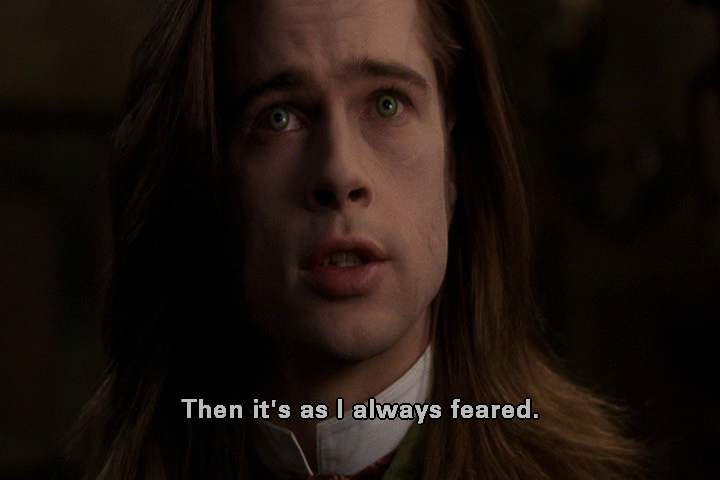
The Autopsy of Jane Doe surprised me. I had heard a little bit about it before screening it but not enough to suggest that it was a superior horror film. At the heart of this complex horror film is a woman who has been tortured beyond comprehension and in this has been transformed into a vengeful entity enacting her pain and suffering on others. That the main others in this case are two men can’t be coincidental, and two men who unknowingly attempt to do the very thing other “men” did to her – violate her body sovereignty. This scenario is the classic case of evil not being born but being created, and the creation of such evil often can be traced to toxic ideologies (misogyny, toxic masculinity ideologies [patriarchy, phallocentrism, hypermasculinity, sexist gender norms], religious belief systems/Christianity, etc.) that make Others (women in this case but also people of color, LGBTQ people, etc.) the subject of their sadistic treatment. This fits Robin Wood’s important concept of the “return of the repressed” to a T, where the “monster” represents the “return” of all that society has “repressed,” in this case, the centuries long oppression and violation and killing of women.
In addition to being deep, I was also surprised by how unnerving I found the film! It is really hard for a horror film to scare me anymore, which is why I never make “scary” a criteria for a good horror film, since “scary” is just so subjective and in any case for most horror film fans, not really a thing anymore. And while I wouldn’t say that The Autopsy of Jane Doe scared me, it did give me some anxieties at times. And that stems from its twist, the answer to the mystery of “Jane Doe,” that and that these two men we come to care about are locked away with her in a dungeon-like space that adds to the intensity.
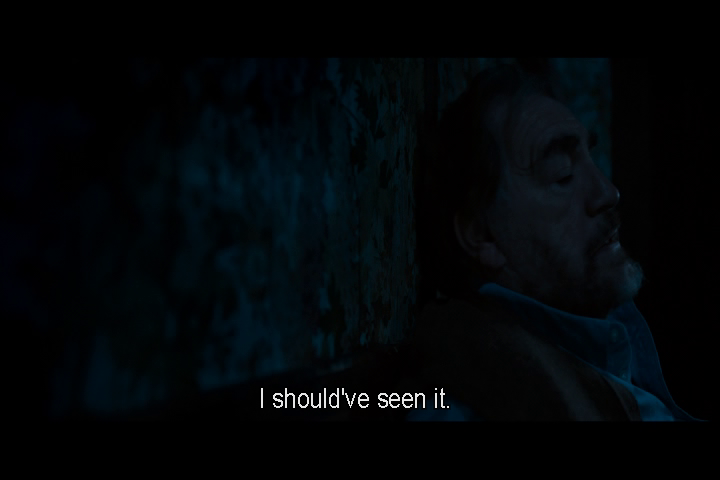
For an excellent in-depth analysis of this film, check out Paul Wooldridge’s piece on it.
(61) Candyman (2021, Nia DaCosta)
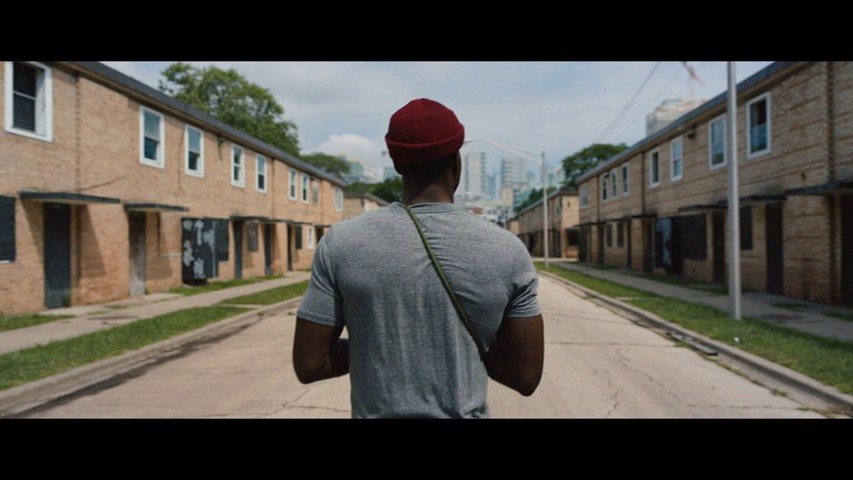
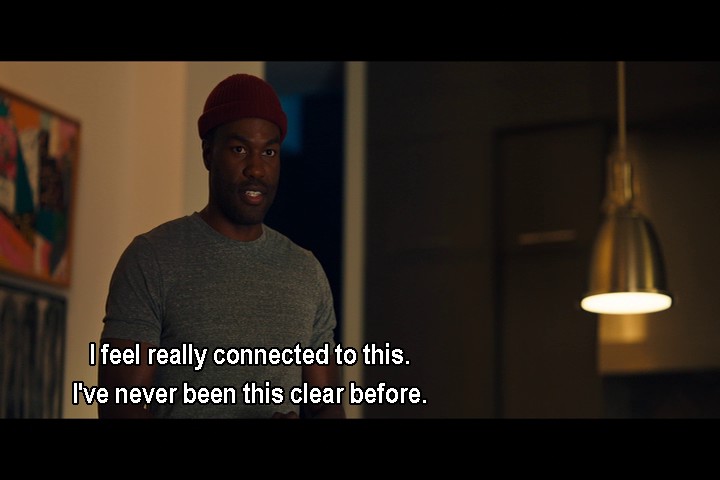
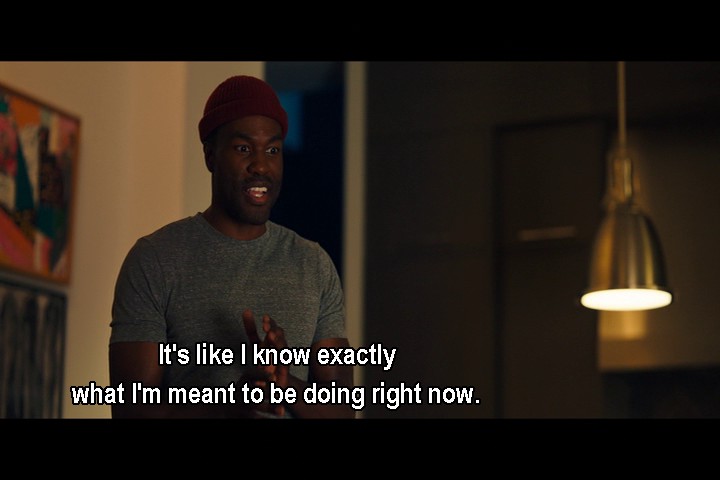
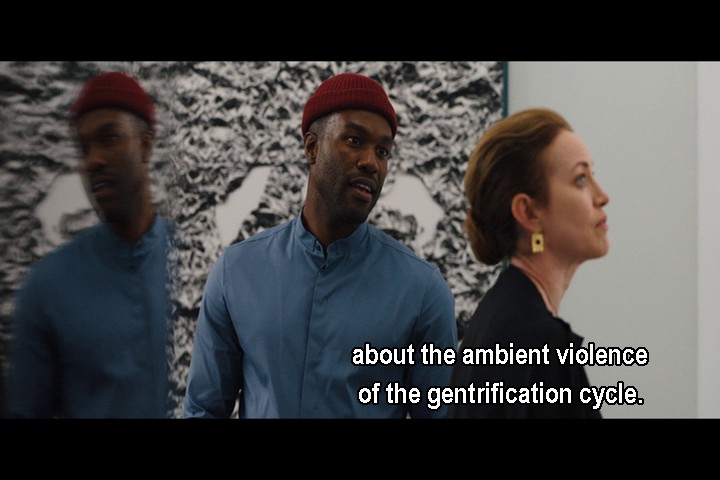
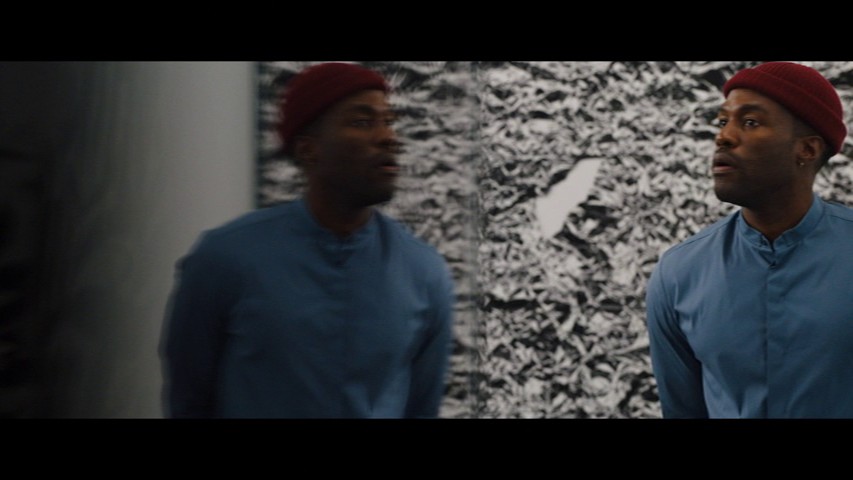
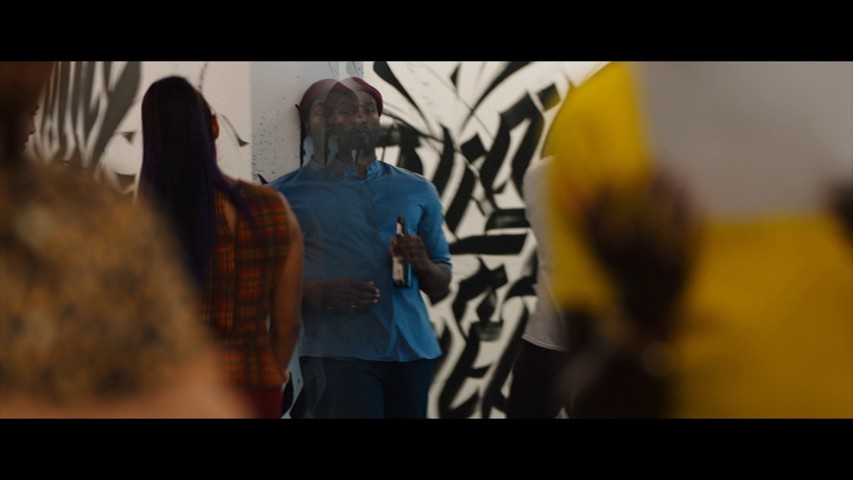
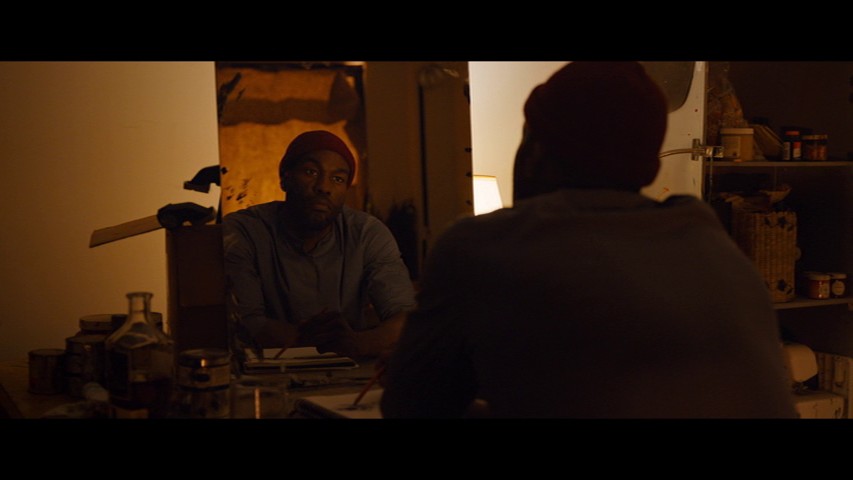
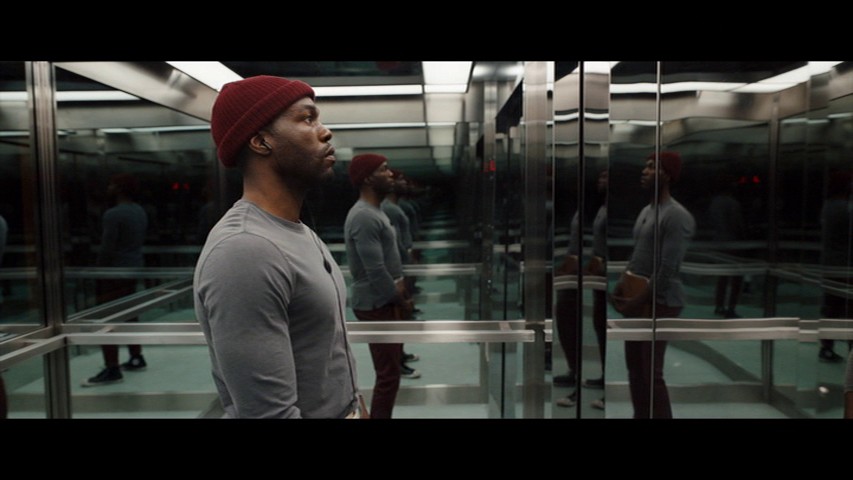
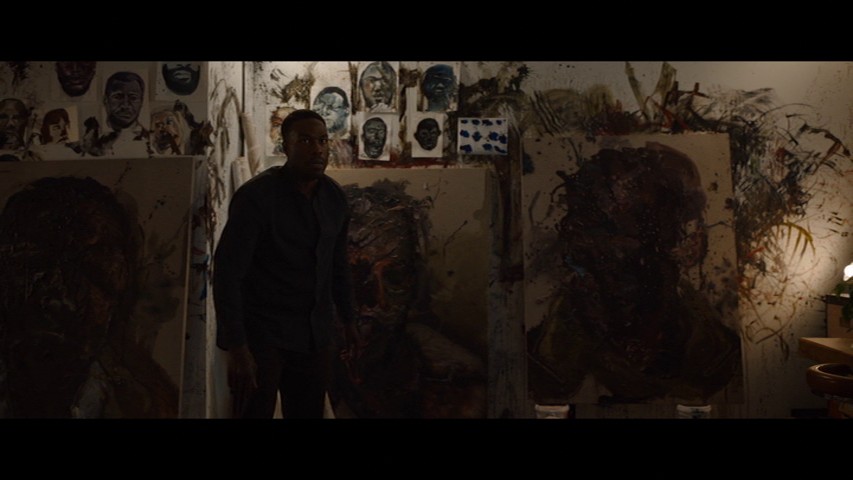
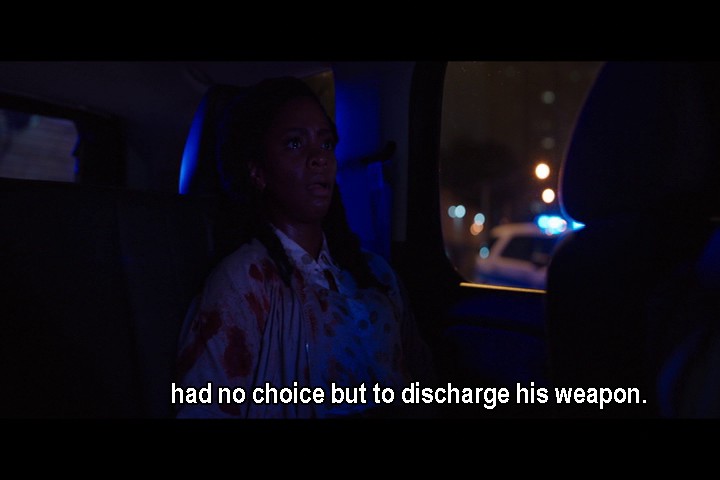
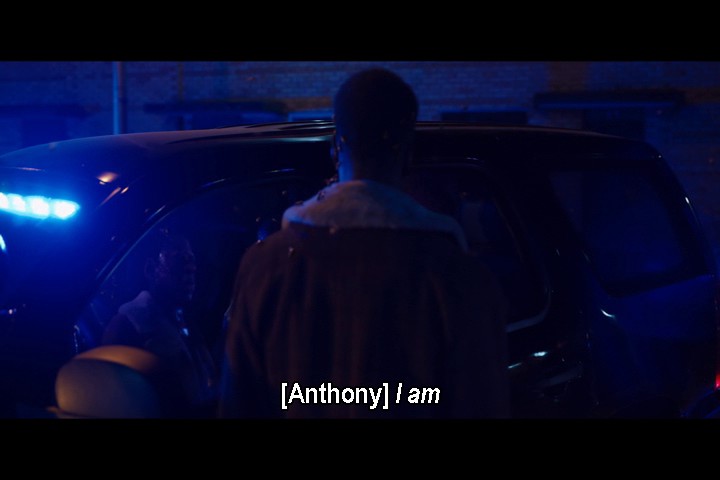
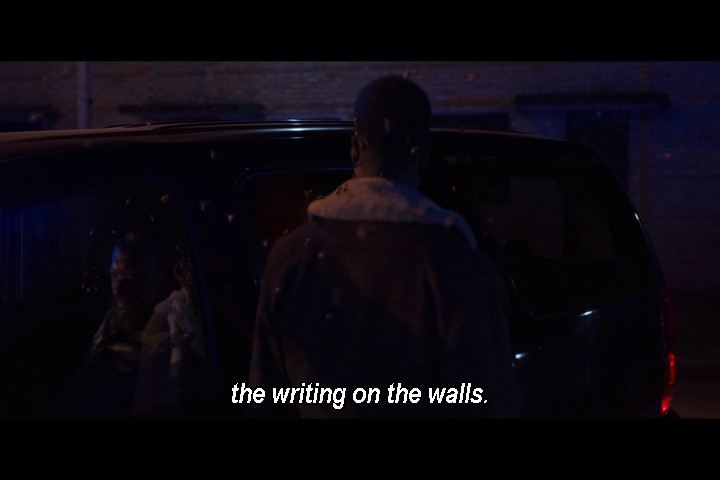
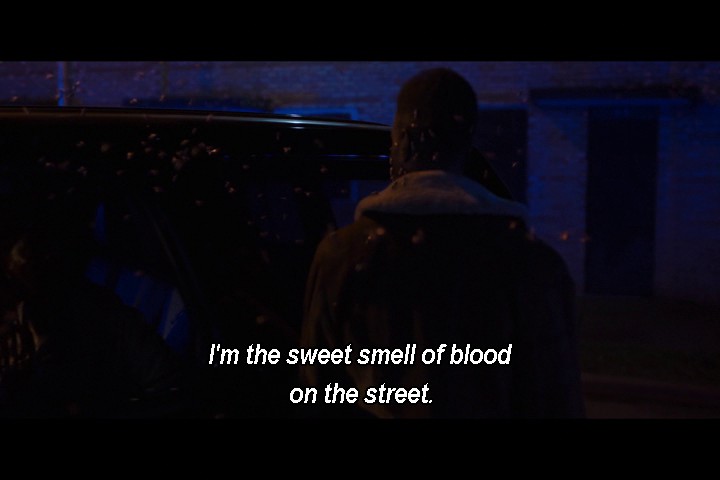
I will be the first to admit that the latest Candyman is a bit messy and uneven in pacing (some of the editing and transitions are clumsy and lack flow) and that some of the plot/story choices are weak (uh, why did they put a hook on his arm??), but oh my goodness does this film do what I would strongly argue is the potentiality of the horror genre, allegorically connect real world (human condition) horrors with horror genre tropes. As so many other analysts have focused on, the film does a better job than the first film in making the “Candyman” character represent “generational trauma,” especially with what it adds to the picture, a “hive” emphasis that stresses how the Black experience isn’t just about what happened to one individual but something that has happened to many Black individuals, especially Black men. More pointedly, the film directly connects racial violence against Blacks to the specter of Candyman, a “return of the repressed” monster if there ever was one, e.g., he becomes the repository of the horrors and atrocities inflicted on Blacks throughout history, which includes white supremacy/racism in general, white supremacist oppression and violence (lynchings, etc.), law enforcement killings of African Americans, and gentrification.
In terms of the latter, one thing this film does that I appreciate so much is its focus on gentrification and capitalism itself, how white supremacist interests create “ghetto” spaces for Others (in this case Blacks though this is also the case with other Others, including other people of color and low income people) and then gentrify them, buy up these spaces for whites and corporate interests, jacking up prices that then drive Others to a different margin of society. But the film doesn’t stop there, targeting other ways that capitalism influences thought, including of course creativity and how the art world is corporatized, forcing artists to paint not just their desires and passions but for what will make money, which, for Black artists, is often not a focus on white supremacy/racism.
(60) Thirst (2009, Park Chan-wook)
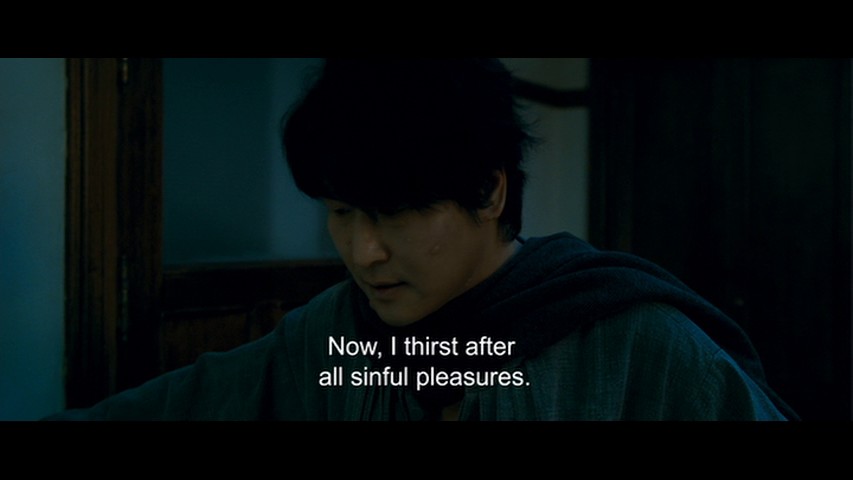
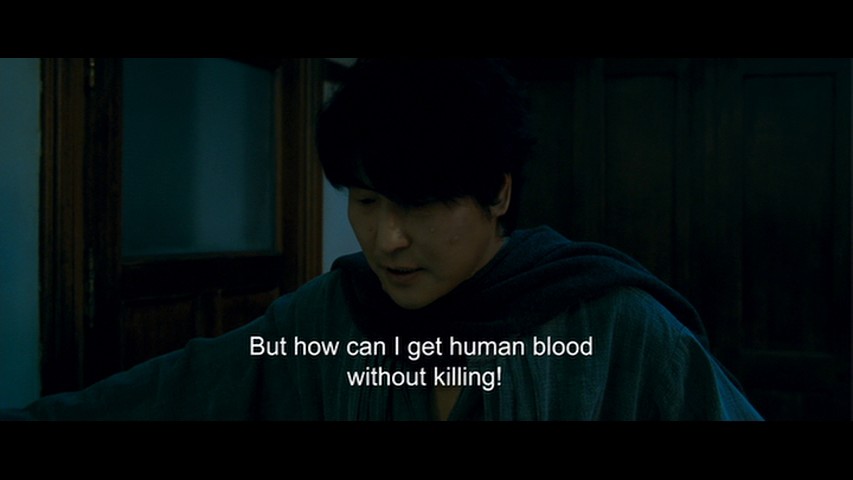
Like Interview with a Vampire and The Addiction, Thirst uses the vampire trope to explore the most existential facet of the human condition, wrestling with our still ingrained baser (primitive) selves, that part of ourselves that accounts for what Freud called our Id, our most primitive appetites and desires.
Before I get to what I think is deep in this film, I must stress that while I really like this film overall, for me, the middle part of the film sags a bit. I really hated the whole guilt scenario, Sang-hyeon (Song Kang-ho) and Tae-ju (Kim Ok-vin) apparently experiencing guilt after murdering Tae-ju’s husband (Kang-woo/Shin Ha-kyun). I also didn’t find the whole blowout between Sang-hyeon and Tae-ju that leads to him killing her organic at all. In terms of the former, while I accept that Sang-hyeon might feel guilt at what he did, it just seems strange for Tae-ju to feel anything but happiness for this act. Moreover, for me, the way that Park chan-wook represents this guilt was just silly and took me out of the film for a while. In terms of the latter, Tae-ju’s appeals to her mother-in-law (Mrs. Ra/Kim Hae-sook) seems to suggest for the only moment in the film that Tae-ju feels something other than hate for her husband and mother-in-law. Earlier in the film, Tae-ju says they have treated her like a “dog,” which is evident in what we see, how she is verbally and psychologically degraded at every turn, not to mention treated like a servant in her own home. Thus, the moment when she asks her mother-in-law for forgiveness for killing a man she herself wanted dead, is a strange, bewildering, off-putting (inorganic) moment for me.
The main deep thrust of the film is Sang-hyeon’s struggle to retain his humanity, his vampirism triggering those baser (hedonistic) desires and appetites we all struggle with. That he is a priest adds to his tormented (conflicted) state of being. Allegorically, we can symbolically say that vampirism and the desired consumption of Others that being a vampire brings reflects our own real world predilection to consume, including for many to in effect “consume” (use, exploit, ground under) Others. In other words, as Sang-hyeon and Tae-ju desire to accept their hedonistic desires and appetites to consume Others, consumerism (capitalism/consumerism=vampirism) fosters the same sort of hedonism in us, in effect encouraging us to be hedonists and live for our consumption appetites and desires whatever those might be (e.g., shopping, eating, pornography/sex, gambling, drugs, etc.). As we see with Sang-hyeon, to be (ethically, morally) “human” means to not consume Others – to not give in to one’s hedonistic desires and appetites.
Contrasting Sang-hyeon, we see how Tae-ju not only does not resist these vampire urges, she embraces them, an allegorical symbol for how to dehumanize one’s self, through desires and appetites that lead to consuming Others, in whatever form that might take. For Tae-ju, that means directly feeding on Others; in the real world, that might mean consuming (sweat shop or slave labor produced) products or people (pornography/prostitution/sex trafficking) that harms or even kills Others, just to consume or feed one’s appetites and desires. It is also interesting to think about how Tae-ju so easily accepts her psychopathic (hedonistic) vampire self perhaps because she is sociopathically degraded most of her life. Such a cruel and degraded state of being almost certainly diminished her empathy and regard for Others, not to mention that most of her life is largely misery and not being able to find much pleasure in the world.
Even though I think the above is the main focus for the vampire trope in the film, filmmaker Park chan-wook does at least touch on what other vampire films stress, how vampirism can also be a trope for deconstructing ideological norms, such as queerness or women’s sexuality. In this film, we do see how Sang-hyeon beats himself whenever he gets aroused, a way to stress how at least some (most?) religions can often do this to people in general, make them think the natural (sexual desire) is unnatural (a “sin”). When Sang-hyeon finally accepts this part of himself – he has sex with Tae-ju who he seems to have genuine feelings for – we can see that at least this facet of his vampirism has freed him from the conflicted (unnatural) taboo of a priest being sexual.
I must just add here that I love the ending of the film, with Sang-hyeon finally resigning himself to the reality that Tae-ju is hopelessly lost to her psychopathic appetites and he himself lost to not being able to leave her – again, he seems to genuinely love her – despite his imperative to be moral. His only way out of this bind is what we see play out, a suicidal act on his part that ends his visceral torment. In this way, Sang-hyeon’s last act in the world is a moral one, the only choice he has to end both his torment and the immorality he has unleashed on the world.
(59) Let the Right One In (2008, Tomas Alfredson)
So, for me, Let the Right One In is just such a difficult film to reconcile. On the one hand, it is just such a powerful and profound film about “letting the right one in,” that risky proposition of opening one’s self to others in the hope of finding the “one” who we can put our unconditional faith, trust, and love in, the “one” who will accept our self unconditionally. In that context, the relationship and bond that develops between Eli (Lina Leandersson) and Oskar (Kåre Hedebrant) is truly special, as each gives the other what they need, that special loved one who one has absolute trust and faith in and will support each other in whatever way one needs to be supported.
On the other hand, there is what I see as the film’s nihilistic element, especially the ending of the film and the truly devastating implications of it. On repeat viewings, this element comes through so palpably, to the point that I wonder if it negates the above element in the film entirely for me???
So much to explore in this complex and deep film! See my full length blog post for my deeper dive into the film.
(58) The Invisible Man (2020, Leigh Whannell)
I must say that when I first watched this film, I loved it simply for just being well made and wildly entertaining, the latter including being genuinely anxiety inducing. But as it settled in my mind and with a repeat viewing, the film also becomes deep for me, the deepness stemming from what many writers have written about, the nightmare scenario created in the film becoming an explicit allegory for domestic violence and both the physical abuse and mental duress that victims have to endure. More specifically, the film captures so much of the trauma that a controlling abuser can inflict on his or her partner, including even a loss of self, which stems from every facet of being controlled by an abuser. Moreover, the “invisible” part of the film is a perfect, albeit disturbing, metaphor for the “invisible” aspect of this control, from getting others to take seriously the abuse to the many ways that a controller can control their victim’s life, even when they are not a part of it, the psychological hold is that great. The film gets at this trauma early in the film, even before the “invisible man” enters the picture:
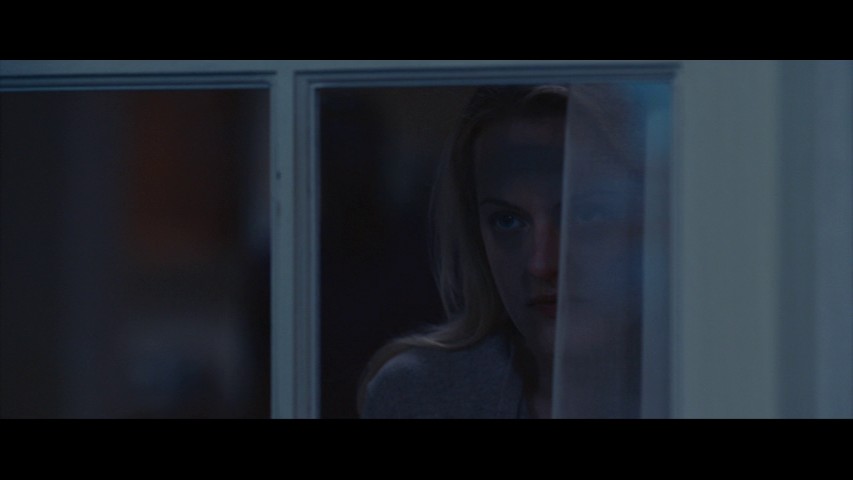
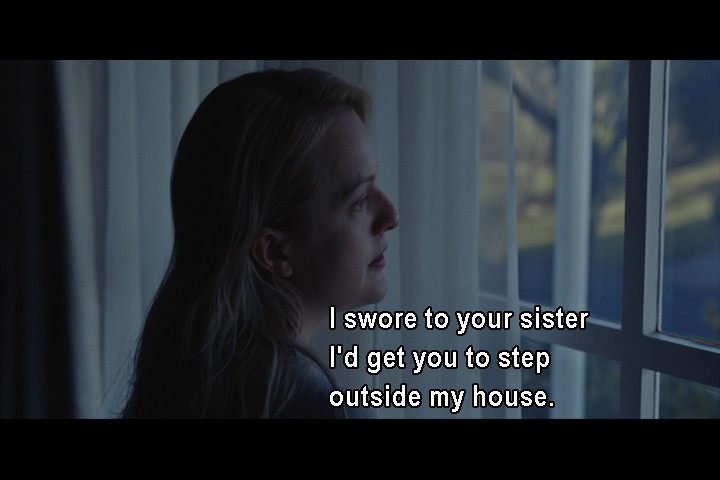

I should add that another facet of this film is Adrian’s wealth and power, rich elites becoming all the more oppressive due to the power they wield in a society that allows them that kind of power. Finally, I just must stress that part of the power of this film is in Cecilia overcoming Adrian, taking back her power and her self, an inspiring testament to all victims who have done the same thing.
(57) 28 Days Later (2002, Danny Boyle)
In addition to all the other reasons why 28 Days Later is so good — so well made (direction, writing, cinematography, etc.); creating fast moving “zombies,” making the film extremely intense — what’s so striking about 28 Days Later is how it gives us both a dystopian and utopian vision. In terms of the former, we see yet again what humanity can become when society/civilization collapses, especially as informed by toxic masculinity, the military/militia men creating a barbaric, primitive authoritarian group who prey on Others, though I must say, in terms of toxic masculinity men, they don’t need a dystopia to be toxic. The “rage” “zombie” they keep chained up (Private Mailer/Marvin Campbell) could be seen as this group of men’s mirror image, a creature living to consume Others. Indeed, the allegorical potential of the zombie trope speaks to this in general, the “return of the repressed” of zombies being just that, an allegory for how humanity consumes each other, especially Others.
In terms of the utopia angle, the film does something really well that many such films do, create a “found family” dynamic with survivors, their egalitarian bonding giving us an egalitarian, humanist vision of what humanity could be, a powerful positive counterpoint to the self-centered toxic masculinity of the militia men.
Finally, the creators of the film ostensibly said the film is an allegory for all the “rage” in society, which I think is potentially telling, but I don’t think they develop this allegorical model very well. More pointedly, the references to animal experimentation and experimenting with viruses for dubious reasons are also important elements in the film, the latter of which is a real fear, that our unnatural tampering will lead to an extinction level virus.
(56) 28 Years Later (2025, Danny Boyle)
The real follow up to 28 Days Later (forget the not horrible but not great either 28 Weeks Later) is this worthy sequel. Like its predecessor (28 Days Later), 28 Years Later is incredibly well-made, intense, and wildly entertaining, but also like its predecessor, it goes deep with its commentary on toxic masculinity. We get this focus in many ways, some subtle, some didactic. In terms of the later, when we get to the island, Boyle and Garland give us some effective over-the-top analogies that link what the father, Jamie (Aaron Taylor-Johnson), and the community he lives in are doing to, well, apparently it seems, boys (we only see boys getting trained I think), which in itself is a sexist commentary on gender/masculinity norms. Now, it’s totally understandable that in a world with “rage zombies,” young people would have to be taught to kill these creatures, but the way they do it informs toxic masculinity ideologies and how such ideologies are (self) destructive.
In terms of the analogies, Boyle gives us some striking real world footage of what looks like youths getting trained to be part of a killing force, which seems to be a direct commentary on how what the father is doing with his son (at a too young age of 12!) — teaching him how to “hunt” and kill and feel good about it — is not a healthy approach to, again, doing what is of course necessary, killing. Of course, the real history footage, and the attendant reading of the Rudyard Kipling poem “Boots,” could just stress the endless “war” that humans are fighting with the “rage zombies” (the gist of the poem), but, for me, with other signifiers in play, it feels like the real world historical footage specifically reflects not so much an endless “war” that humans have fought in the past and continue to fight but rather how it is this toxic masculinity ideology that drives these wars, incubating in young people this equation that violence and killing are barometers for masculinity (see below for more).
For another thing, I thought it was interesting how Boyle and Garland seemed to create a kind of Oedipal scenario, with Spike (Alfie Williams) displacing his problematic father and becoming a healthier version of masculinity, both in terms of being more sensitive and tender and nurturing to his mother and not wanting to exaggerate (reinforce) his masculinity, lying about his prowess at killing.
In another provocative moment, in the opening segment, young Jimmy (Rocco Haynes) reaches his father (Sandy Batchelor), a minister, who crazily almost seems to normalize what is going on, accepting the slaughter by the “rage zombies,” calling it “the day of judgement.” When Jimmy says “Father, why have you forsaken me,” this becomes a very interesting play on words, the “father” bit both signifying how his real father has failed him — not so much in terms of protecting him but accepting the horrors that are happening — but also could be a way to scathingly interrogate toxic masculinity, or rather patriarchy in particular, since Christianity is a patriarchal ideological religion. In wondering how God has seemingly abandoned him, we could extend this to include how religion has failed humanity in general. Indeed, one could argue that Christianity has enabled many of the horrors inflicted on humanity.
Finally, the “Samson” figure (Chi Lewis-Parry) in the film is just too fascinating, an “alpha” or phallic leader, which also has to figure in on this commentary on the (“return of repressed”/REAL ) savageness (primal nature) of toxic masculinity ideologies in general. Even his name, “Samson,” resonates one of the most phallic fictional masculinity (Biblical) characters in history. Like the chained up rage zombie (former soldier) figure in the first film, “Samson” becomes the REAL of toxic (“Alpha”) masculinity, savage, primitive, primal, all-consuming.
I am leaving out a lot of interesting signifiers in the film (the medieval thread for one thing!). I will do a deeper blog post on the film at a later date.
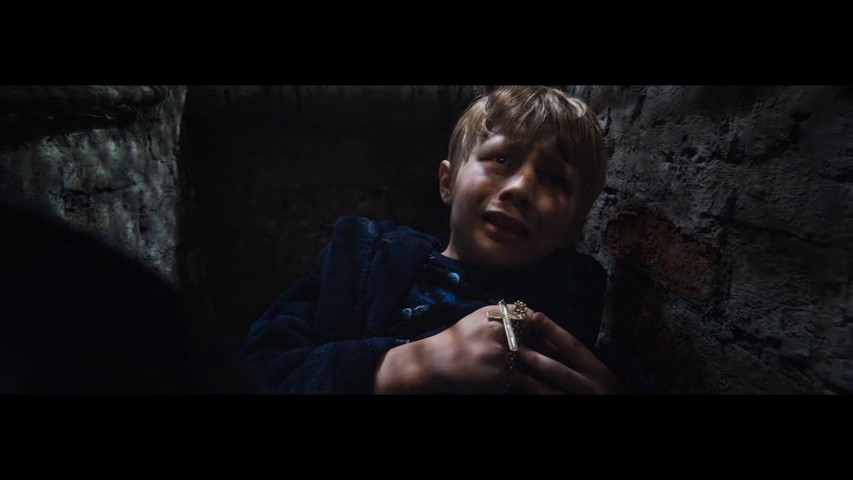
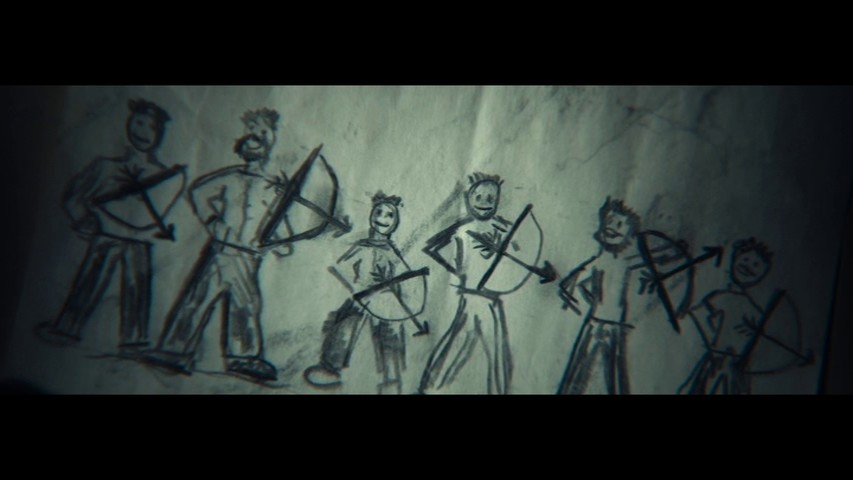
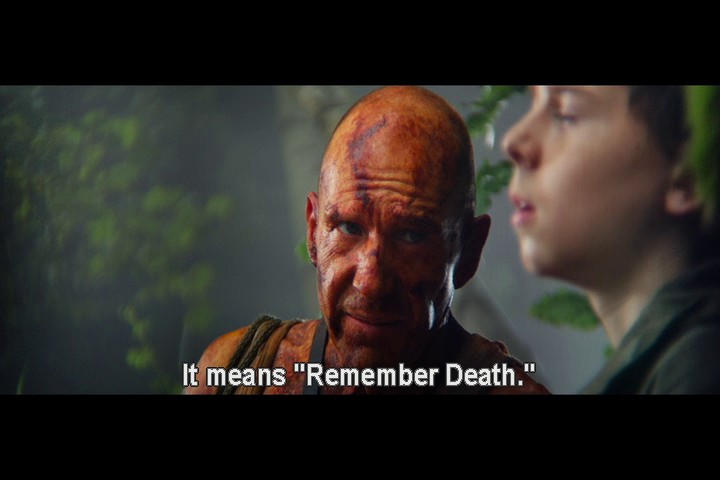
(55) The Girl With All the Gifts (2017, Colm McCarthy)
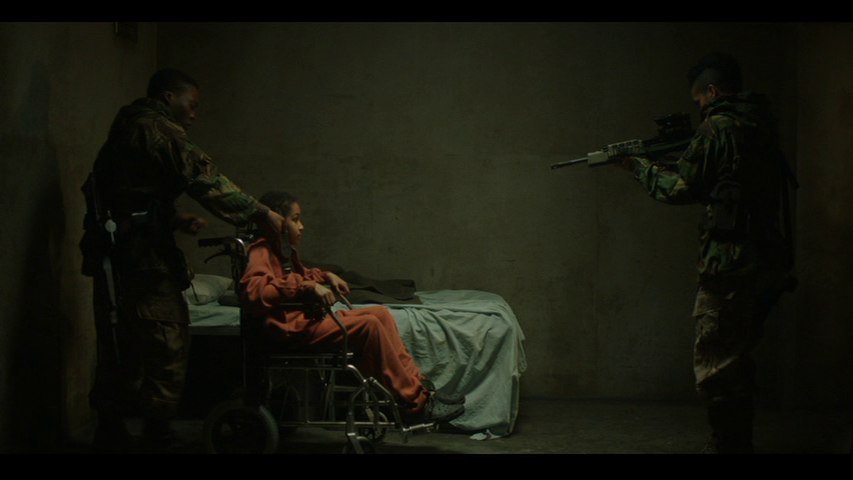
Despite some glaring contrivances (come on, how can the dog still be alive!), I loved this film! For one thing, the film gives a fresh spin on the zombie sub-genre of horror. Just when I think no new spins can be created for this well tread sub-genre of horror, I get this zombie film with yet another interesting take. The film has got lots of fun and interesting twists and characters and of course the requisite tension and horrific moments, but I think it also has some deep elements. More pointedly, I think there are two interesting allegorical elements in the film, which I will only just briefly sketch out:
First, the film seems to explore the notion of “free will” and how it’s not as clear as we would like to think. Melanie and the other kids cannot really control their baser appetites (allegorically speaking to our baser appetites and behaviors) though it is suggested that Melanie is developing control. (I could go on a long spiel on the conception of “free will” and how, like the children, we largely don’t have it but will save that for another time.)
Second, more importantly, the film does what AI (artificial intelligence) and clone films do in science fiction (well, at least, the more serious ones–see my “Favorite Science Fiction Films” blog post for more), e.g., it reveals how historically dominant social orders/ideologies have Othered those who are different (people of color, indigenous peoples, LGTBQ people, etc.) and have seen them as exploitable and/or disposable. Melanie (Sennia Nanua, in just a superb and endearing performance) is the Other, both in terms of her “zombie”/human hybrid Otherness but also in her casting, e.g., Nanua is a young female of African descent. That we come to care about Melanie despite her, um, predatory appetite, speaks to our own potential (and the incredible potential of film) to open our minds and accept and embrace Otherness in all of its manifestations. Yes, that means in terms of humanity (people of color, people with different beliefs, LGTBQ people, and so on) but that also means in terms of any other present (other sentient species) and future possible permutations of Otherness, whatever that might be. In other words, what films like The Girl with All the Gifts do is evolve our minds to accept and embrace Otherness in general, breaking down the dehumanizing self/Other divide in the process.
Finally, I just want to touch on one other fascinating phenomenon going on in film (the recent Planet of the Apes films and Alien: Earth) and other art forms, the truly bizarre phenomenon of choosing other forms of sentient beings over humans! In this case, Melanie chooses her human/zombie hybrid species over humanity, Melanie seeing in humanity nothing to suggest that it is better than her species and based on what we know about humanity, I don’t know if she doesn’t have a case!
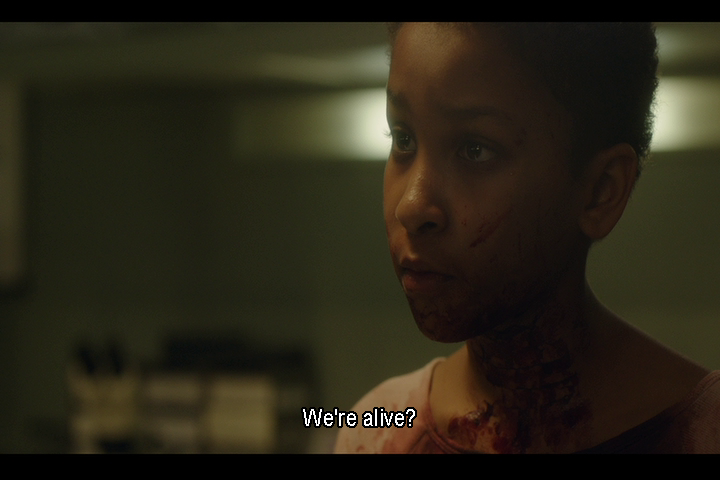
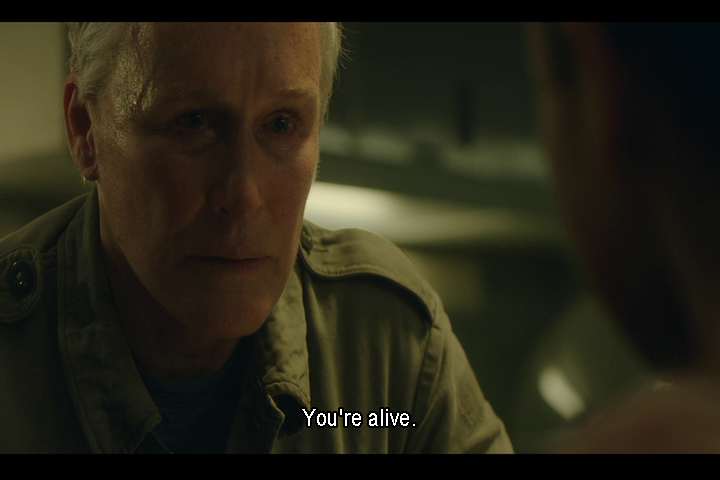
(54) Eraserhead (1977, David Lynch)
I know some horror fans will dispute Eraserhead being a horror film, but I can’t think of another horror film that creates a nightmarish landscape and general horror sensibility like Eraserhead does. This extremely bizarre and experimental film is one of the most difficult-to-unpack films in film history, and I may at some point take on the challenge of unpacking it, but for now here are some key elements in the film that I think speak to both its horror elements and its deepness:
To begin to get at the horror facet of the film, Julia Krestiva’s focus on abjection is the place to start. The film gives us one abject (repulsive) image after another, including of course the core focus in the film, a nightmarish “baby” that looks decidedly not human. Its incessant wailing and creature like features make it a disturbing and abject monstrous entity. And yet Lynch inexplicably makes it so fragile and needy that we can’t help but feel sympathy for the poor thing. (I’m especially thinking of that moment when Henry tries to leave his place and the creature wails in protest, a strange moment that at least tugged on my feelings of wanting to nurture the pathetic creature!) What’s so truly horrific about this scenario is that the creature seems more in a tortured state, creating a complex binary for spectators, one where we are both repulsed by it (and perhaps want to see its misery come to an end) and come to feel sorry for this living sapient thing. And it is this complex binary itself that threatens our sense of boundaries, between protecting (sapient) life – it is of course sacrosanct to do any harm to infants in particular – and putting a life form whose only mode of existence is suffering out of its misery, perhaps one of the most horrific modes of being one can be in.
Adding to this strange mix is the recurring motif of parasitic creatures throughout the film, especially in the moment when these creatures rain down on the “Lady in the Radiator” and she begins to crush them under her heels, the splattering of them making this moment yet another abject moment. Even more grotesque is when Henry starts pulling the creatures out of Mary X, an extremely disturbing scene!
That only begins to get at the abundance of abject elements in the film, which include the “Lady in the Radiator” herself (excessively cheerful but with weirdly tumorous cheeks), the deformed man (“Man in the Planet”) pulling the levers, the strange “man-made” chickens served to Henry (leaking some bizarre liquid), to name just a few of the many abject, horrifying elements in the film.
In terms of deepness, what does this all add up to?
Kristeva said that which repulses us speaks to something deeper in us, that which “disturbs identity, system, order.” In terms of the wailing baby-like creature, it may indeed be (many people have made this reading) that this abject element in the film speaks to the parasitic (abject) nature of childrearing, how childrearing does have a parasitic facet to it, e.g., how children demand so much of ourselves for them, something that no one wants to talk about.
More generally, the baby-like creature and all the abject elements in the film suggest a deeper level of animus towards our own sense of being, the deep down sense of our own dehumanized state of being in a dehumanizing world.
Most striking are Lynch’s mise en scenes, virtually every setting or space drained of anything approaching warmth, the choice of black and white photography adding to this vision. The much talked about bleak industrial landscape especially reflects this nihilistic (dehumanized) vision of humanity, but the austerity of interior spaces add to this cold sensibility (that window set against a brick wall!). This aspect alone seems to register a core part of Lynch’s vision in this film, a humanity who has become wholly drained of life, dehumanized.
One of the most telling moments in the film that particularly punctuates this bleak picture of humanity is when Henry’s head comes off (displaced by the creature, a punctuation of Henry’s own dehumanized state of being), his decapitated head then being used to manufacture pencils (the graphic match of his high hair punctuating this allegory), a commentary on how people are commodified, used to create commodities, part of our reified (objectified, dehumanized) state of being.
The deformed man (“Man in the Planet”) who we see pulling levers also seems to inform this vision, the suggestion seeming to be that someone or something is pulling the levers of Henry’s (our) fate, an allegorical way to suggest a truth about ourselves, one possibility being a truth about our working class plight in a capitalistic (controlling, abjecting) ideology.
In other words, in short, the abjection of the film is the deeper implication, how Lynch has put us in a dreamlike (surrealist) reality that radically disrupts our sense of being (identity, system, order), a way for us to rethink our seemingly healthy reality, a seeming healthy reality that is really hiding (Lynch giving us) an abject/dehumanizing REAL.
Again, I’m leaving out a whole lot of signifiers here, but I will leave it at that for now.