(38) The Substance (2024, Coralie Fargeat)
I must say that after watching The Substance a second time, my view of it has changed a bit. Perhaps because I was more prepared for it and more putting it under my analytical lens, the film’s deficiencies became more glaring. What I took to be daring and audacious over-the-topness and incisive didactic messaging now seems a little off putting for me, not to mention that I wonder how seriously people will take the deeper messaging of the film if they are turned off by these in your face body horror elements??? And I do want to emphasize that I am a defender and champion of didactic art, but the creators of this film maybe go too far even for me, hammering their point over and over and over again. I also question how the filmmakers use a wide angle lens and close-ups to magnify Elizabeth’s older age, giving it/her an abject sensibility that almost seems to me to at least somewhat undercut the messaging of the film, that Elizabeth self-defeatingly sees her aging body and looks as abject, the shots of her aging body almost reinforcing that self-destructive point of view instead of countering it. (I do think the vital scene when Elizabeth is getting ready for a date with an old admiring classmate effectively counters her seeing herself as abject, which I will come back to.)
Having said that, despite what I see as some weaknesses, I still think the film is important and complex and deep. For me, here are the core deeper elements in the film:
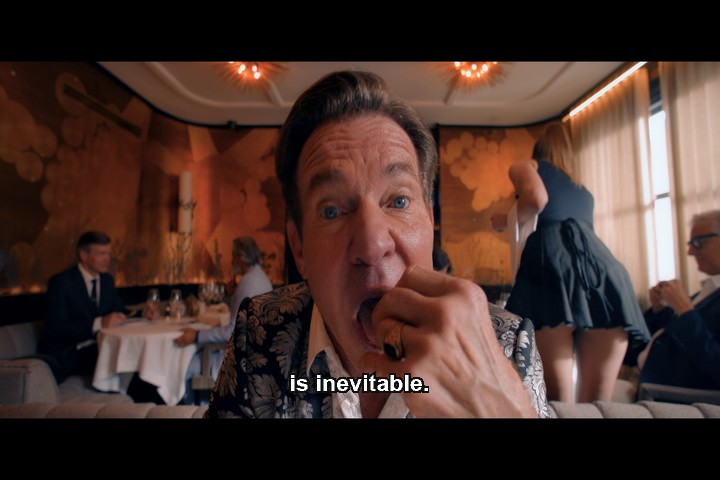
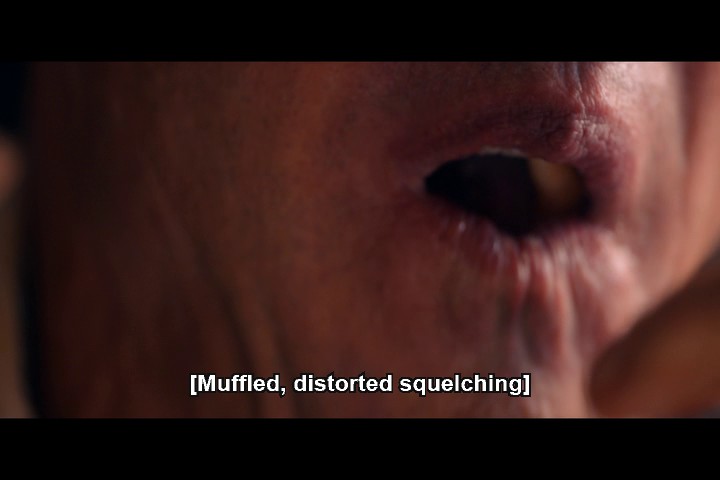
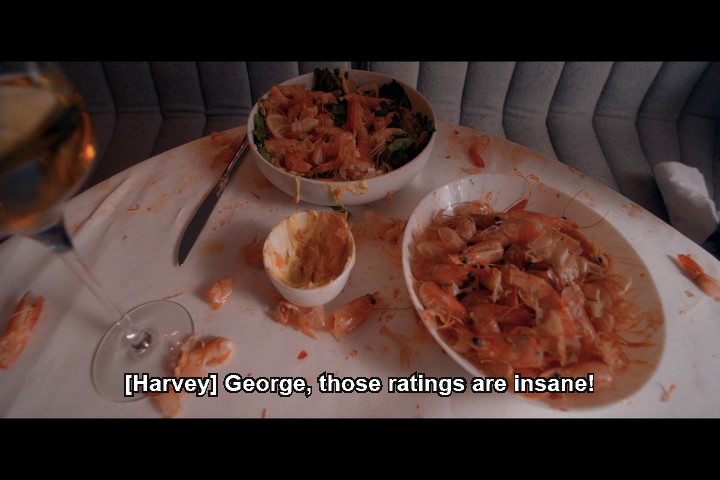
Harvey (Dennis Quaid): Harvey is an allegorical character if there ever was one. The already famous scene where director Coralie Fargeat uses a wide angle lens and extreme close-ups of Harvey eating shrimp immediately makes him disgustingly abject, hyper stressing his single-minded consumption appetite, living just to consume and nothing else. Throughout the film, he is incessantly only interested in ratings and profit, the quintessentially “fat cat” whose food consumption appetites metaphorically mirrors how he sees people, as disposable, as purely made for his own consumption or as a way to commodify them for the consumption of others. The two males who do the tryouts and the old white male “shareholders” also fit this allegorical mold, the film clearly creating not just commodifying individuals (toxic masculinity men) but allegories for capitalism-consumerism, the root cause of the commodification of human beings.
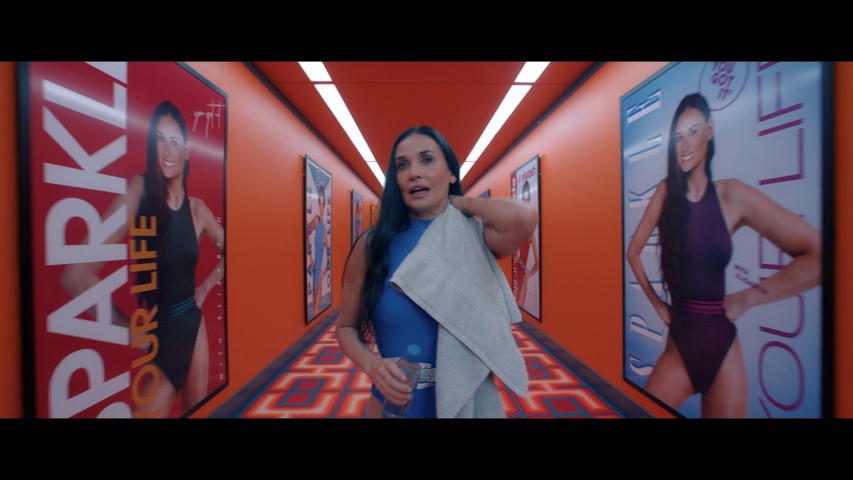
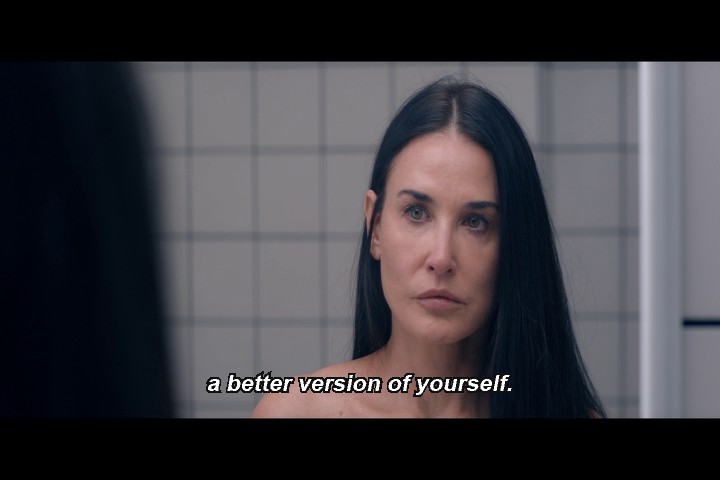
Elizabeth (Demi Moore): Often unnatural body representations for women stress thinness, “perfect” body “parts” (breasts, etc.) and “perfect” (youthful) beauty, the point being that such a way of thinking and being is “unnatural” because women (humans!) aren’t made that way but then covet that impossible-to-achieve look anyway. The creators of this film focus on that of course though their particular focus is on aging and the really disturbing way we abject aging bodies, the natural aging process (sagging body parts, wrinkles, etc.) seen as abject compared to the glossified “perfect” bodies represented in mass media discourses (advertising, films, TV, workout shows, etc.). More particularly, what this film does so well is materialize the way so many women (and men too though in a different way) Other themselves, create a kind of interior split in their minds between their own self-loathing of their aging or just “imperfect” bodies and the unnatural body they covet. In this way, Elizabeth becomes a truly heartbreaking allegorical subject of this process, Harvey seeing her aging self as abject and disposing her like he would garbage. That begins the self-harming process of her downward spiral to self-annihilation. More on this in a moment.
Sue (Margaret Qualley): Of course, Sue becomes the allegorical stand-in for all women who are eroticized, sexualized, commodified, objectified, dehumanized.
In this utter commodification of the self, again, we see how Sue bizarrely not only Others (abjects) her own self (Elizabeth) but actually disconnects her self from Elizabeth, making Elizabeth a wholly different person. Elizabeth does the same thing but for different reasons, her extreme jealousy of Sue creating an irreconcilable schism, Elisabeth only seeing Sue as that which she can never be. That’s where it gets really interesting, how their perspective bodies and age actually dictate being. That is, instead of seeing each other as the same self, their bodies and age manifest a psychological perception of radical differentness.
It doesn’t help that Sue abjects Elizabeth more and more, to the point of self-disintegration. In this way, as I say above, the film does something quite remarkable, materialize this interior split that all women who subject themselves to this unnatural way of thinking and being, the film exaggerating this split for effect, making the split between two parts of the self so apparent that one can’t help but also see how damaging such an interior split would be, to the point of self-harming and even self-eradicating the self.
I should add here that such a way of (Othering, abjecting) thinking and being begets Othering and abjecting in general, Othering and abjecting becoming so normalized that it becomes normal to Other and abject people who don’t fit a certain standard of representation.
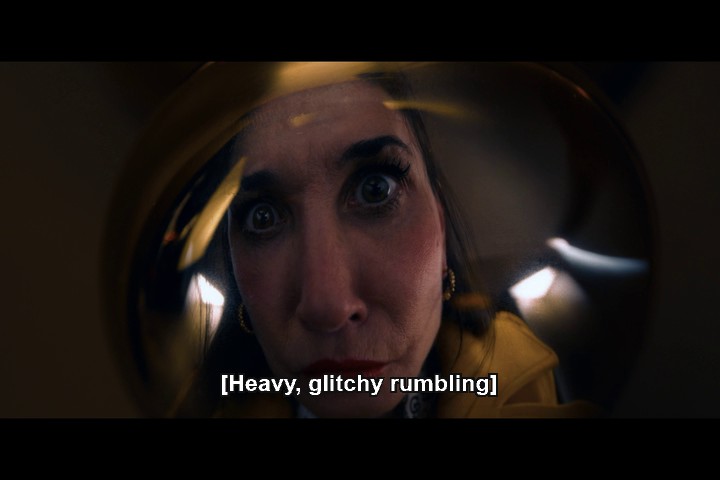
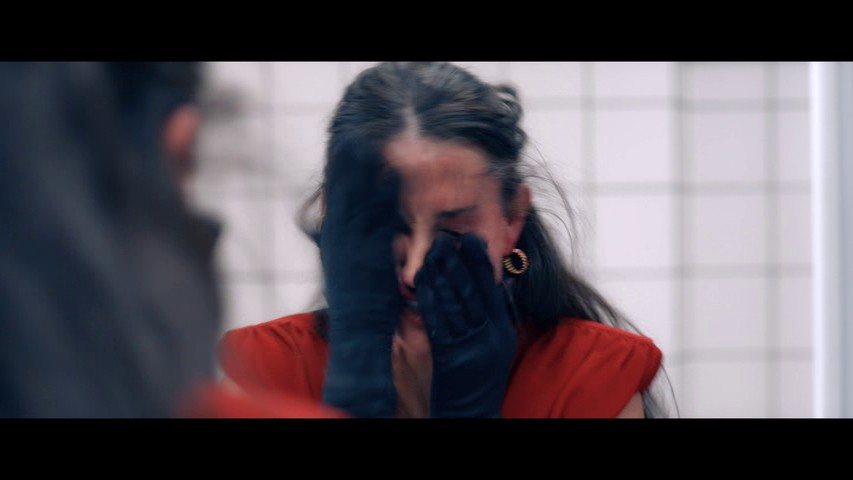
“Monstro Elisasue”: The last extreme form of abjection in the film – dubbed “Monstro Elisasue” – is the most difficult to unpack. For me, she represents four deeper meanings.
First and the most obvious is that she represents the extreme consequences of going down this road of pursuing an unnatural body and beauty standard. The allegory here I think is that by fixating on constantly attempting to recreate the self unnaturally, the ending result is an abject self, perhaps commentary on similar extremes that some people go to in the real world.
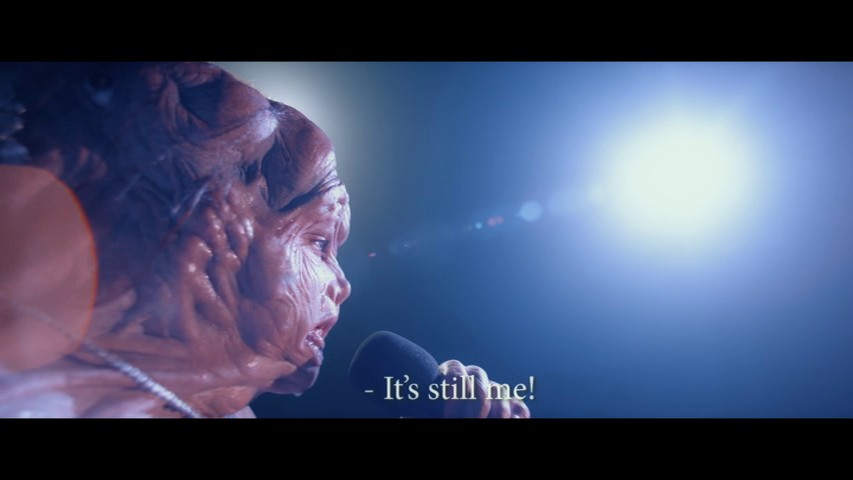
Second, by “Monstro Elisasue” actually going on the stage in place of the expected Sue, we get a distinct message: When “Monstro Elisasue” says that “It’s still me,” it feels as if the creators of this film are saying that this displacement is not a displacement at all, that Sue and “Monstro Elisasure” are one and the same, literally of course, but figuratively as well. Both are unnatural constructs, Sue the projected desire of consumers seeing in her that which they want to consume, Elisabeth “creating” her artificially (via a drug, a stand-in for all the other ways one can artificially create the self). In this context, while “Monstro Elisasue” is the obvious abject “monster,” Sue is as well, her unnaturalness informing her “monstrous” construction.
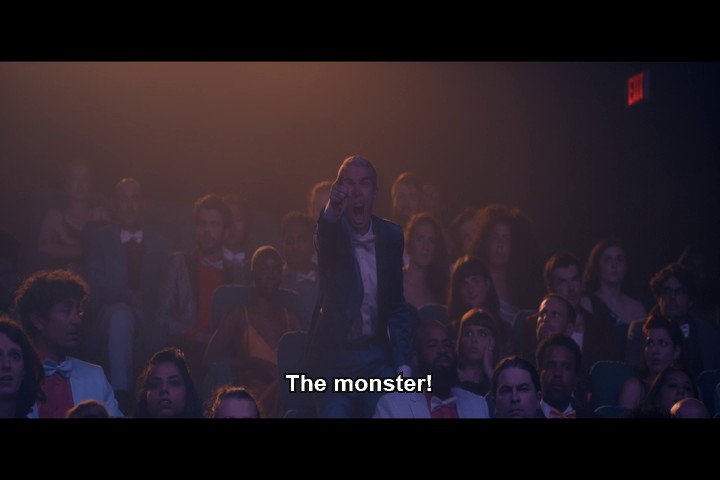
Third, when some members of the audience call “Monstro Elisasue” a “monster” and “freak,” we get what people have been calling those deemed as abjectly Other for centuries. Of course, “Monstro Elisasue” is wildly exaggerated – her “deformities” indeed hard to look at (e.g., that face of Elizabeth in an opened mouth scream punctuating her abjection) – but sometimes it is exaggeration that helps us see that nothing has really changed for many people when confronted with something outside the norm.
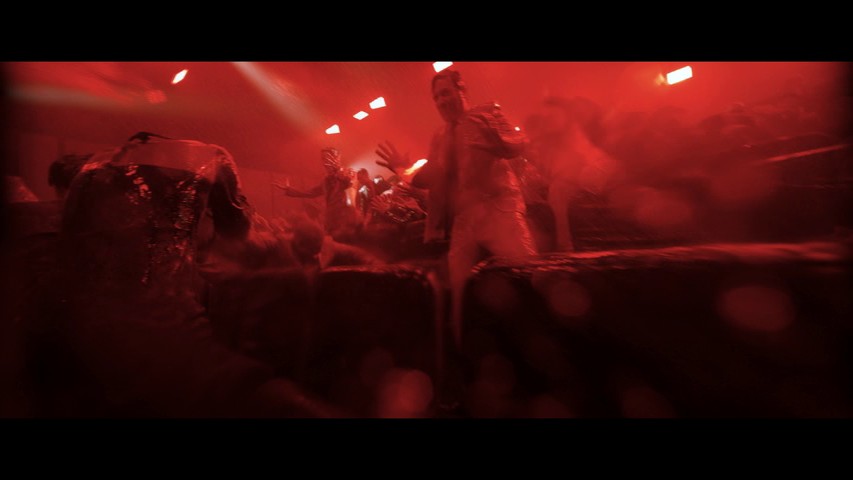
Fourth, in a way “Monstro Elisasue” is a mirror image of the audience. When she sprays her blood all over them, they too become abject, apt since they are complicit in her creation, making them just as or more monstrous than “Monstro Elisasue.”
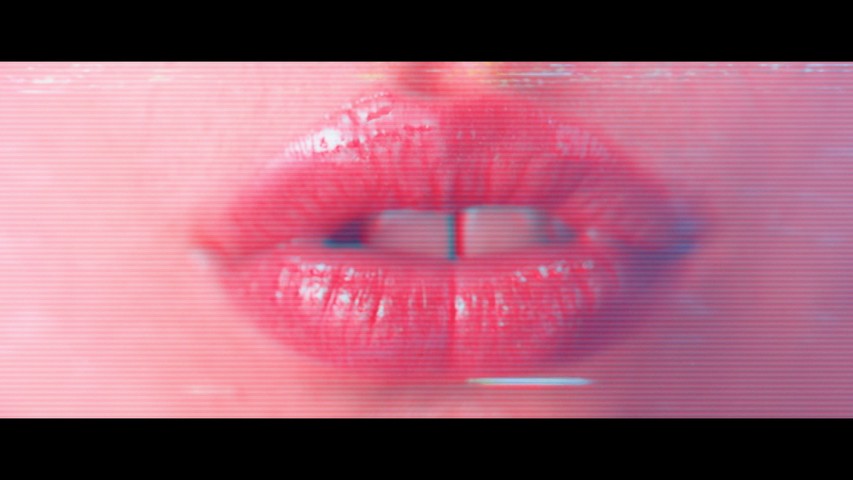
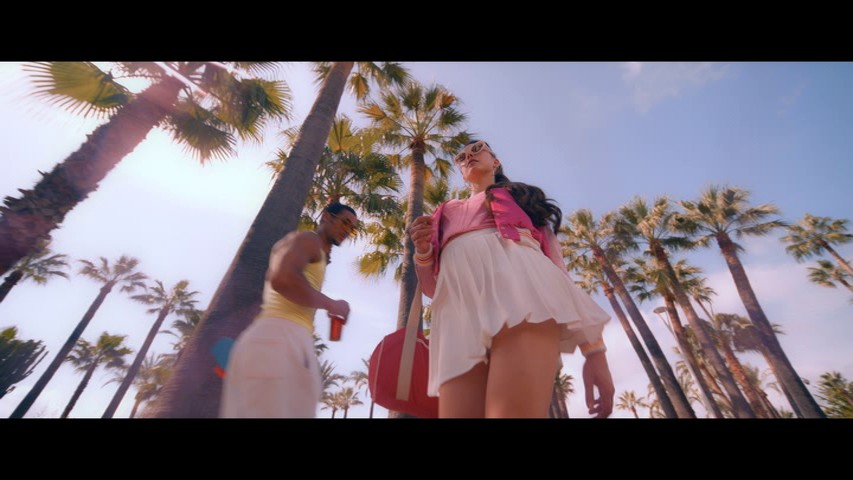
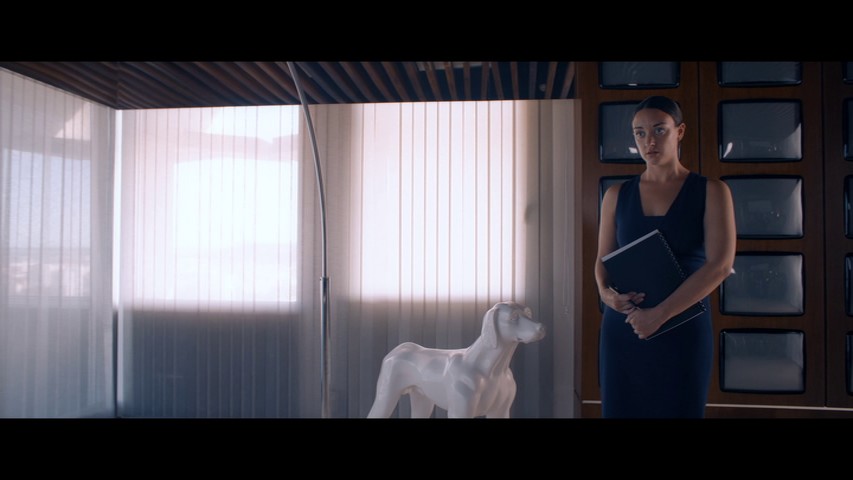
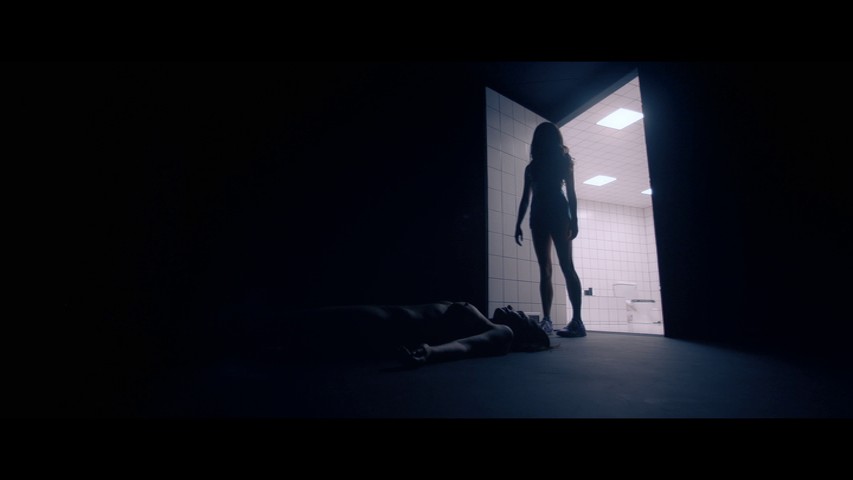
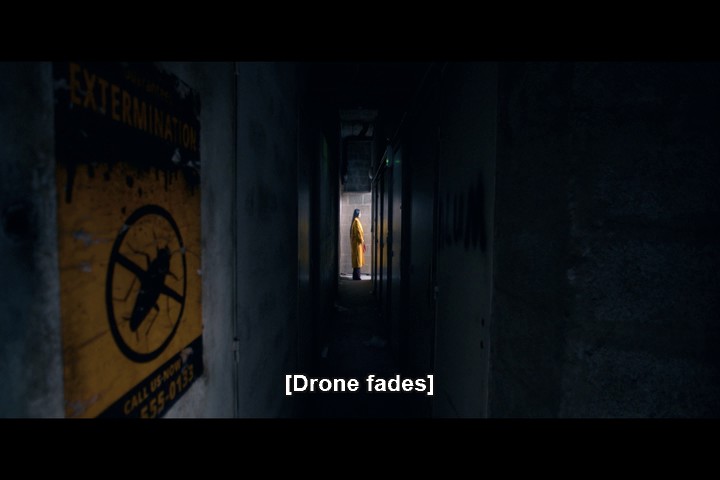
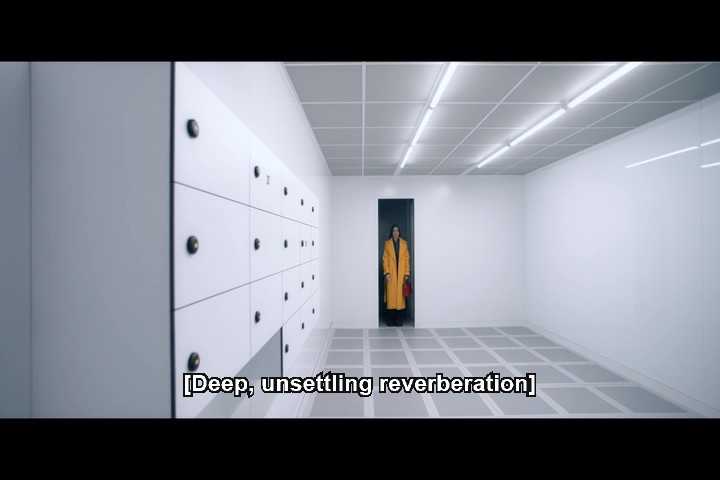
There is still a lot to comment on, but I will end with these images:



(37) Antebellum (2020, Christopher Renz, Gerard Bush)
I know that I am in the minority on this film, with many people, including many (not all!) African American writers and scholars really disliking the film, some even finding the film offensive. And that does give me pause in putting this film on my list. However, I’ve screened this film four times now and while I would be the first to admit that it has some glaring weaknesses, I am still convinced that it is doing something quite profound. In this regard, I am going to keep the film on my list for now, though if after expressing my views on the film, I get a lot of outrage over it, I will reconsider this decision.
In terms of its many flaws, I will just touch on what I saw as some key ones: For one thing, it really frustrated me that we get only four characters who seem to resist their bondage, the rest of the Black figures we see on the “plantation” merely used as wallpaper, apparently just going along with being wrenched into “slavery.” And the thing is, had they included more Black individuals in the ending escape plan, that could have fixed the many glaring contrivances that happen at the end. In terms of these later contrivances, I would include how the general (listed as “Him” in the credits) yells “Eden!” and doesn’t wake up the whole camp, including the “soldiers”; how easily Veronica lured Captain Jasper into the furnace; how easily Veronica escaped (where in the world are all the “soldiers” that seem to act as security?!?); and how Elizabeth just seemed to come out of nowhere to suddenly be behind Veronica!
Such flaws and others I know will just sink the film for many. However, again, for me, the film also has some strengths that make it an unusually deep and complex film. One other thing before I dig into the film a bit: Some may not consider this film a horror film, but I think part of the brilliance of the film is contextualizing “slavery” into this mode of thought, making it not just a “realistic” atrocity but casting it into the tropes of “horror,” a way for all of us to be sutured into this reality of what it means for one’s sovereignty to be taken from them and literally turned into a dehumanized object.
In this context, the “twist” is as disturbing as anything I’ve experienced and also why the “classic Hollywood style” continues to reap its potential for empathy and suturing us into characters’ experience. In this way, again, I would strongly argue that this film forces all of us to both experience white supremacy and experience it in a way that is particularly traumatizing. In terms of the latter, part of the trauma is in so starkly reflecting on just how deep and disturbing white supremacy persists in our world, to the point where I cannot image one can watch this film and walk away not seeing how in a very real way, the stark horrors of white supremacy have not changed from the slavery/civil war era.
That is, the “return of the repressed” in this film is how there are two polarities in our present times, equality and empowerment by African Americans, but that constant shadow of the horror of white supremacy that STILL permeates society. The REAL or “return of the repressed” isn’t that we “repress” what slavery was but that we “repress” just how much it still informs so much of the African American experience, e.g., as long as white supremacy/racism exists, African Americans can only be reminded of the horrors of what their ancestors endured and still endure the attempt by white supremacy to keep them in that shadow.
Even more pertinently, I’ve always believed that while slave narratives are important (12 Years a Slave comes immediately to mind), we really don’t need them anymore, unless they come with something more, perhaps getting at the root cause of slavery (instead of just giving us the symptoms of slavery, the degradation, the cruelties, etc.) or doing what Antebellum does, referentially commenting on slave narratives and actually giving African Americans a way to engage them in a more agentic way. One criticism of this film is that it is an example of “slavery porn,” and I get this criticism – there are moments in the film that give us sadistic brutalities inflicted on our Black characters – but for me, these moments of violence necessarily inform a couple of crucial points:
First, the film needs to at least realistically reflect the brutalities of the slavery era. Again, in terms of representational issues, I don’t think slavery narratives should only do this, but I still think it is necessary to remind spectators of, yes, what they already know, but still require less we participate in current efforts to unfathomably suggest slavery wasn’t so bad.
Second and more importantly, it is just so important to understand the depth of depravity of white supremacy today, both in terms of actual violence against African Americans (cop killings and other racist violence) and in terms of how white supremacists see Blacks, as still dehumanized (objectified) Others that need to know their “place” on the human hierarchy. Moreover, what the film gets at so well is how white supremacists can’t stand their white supremacist belief system/identity being proven wrong again and again (see below for more), the consequence of this being both a latent need to prove their archaic and ignorant view, by forcibly manufacturing an alternative reality that reinforces this view, and by violently (physical, sexual, psychological) exercising their interior rage at being wrong. In this context, I suspect most people watching this film will say, yeah, if they could do this, they would, and that alone makes this film both unsettling and necessary.
Third, in just pragmatic terms, to at least understand if not justify the truly horrific killings of the white supremacists, we need these reciprocal killings measured against the atrocities against our heroes in the film. And I must say that I suspect Martin Luther King Jr. wouldn’t like this film; there is no mercy in this film, the violent retribution inflicted on our three principle white supremacists truly horrific!
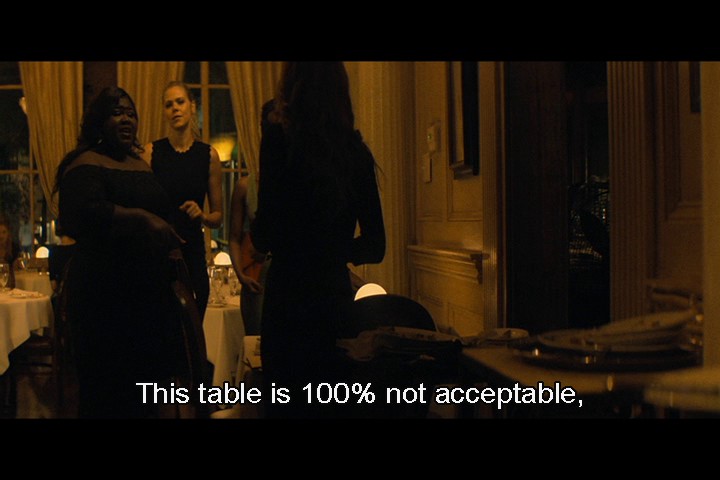
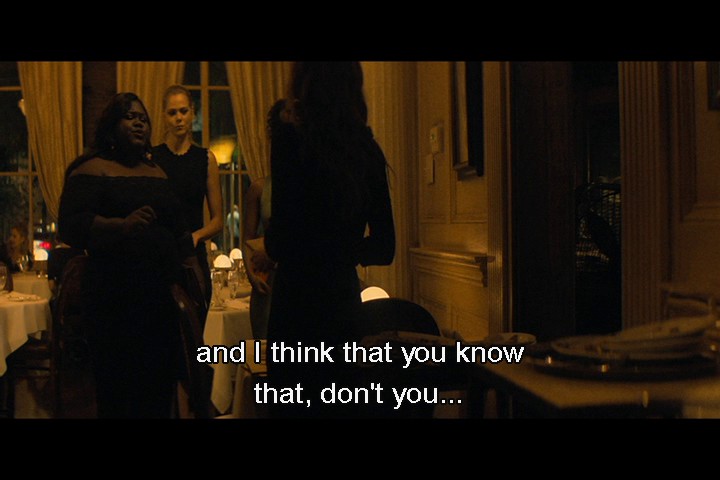
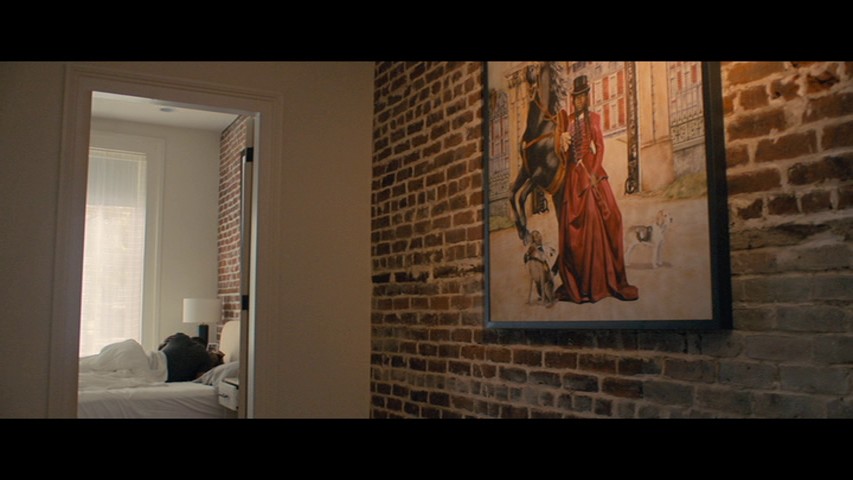
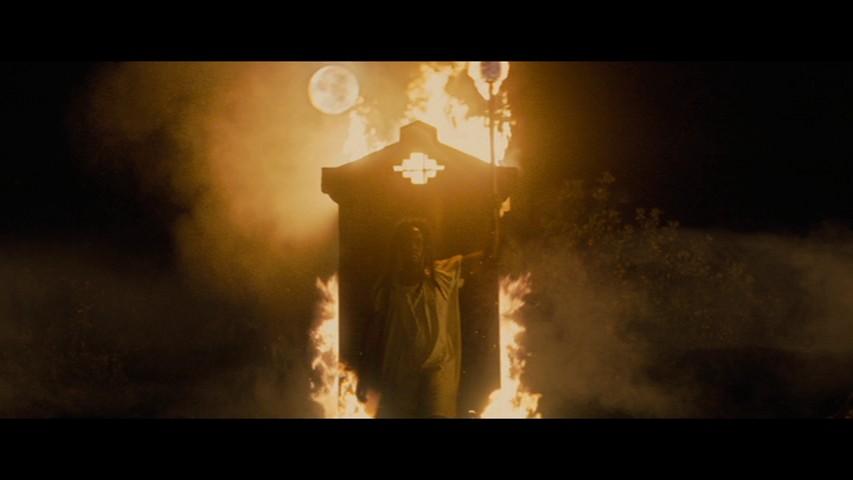
Here are more thoughts on this provocative film:
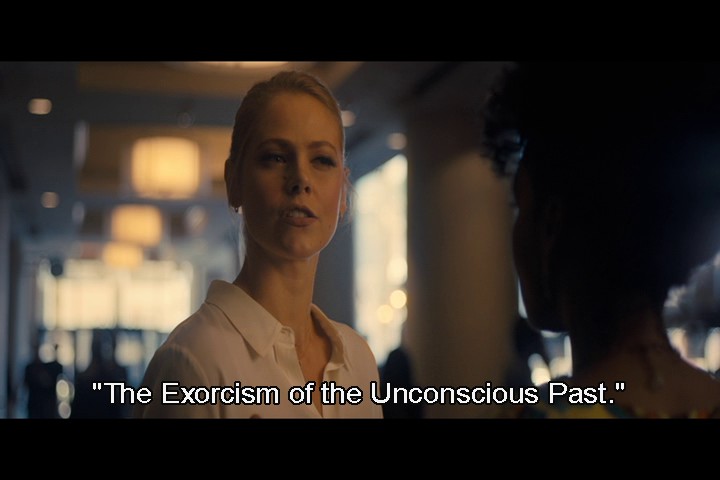
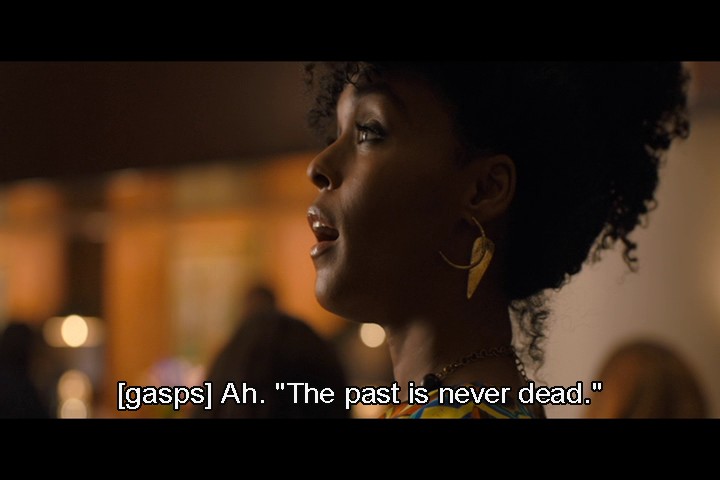
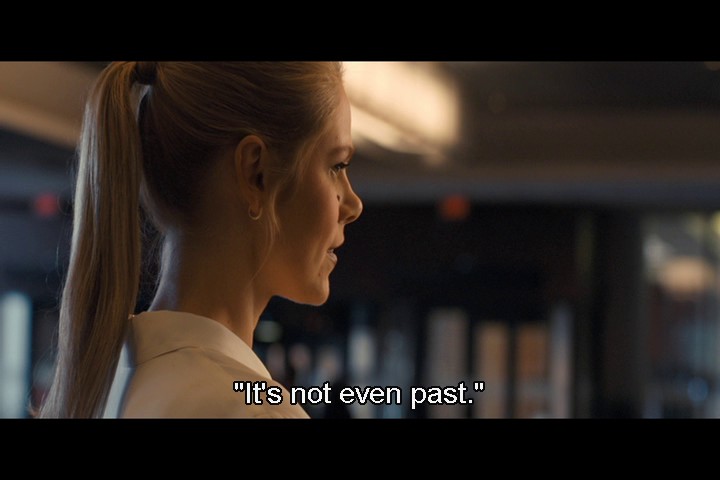
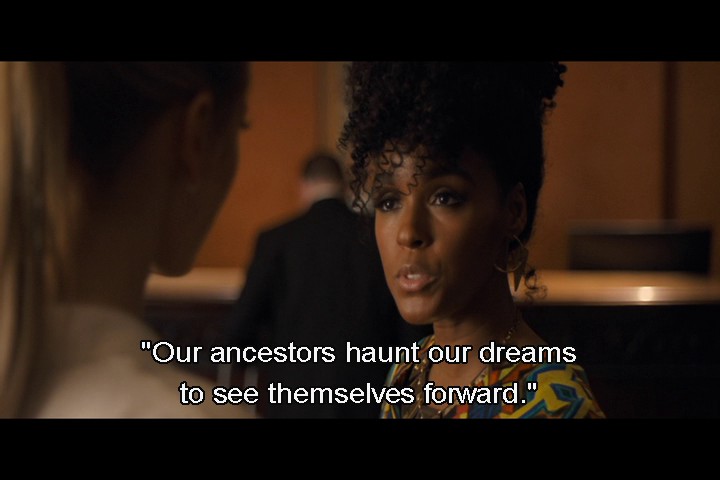
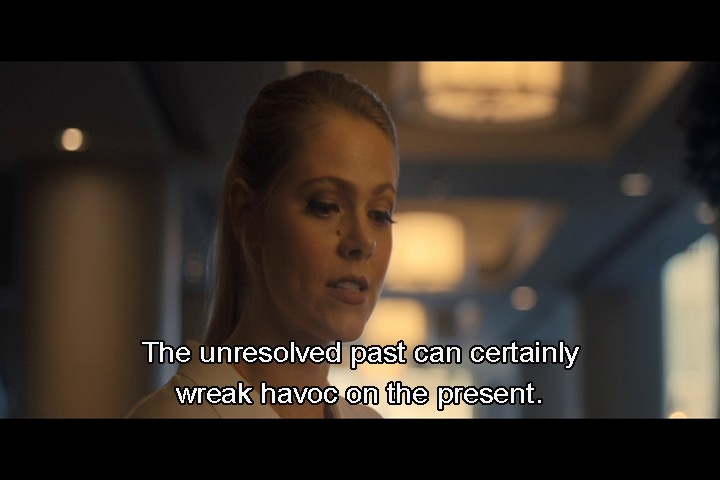
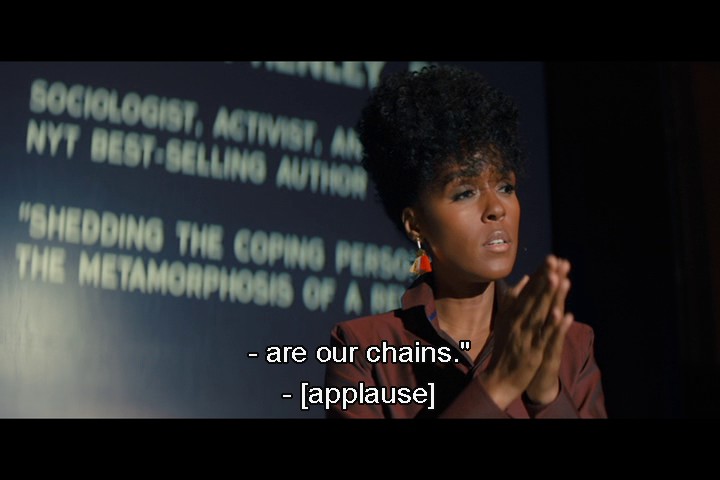
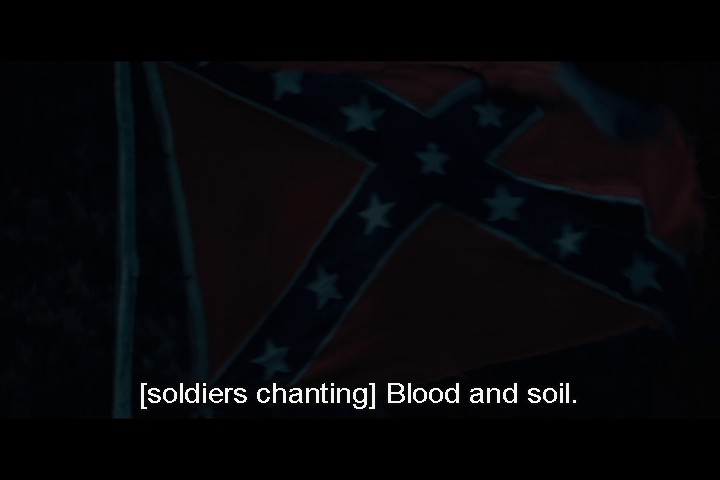
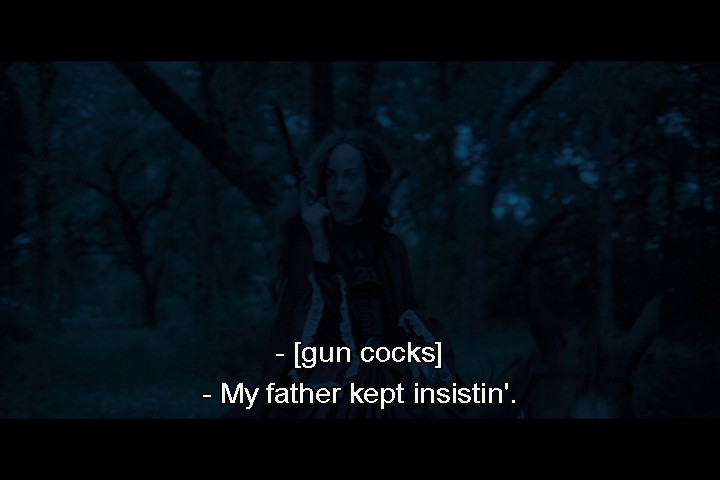
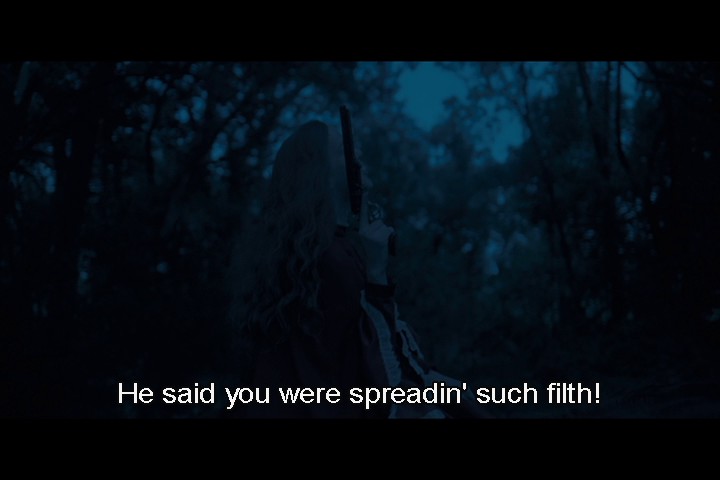
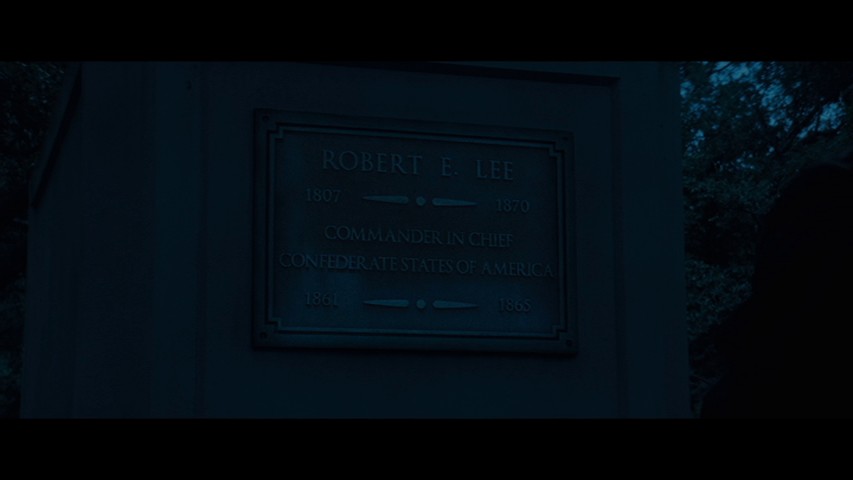
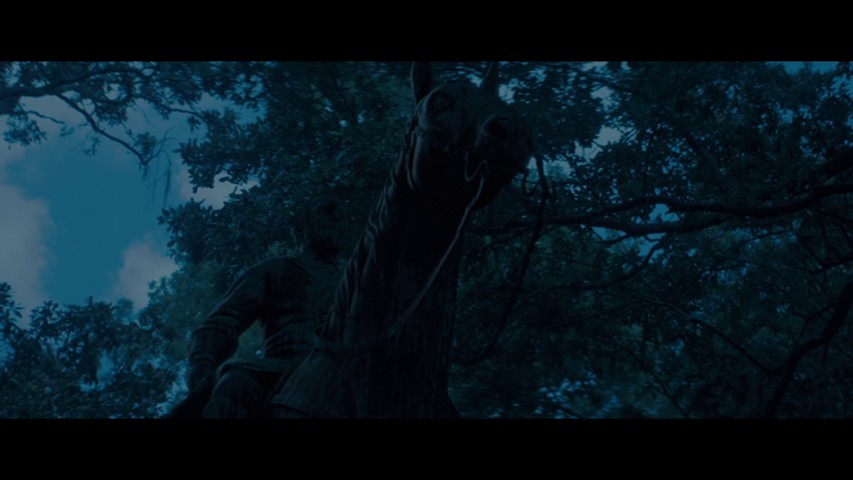
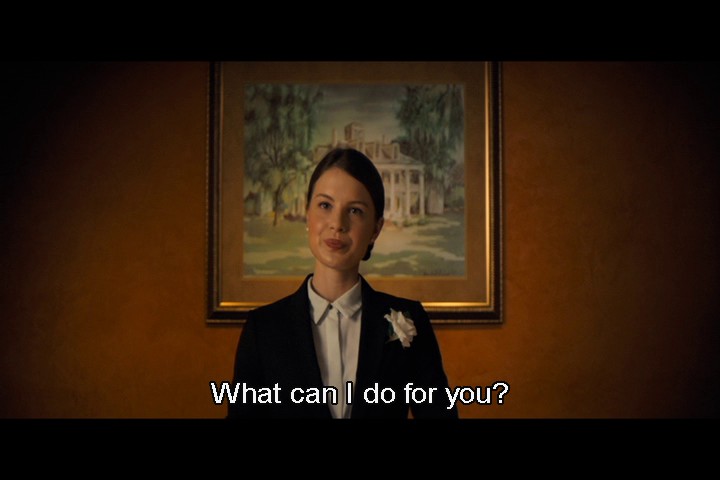
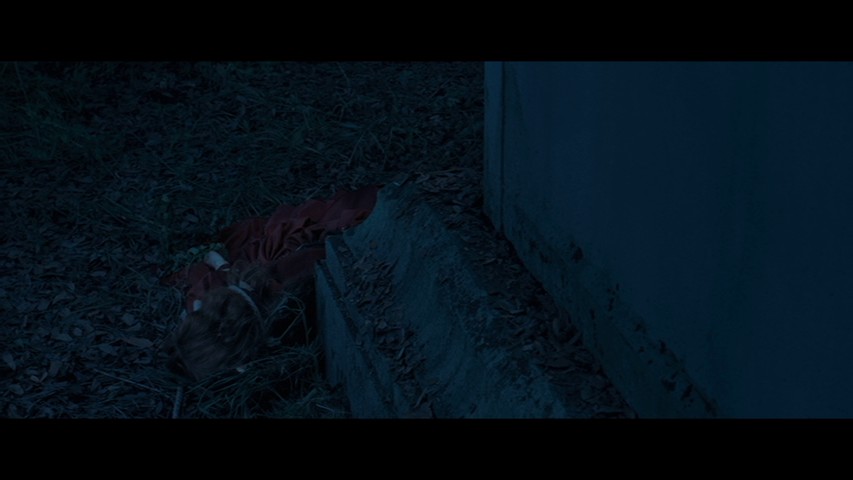
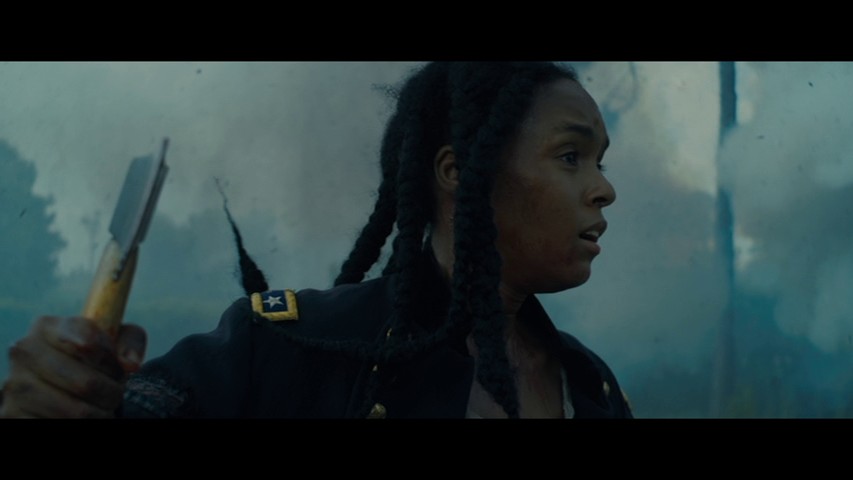
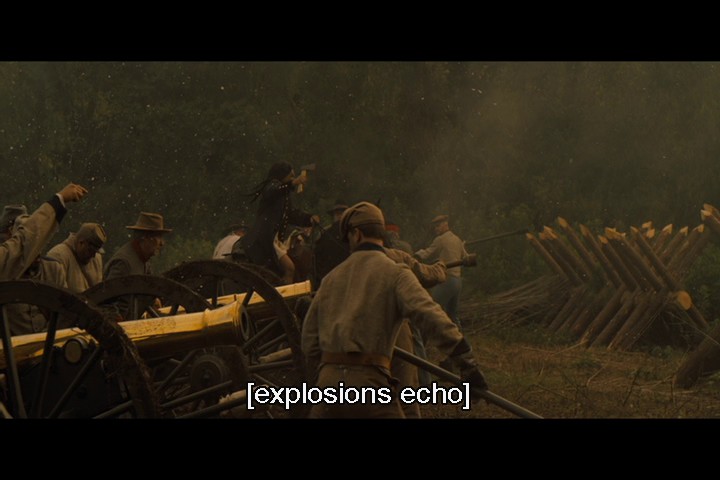
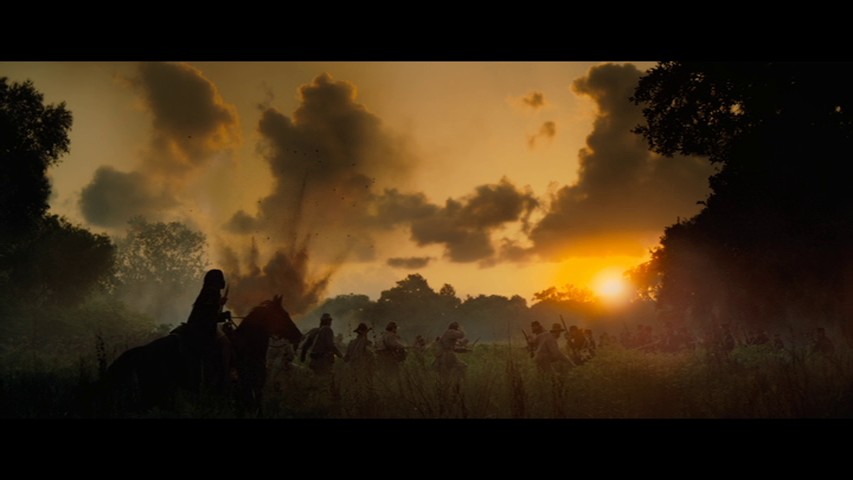
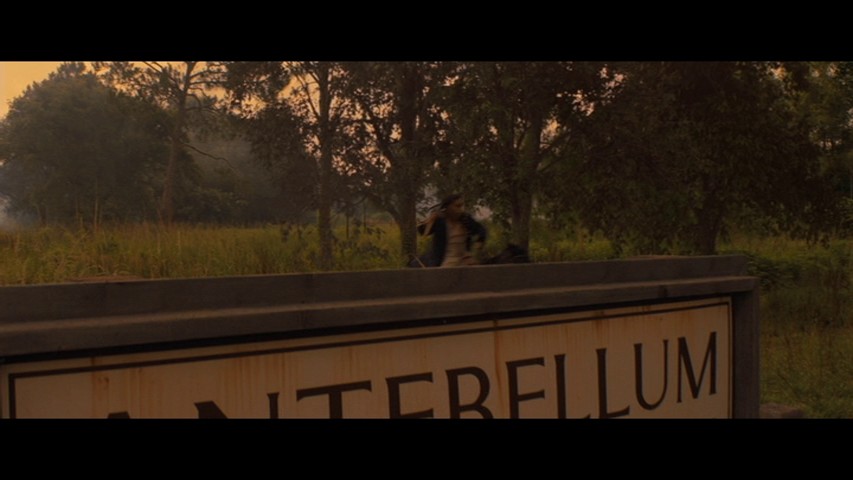
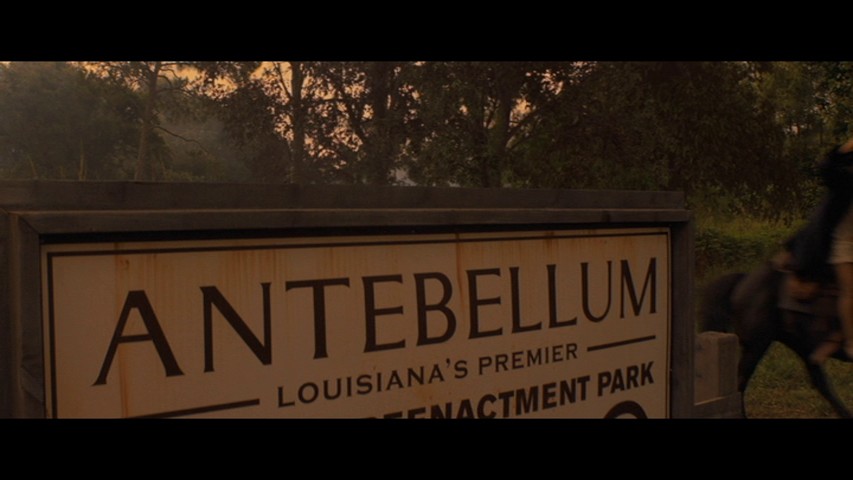
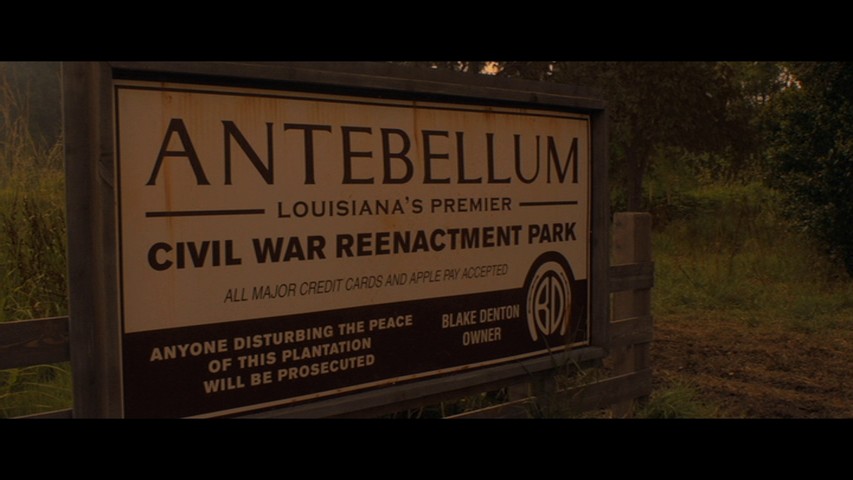
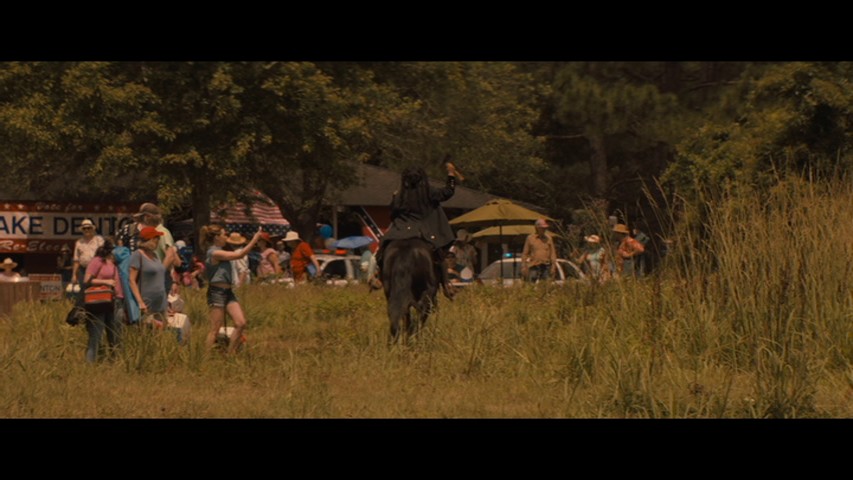
I still have dozens of images for this interesting film! But I will leave it at that for now. Perhaps I’ll do a full blown blog post on this film at a latter time.
(36) Us (2019, Jordan Peele)
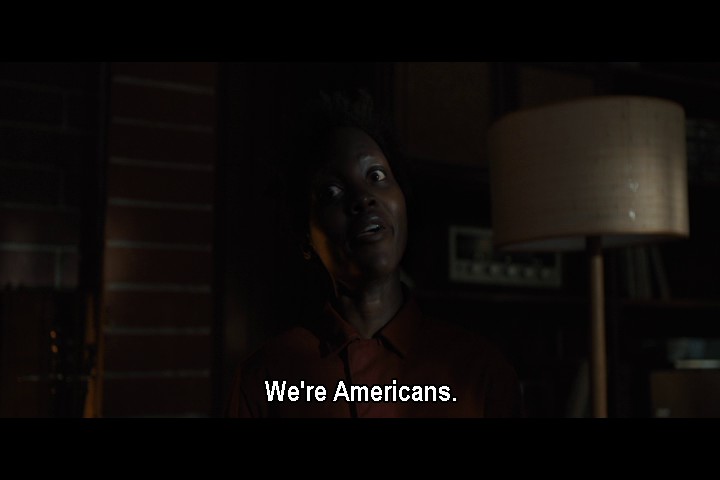
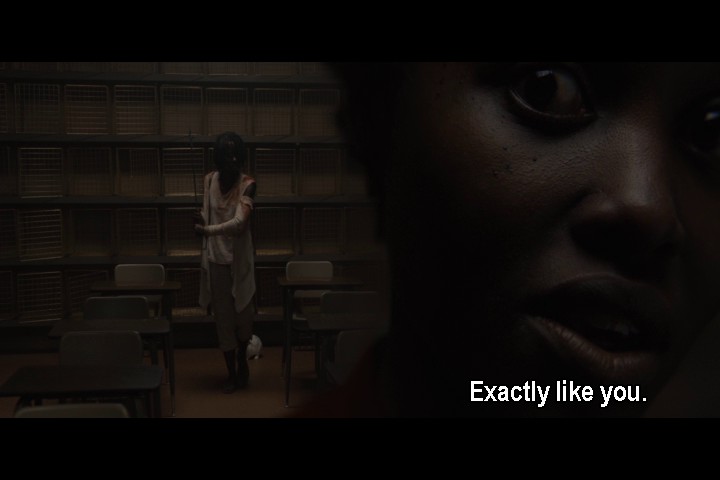
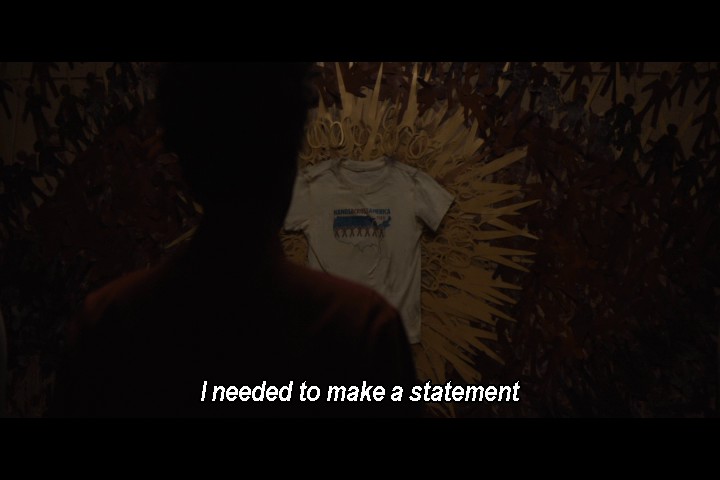
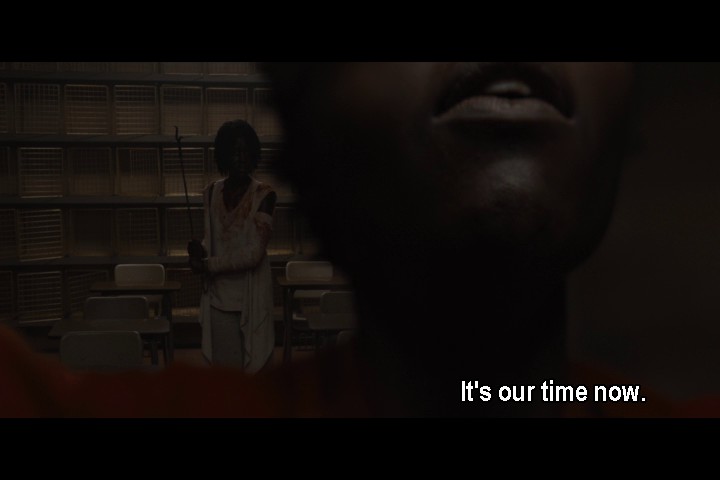
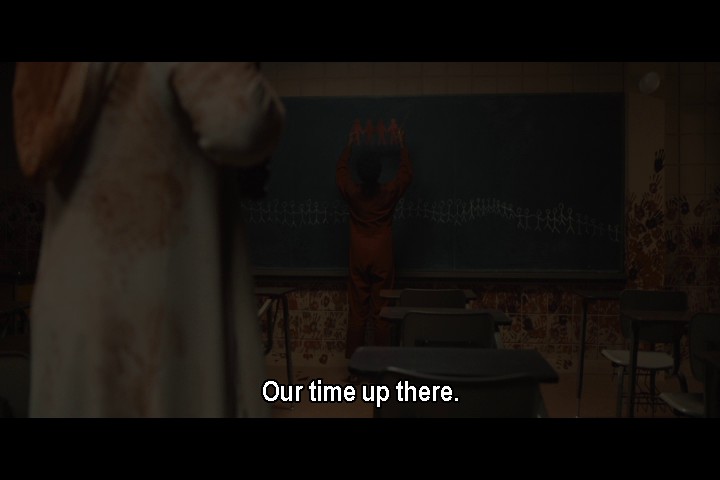
For me, Us is Jordan Peele’s weakest horror film, though it is remarkable how high the quality all three of his horror films are (see below for my thoughts on his other two films, Nope and Get Out). Now, the film isn’t his weakest in terms of deepness – the film is as deep as his other two films – but rather because it is, especially on repeat viewings, not as sound plot wise, with many holes and contrivances in the story. (For example, isn’t the daughter who gets substituted not old enough to escape from her bondage? And the “Tethered” are armed with only scissors. Would they so easily be able to take over against heavily armed law enforcement, who don’t seem to be anywhere in sight?!? And I must say the whole conception of the “Tethered” seems weakly developed.)
In terms of deepness, as Peele himself so articulates, the film captures multiple metaphors and allegories of doubleness. Here is what Peele has said about this key focus:
“One of the central themes in Us is that we can do a good job collectively of ignoring the ramifications of privilege. I think it’s in the idea that what we feel like we deserve comes, you know, at the expense of someone else’s freedom or joy. You know the biggest disservice we can do as a faction with a collective privilege, like the United States, is to presume that we deserve it and that it isn’t luck that has us born where we’re born. For us to have our privilege, someone suffers. That’s where the Tethered connection, I think, resonates the most is that those who suffer and those who prosper are two sides of the same coin. You can never forget that we have to fight for the less fortunate.”
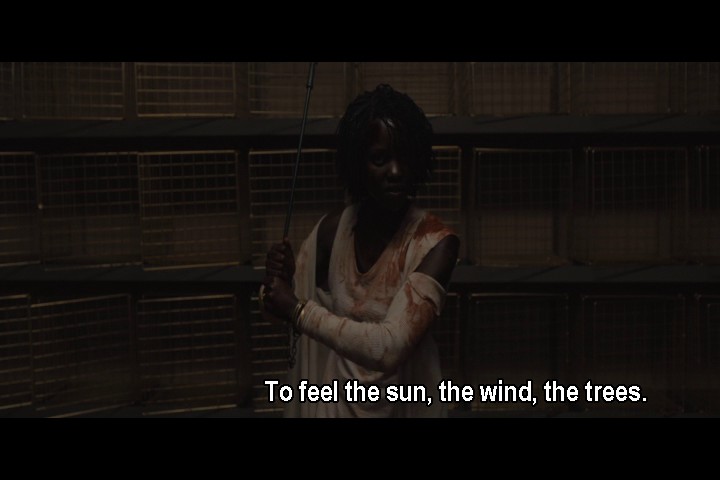
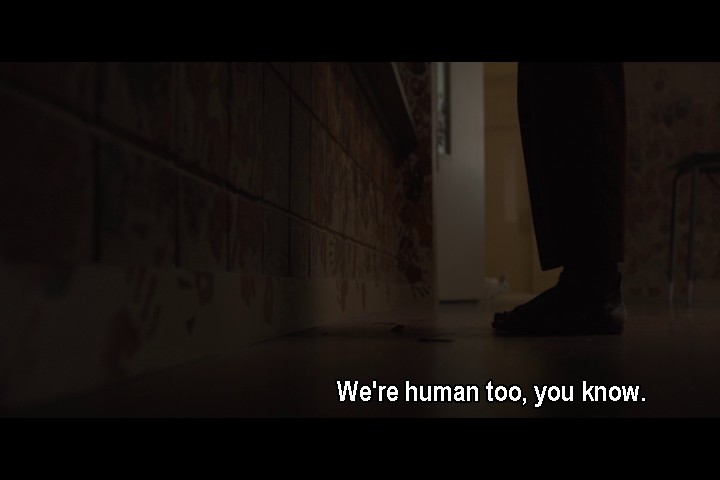
In this context, the “Tethered” resonate not just our interior (animalistic, dark) “duality,” more importantly, they resonate our (“return of the repressed”) degraded humanity, those in society who are our fellow human beings but who we treat as disposable Others.
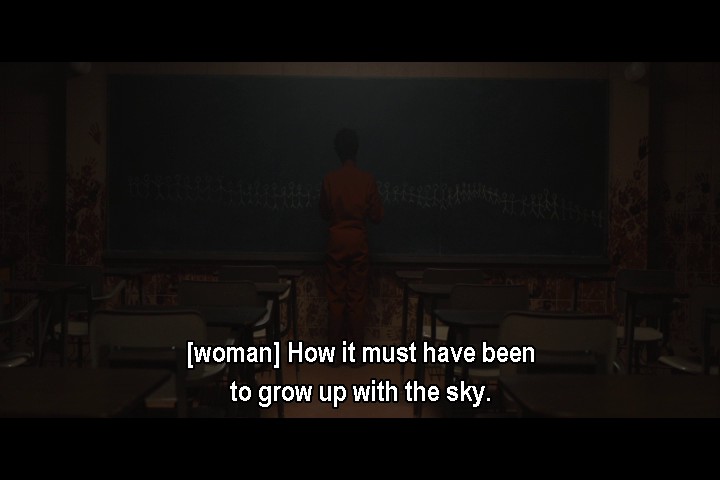
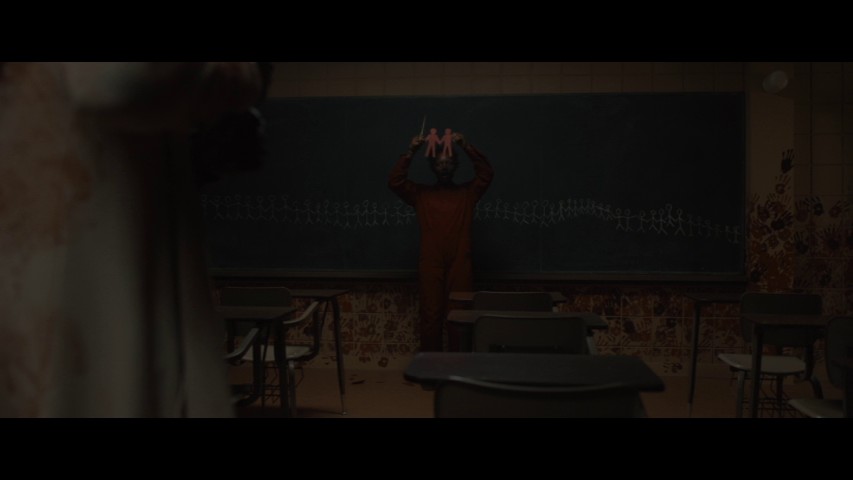
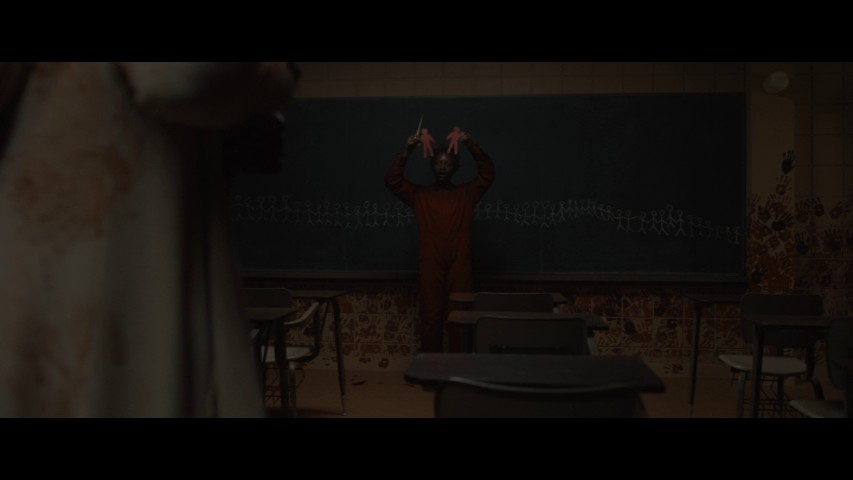
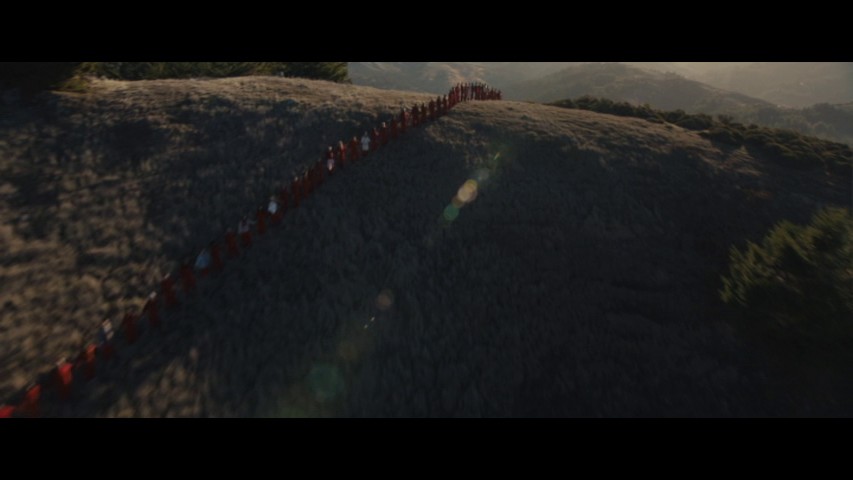
The “Tethered” are coded as degraded and disposable Others in a number of ways. That they are “experiments” itself marks them as dehumanized. The rabbit motif informs this element as well, the “Tethered” treated like experimental animals. Moreover, as Peele has stressed, their red jumpsuits resonate “prisoners,” forgotten ones at that. Further, just the fact of their subterranean location (spatially marking them as low) and their purpose (“puppets”), all suggest the lowest of the low.
The deeper implications is how they represent the “low” in our real world society, or rather, how we do what is done to the “Tethered,” in effect make them low, not unlike our fellow human beings who we also mark as low and disposable, the homeless, the incarcerated, “immigrants”/refugees, the poor, and so on.
The most provocative part of Peele’s thesis above is his spot on point about how our “privilege” comes at the expense of the underprivileged. I’m not sure if the film explores this idea in-depth, but it at least importantly touches on the symptomatic part of this equation, the “Tethered” of course being born (or created) into their low status, never getting a chance, in Karl Marx’s dictum, to realize their “species potential,” while those above them getting this opportunity. This isn’t unlike people born into poverty or the global south, the odds hugely stacked against them from the get-go. Moreover, Peele does loosely explore this disparity by showing how the “Tethered” can only mimic what those above them do, a way to signify how “low” Others can also only dream of getting the same privileges as the privileged in society.
And we see what would happen if one of the “Tethered” got the opportunity to be one of the privileged, that she would realize her species potential in the same way the privileged do. In this way, we see that “luck” is indeed part of the equation, suggesting that this system of class (alterity) hierarchy is fundamentally inhumane. And that too becomes part of the complexity of the film, that while the “Tethered” are vicious predators who need to be stopped, Peele makes it very clear that they are “monsters” we created and so can’t entirely not feel some degree of sympathy for them as well.
More to say here, but I’ll leave it at that for now. I’ll touch on a bit more below.
(35) The Wicker Man (1973, Robin Hardy)
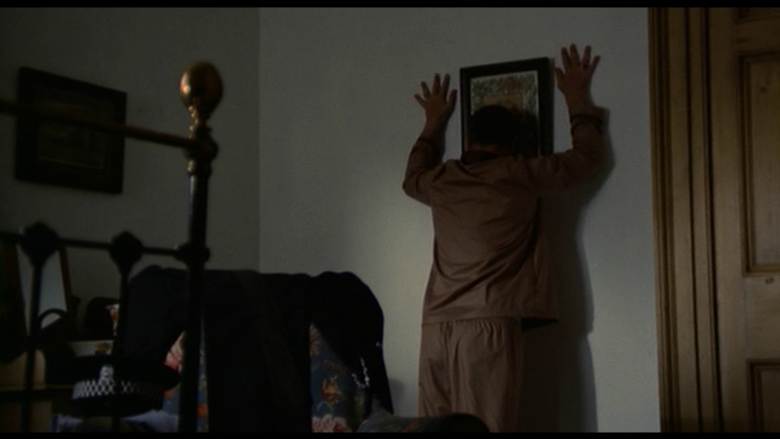
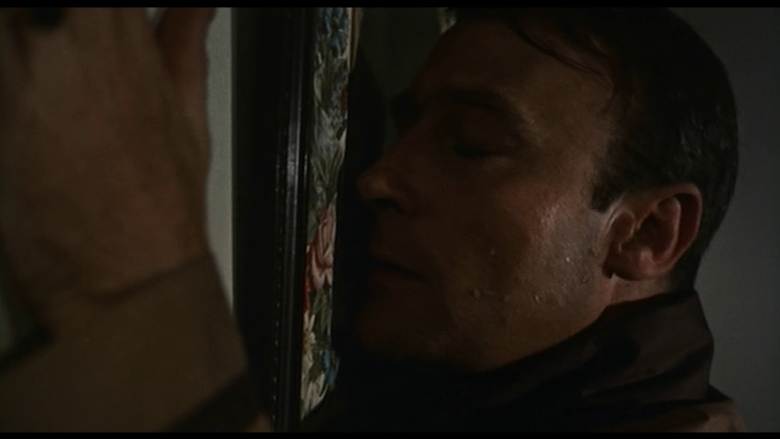
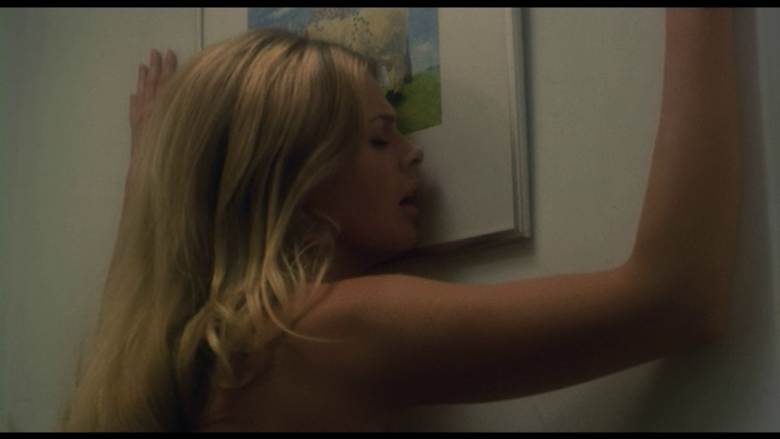
One thing I find so striking about readings of this film, which I’ve read a little bit over the years, is that somehow the film is on the side of the Summerisle pagan belief system. I suppose one could read it that way as the film clearly makes the law enforcement officer, Sergeant Neil Howie (Edward Woodward), an allegorical representative of a historically colonizing toxic Christian ideology. The film is for sure THAT, a commentary on the whole history of Christians myopically seeing their religion as the “one true” religion and of course their Christian God as the “one true” God, a way of thinking and being that of course has created all sorts of crimes against humanity and human rights violations over the centuries (the crusades, forcing indigenous people to adopt a Christian belief system, etc.). That it is ultimately HIM (Sergeant Howie) who gets sacrificed and not an innocent young woman, perhaps becomes okay for some spectators, since he is represented as a pretty reprehensible character!
In terms of “siding” with the pagan belief system of Summerisle, I can’t read the film that way. For me, the film is more complex than that. The truly radical deepness of the film is in its commentary on religious belief systems in general. I think during the film, the filmmakers collapse Christianity and the Summerisle belief system, making them BOTH barbaric and primitive. The school teacher at one point says as much, that Christianity is a “comparative religion,” but an unsavory one, children having a hard time with “resurrection and rotting bodies.” Later, Lord Summerisle says mockingly that Christianity is based on a “a virgin impregnated by a…ghost.” And if one really looks at many of the tenets of Christianity, they do seem a bit, well, hard to believe if not pagan themselves if practiced and believed in a non-Christian belief system.
But, I would argue, so too is the Summerisle pagan beliefs, beginning of course with the core premise that sacrificing a human being will lead to a bounty of crops. We get other aspects of the pagan “religion” that seem suspect, such as fertility rituals, putting hares in caskets, and putting navels on trees on top of graves. (Not sure if it is part of their “religion” but putting that frog in the mouth of a child was just so crazy!!)
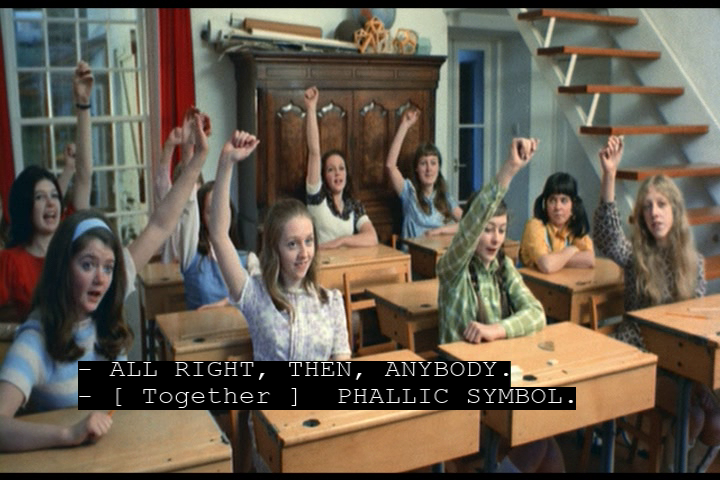
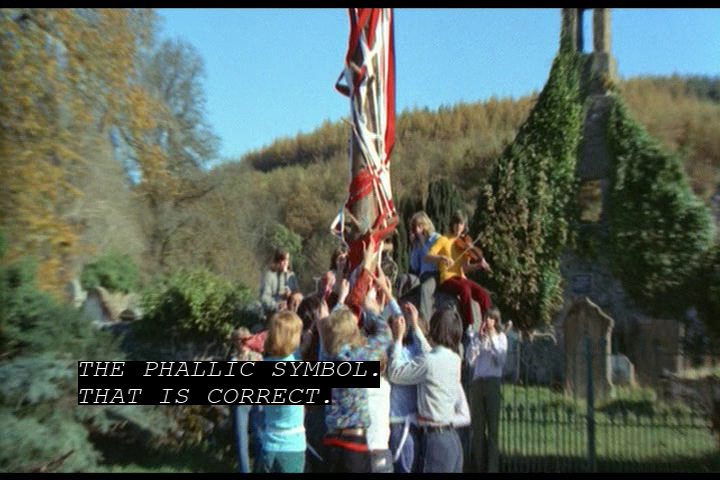
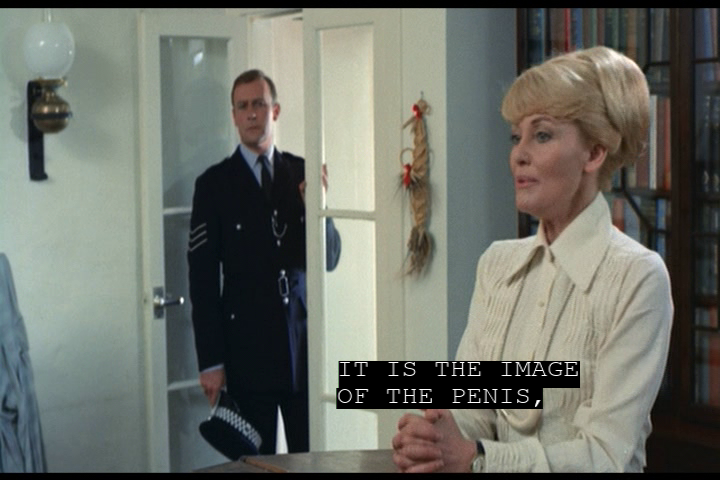
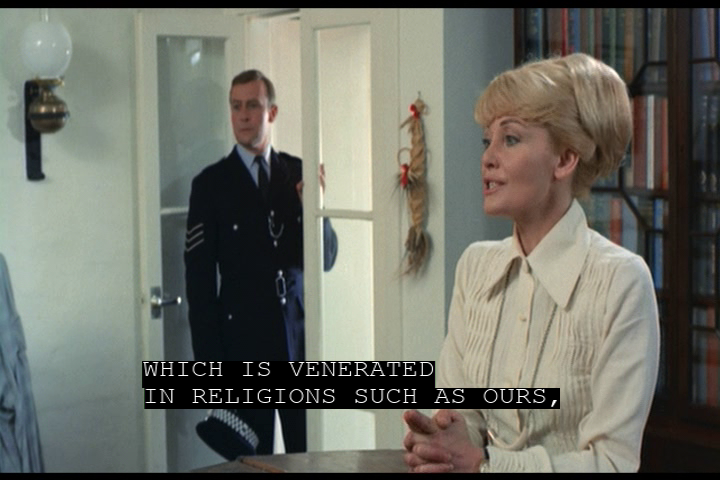
The one key moment in the film that crystallizes this collapse of the two religions is when the teacher tells the class full of girls (apparently the school segregates girls from boys?) that the Maypole represents “the phallic symbol” and that “it is the image of the penis, venerated in religions such as ours, symbolizing the generative force in nature.” That makes this pagan Summerisle religion phallocentric and patriarchal, just like Christianity, part of what makes Christianity a toxic belief system.
Further, the fact that this pagan religion has as its head a “Lord” suggests that, like Christianity, it is a patriarchal belief system and, like Christianity, also fosters a hierarchical class system. (Interesting to think about how at least in the western world, Christianity is deeply intertwined with economic ideologies.)
I think one weakness in the film is not giving an equivalent in Christianity to the human sacrifice for the Summerisle pagan belief system, even though Christianity certainly has its share of atrocities, including burning people alive. I suppose one could say that a kind of equivalent is Howie’s extreme suffering from resisting the temptation of Willow’s sexual invitation for him, which I think is less about his desire for Willow herself than just his “sacrifice” of his very self by denying that natural part of himself (his sexual desire) overall, even before Willow. In this way, one could say that Christianity in effect forces people to “sacrifice” their natural selves.
One other brief thought: Sometimes The Wicker Man is lumped in with “cult” films and at first I thought that wasn’t a good way to categorize the film. But perhaps it is, e.g., again, the commentary here too collapsing the Summerisle “religion” and Christianity, the suggestion that both are essentially “cults” and that perhaps even most if not all religions are in effect “cults” disguised as something more “civilized.”
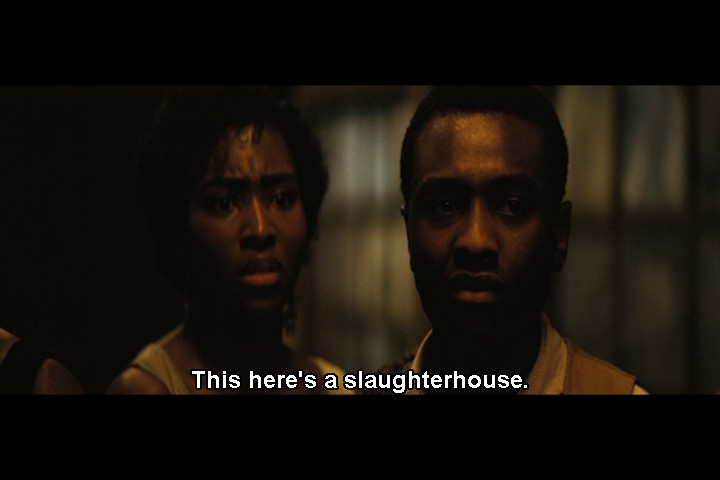
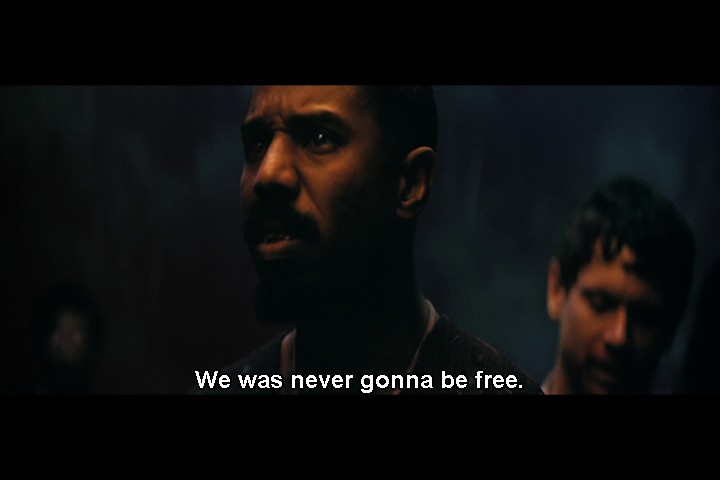
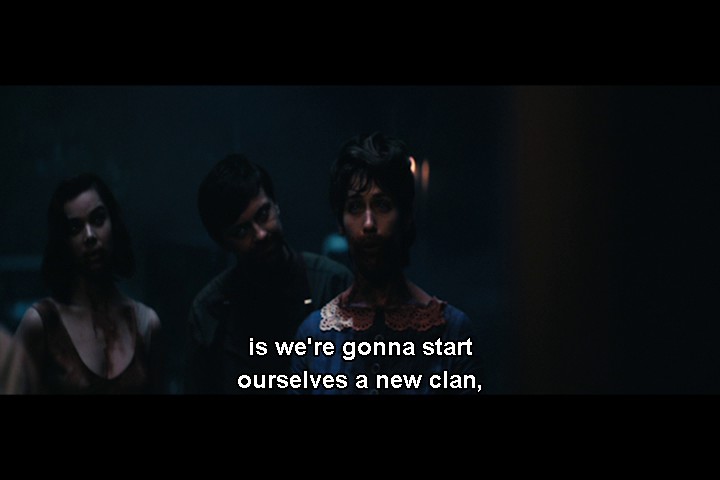
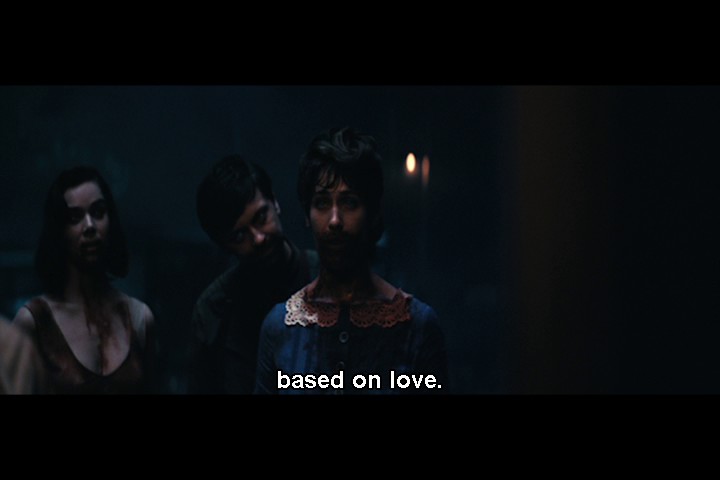
(34) Sinners (2025, Ryan Coogler)
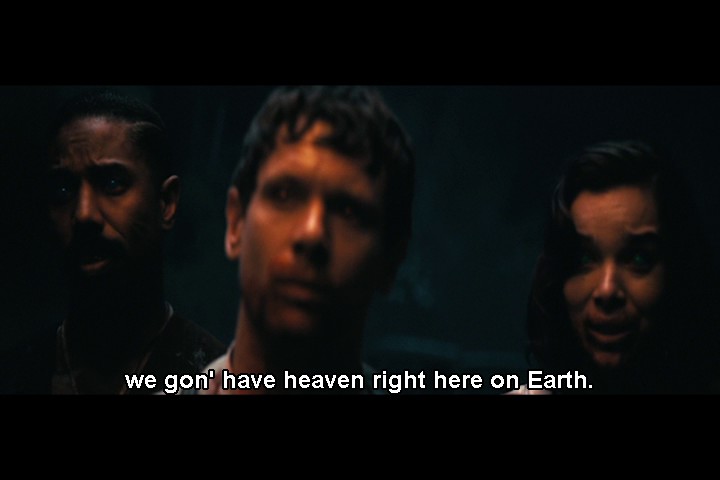
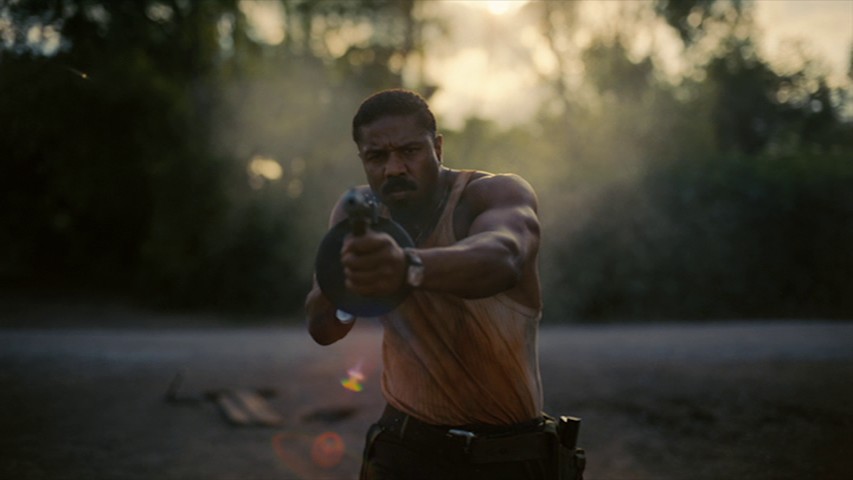
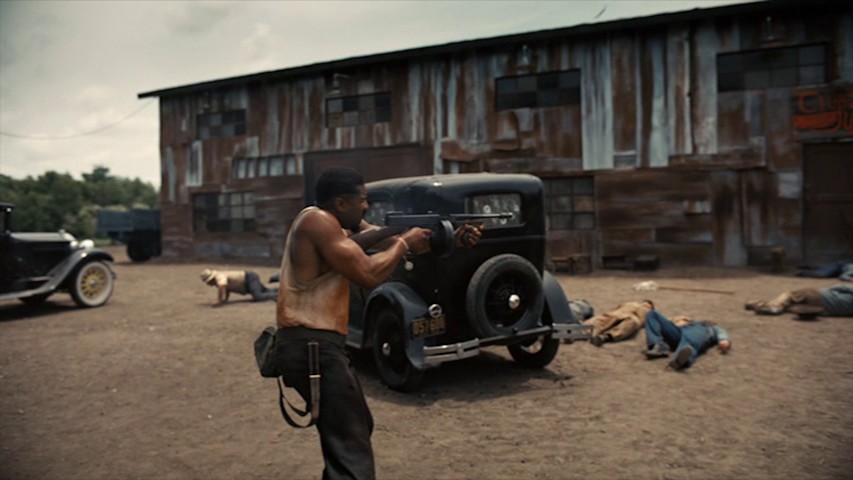
Before I gush about this great film, let me offer just one gripe, or, well, two, one small one being that the film has some pretty sloppy edits! But what I see as the one glaring flaw in the film is just such a silly contrivance. This moment comes when Grace (Li Jun Li) inexplicably invites the vampires in and they attack our remaining six survivors. Now mind you the vampires number in the dozens and seem to have superior strength and are very hard to kill. So how in the world do the vampires not easily overrun and defeat the survivors, not to mention that they actually retreat at one point?!? It is a ridiculous moment and one that could have easily been fixed with a rewrite.
Having said that, while that contrivance does lower my esteem of the film a tiny bit, the film on the whole is a real treat, just so well made overall, thoroughly engaging with thoroughly memorable characters and yes very deep!
The deepness stems from just the brilliant idea of giving us vampires in the deep south during the worst of “Jim Crow” racism/white supremacy/segregation/lynchings, which the film gives us numerous signs of. This allows the filmmakers to create all sorts of very interesting symbolism and allegories:
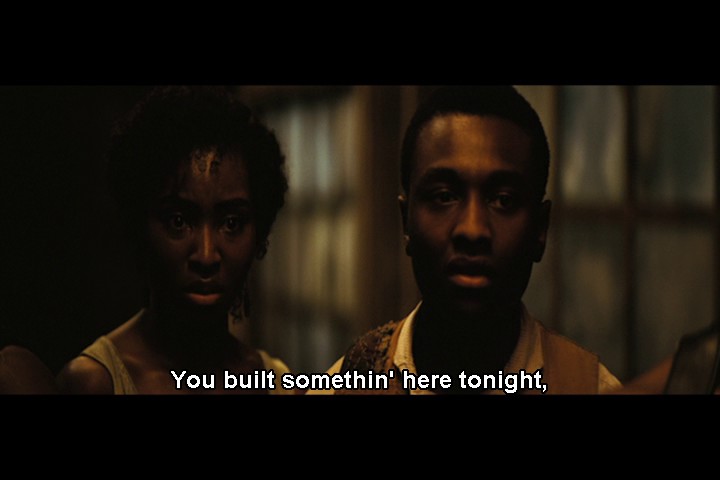
*The vampires tantalizingly and interestingly represent “freedom” for African Americans: We get this with a couple of stark threads in the movie: First with Stack (Michael B. Jordan) and Mary (Hailee Steinfeld), who in 1932 as humans can NOT be an interracial couple (even though Mary’s mother was mixed race, she looks white) but as vampires they can be together. Second, when Stack tempts Smoke with this very point, that he feels “free” as a vampire in a way that he never could be as a black man. This perhaps invites the audience to see the vampires in a positive light, which I know some spectators do! In any case, the vampires actually seem better, more evolved, than white supremacist, racist white southerners and that is pretty wild. I’ll come back to this point below.
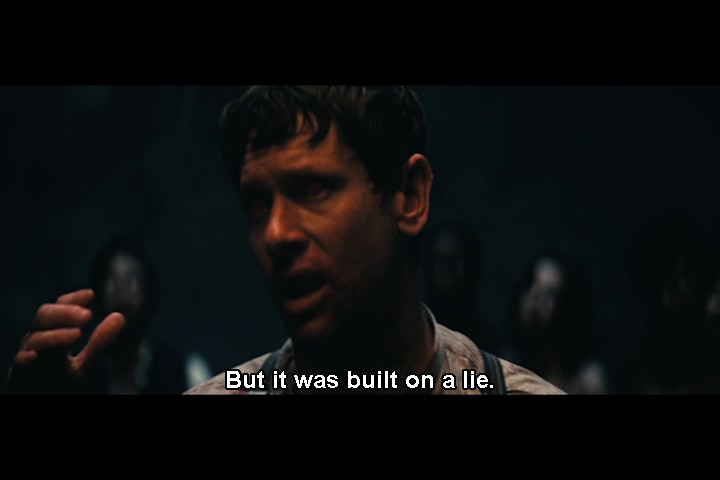
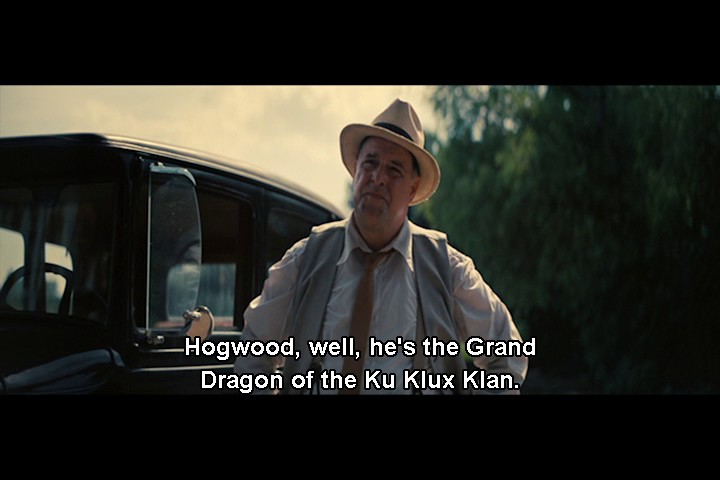
*Moreover, the vampires are seen as a POSITIVE collectivized Other: What is just so striking in the film is how when blacks, whites, Irish, Asian, and working class all become vampires, their differences get elided and they become a collectivized “tribe” so to speak, stressing how the differences between them were always what they really were, ideological (unnatural, arbitrary) norms. Intriguingly, this is especially seen with the two white (Klan) southerners, whose racism goes away when they become vampires, their brethren now the very black people who just moments before they saw as degraded Other!
*As I suggest above, the vampires can also be seen as the REAL or “return of the repressed” of white supremacist/racist southern whites: These vampires are fascinatingly not just coded as evil, but rather they are coded as very complex, not necessarily just “evil.” For example, they definitely seem to have some honor in them, in that Stack “honors” his commitment to leave Sammie (Miles Caton) alone, not to mention they visit him and offer him immortality, give him that choice. However, I still see the vampires as definitely not good, since while they don’t seem to actually kill anyone – just transform those they bite and consume – they are still violating other people’s sovereignty and consuming them. The idea of consuming or “eating” Others would seem to still classify them as predatory and at least sociopathic. But what is just SO interesting is that they seem to register humanity in complex ways, especially as I don’t think we can help but compare them to racist/white supremacist white southerners, who do the same thing, violate the sovereignty of African Americans, in effect white supremacist/racist southerners “consume” them for their own needs. In this way, the vampires both represent the REAL or “return of the repressed” of white supremacist/racist southerners while also actually seeming worse than the vampires!! And THAT is a freaking powerful way of contextualizing THEIR evilness!
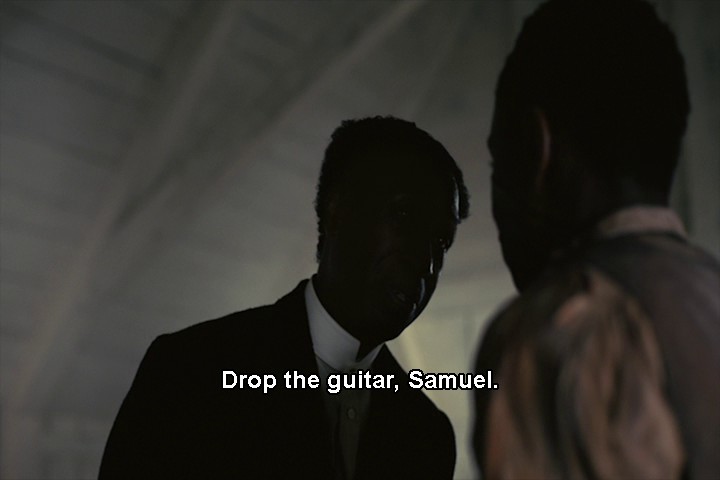
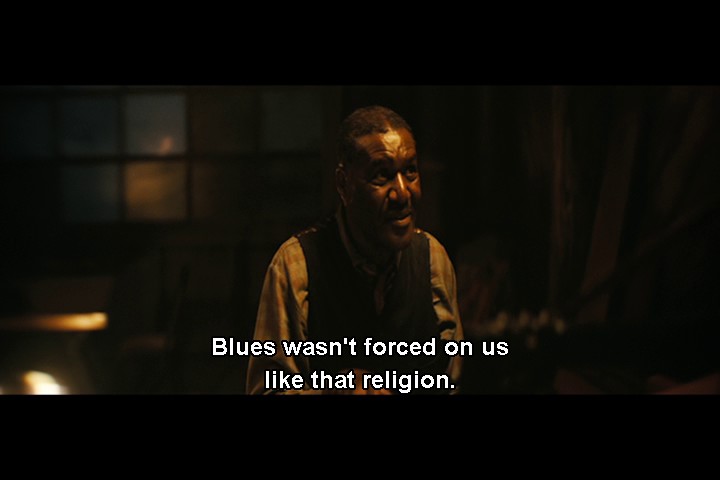
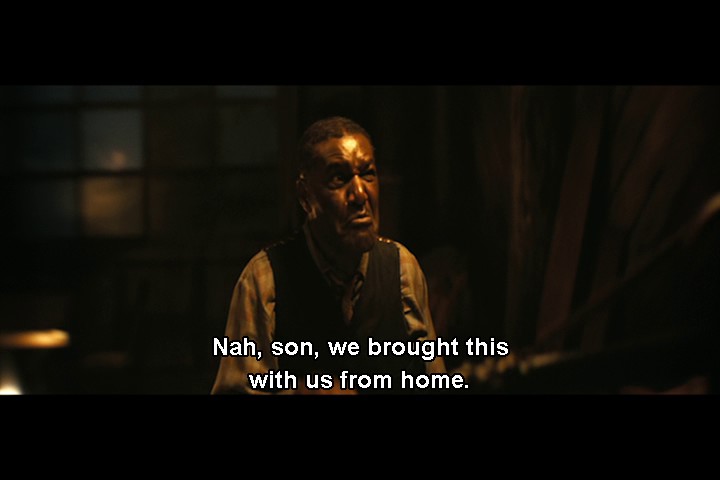
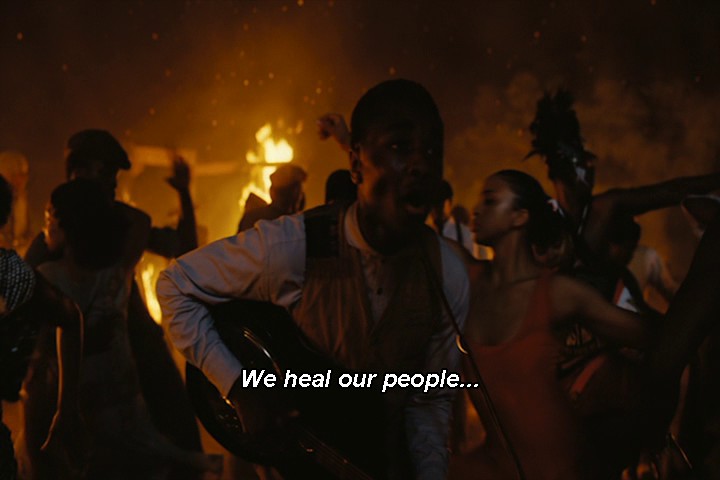
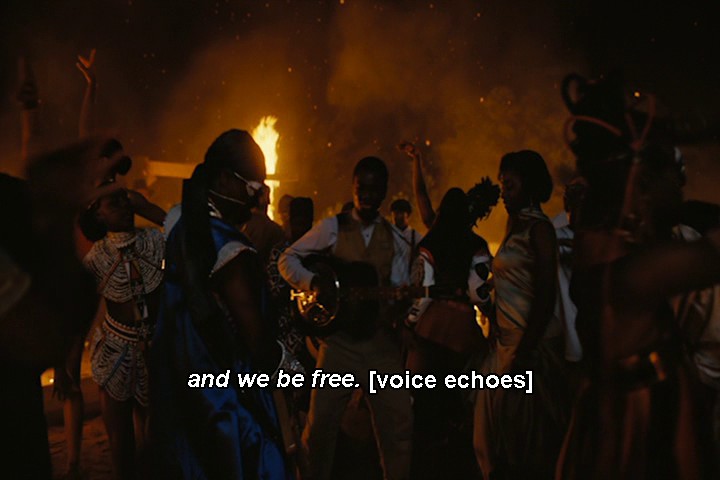
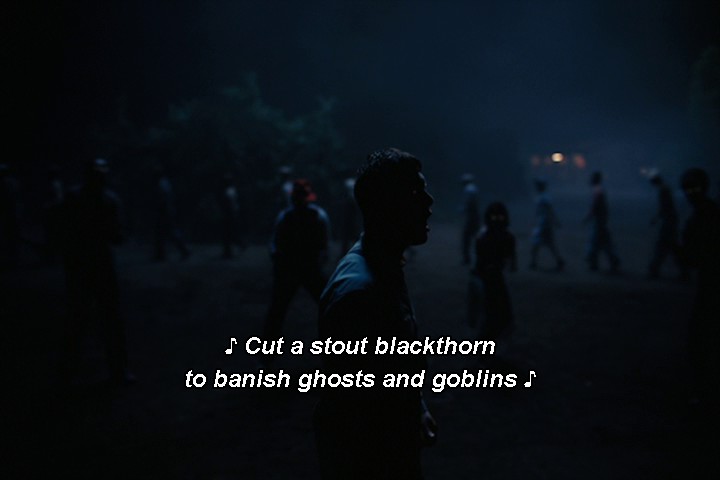
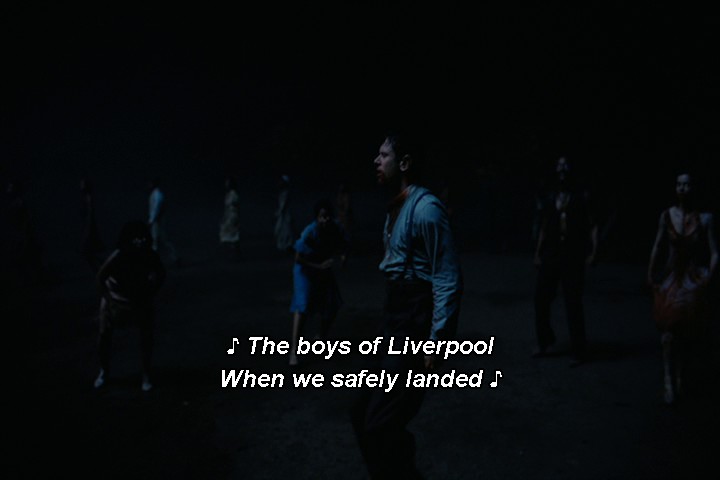
*Then there is the very interesting music thread in the film, music being another way for Blacks to feel “free.” When African Americans were brought to America, like Native Americans, the assimilation of them began, e.g., they were robbed of their culture, dress, language, names, religious beliefs, their very way of thinking and being. Indeed, religion/Christianity itself was weaponized to both assimilate them and control them, which we get with Sammie’s preacher father, who acts as a kind of tool to assimilate Sammie, coerce him to give up his music, the one mode for Blacks to express themselves, spiritually, culturally, cognitively. At one point, Delta Slim (Delroy Lindo) says as much: “Blues wasn’t forced on us like that religion…we brought this with us from home. It’s magic, what we do. It’s sacred. And big.”
Delta Slim also adds that musicians “heal our people…and we be free.” As I try to understand this profound sentiment, music, or especially the blues, reflect the interior torment of oppressed African Americans, and when it is played, this tormented state of being becomes collectivized, a shared trauma that then can be exercised, at least for a moment. Further, that they can play and express themselves in this way is something all theirs and can’t be taken away by whites, at least one form of sovereignty they can hold on to.
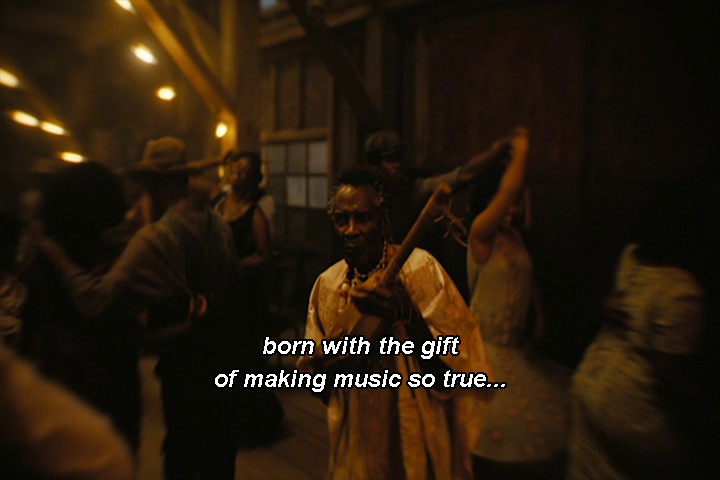
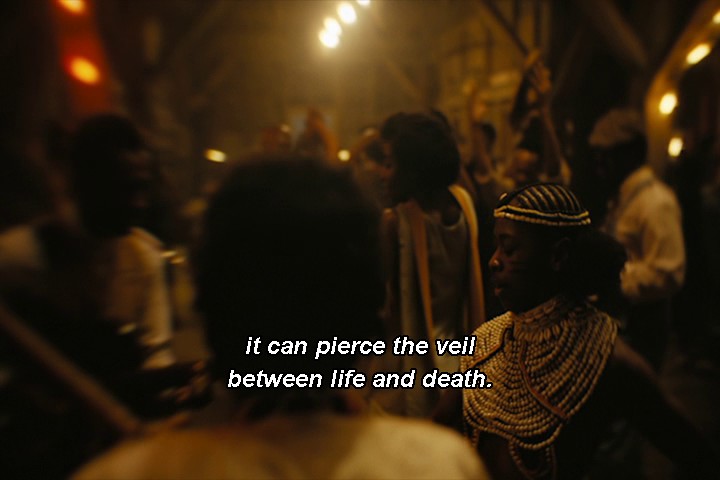
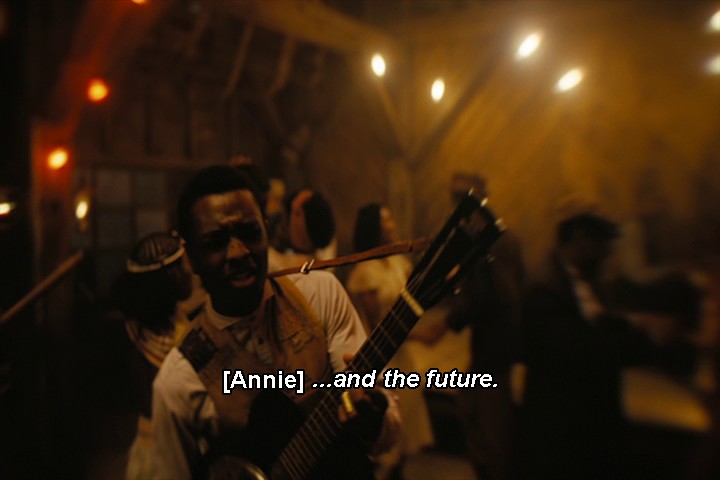
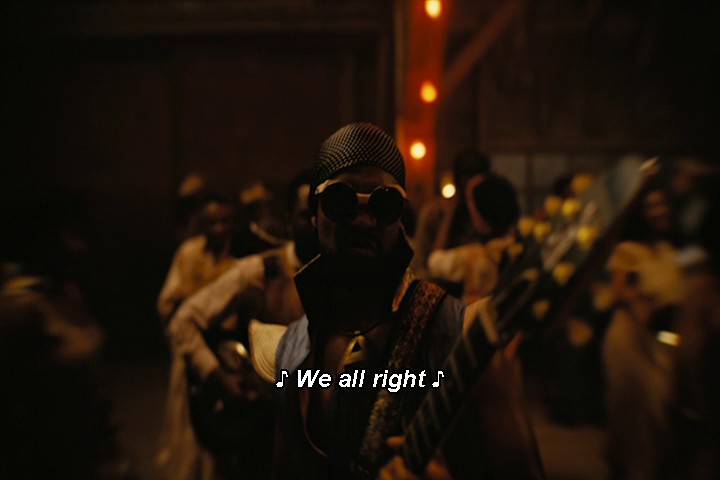
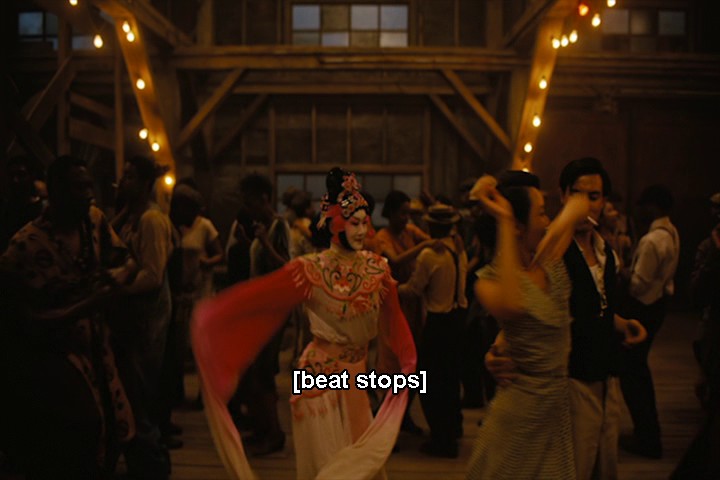
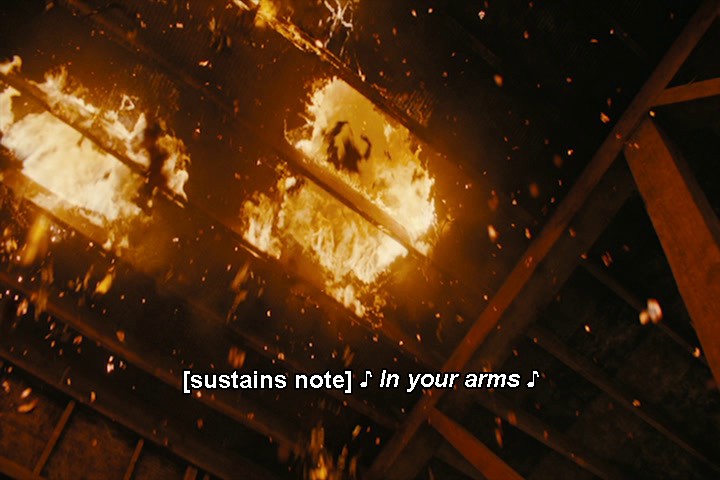
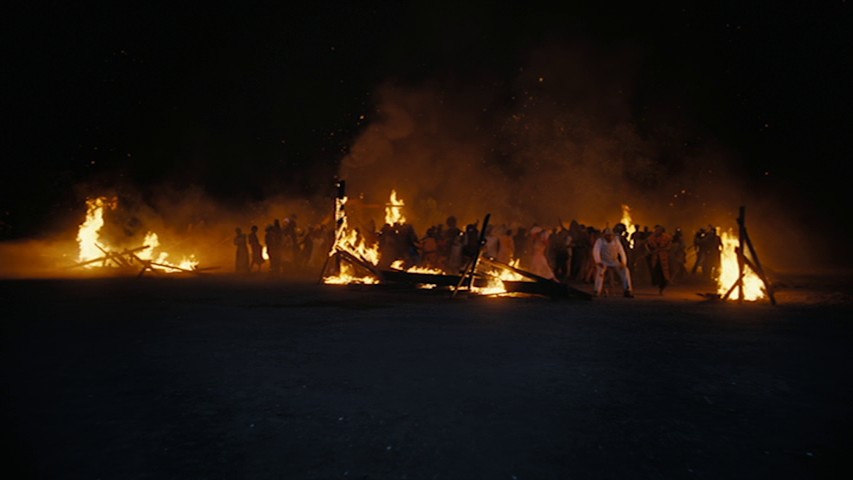
The famous sequence when director Ryan Coogler breaks the realism of the narrative and gives us musicians and musical artists from different cultures and different times is truly magical, a way for Coogler to interject commentary in the narrative. In terms of making this choice, the scene really speaks to the special power of film, to express a deeper meaning through visual and aural cues, in this case collapsing temporal and spatial norms to express these vital musical connections over time and how they connect us culturally and historically and I would say cognitively, the latter reflecting, as I say above, the deeply personal expressions that come through living in the world, music being about more than just entertainment but also about our very way of (meaningful, purposeful, soulful) being in the world.
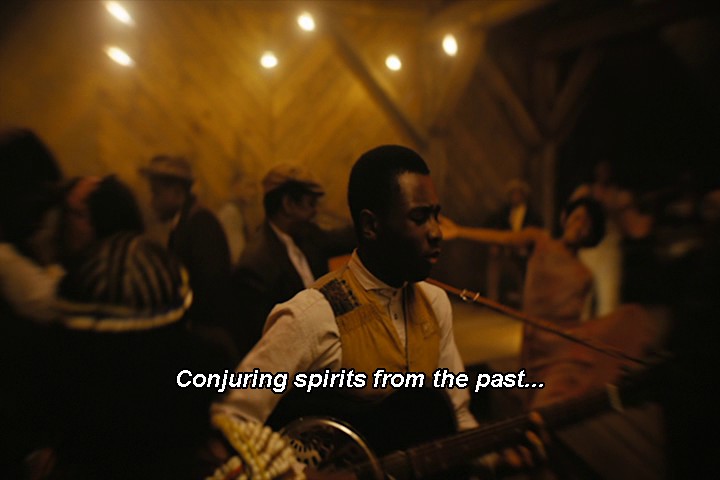
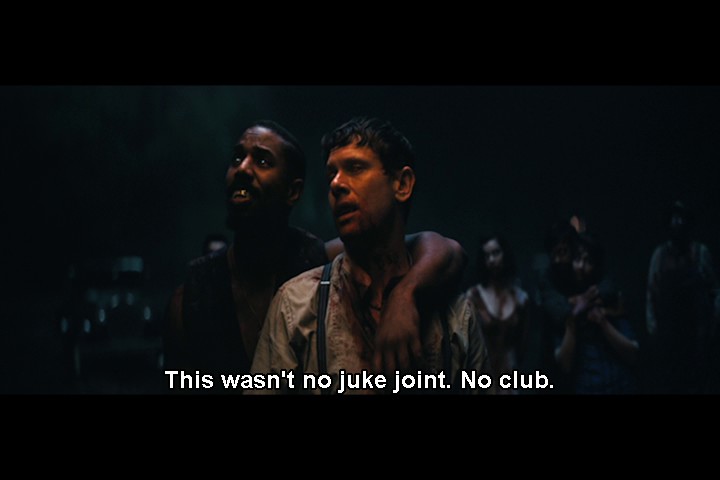
The core question, though, is why Remmick targets Sammie specifically. He says to Sammie, “You’re the one I came for. I sensed you. I wanna see my people again. I’m trapped here. But your gifts can bring ‘em to me.” This is a very interesting facet of this music thread in the film, the suggestion being that Sammie doesn’t just invoke a profound connectedness with other oppressed African Americans, but that his music is even more special than that, that he can invoke “spirits” of past and present. Indeed, the figures invoked by his music may actually be real, ghostly apparitions called by his music. And it is that connection to our ancestors and heritage that gives us meaning, the suggestion being that the lack of it makes us like Remmick, an emptied of meaning being just living for his appetites and nothing more. That Remmick has the self-awareness to know that makes him a much more interesting vampire than we usually get with vampire films.

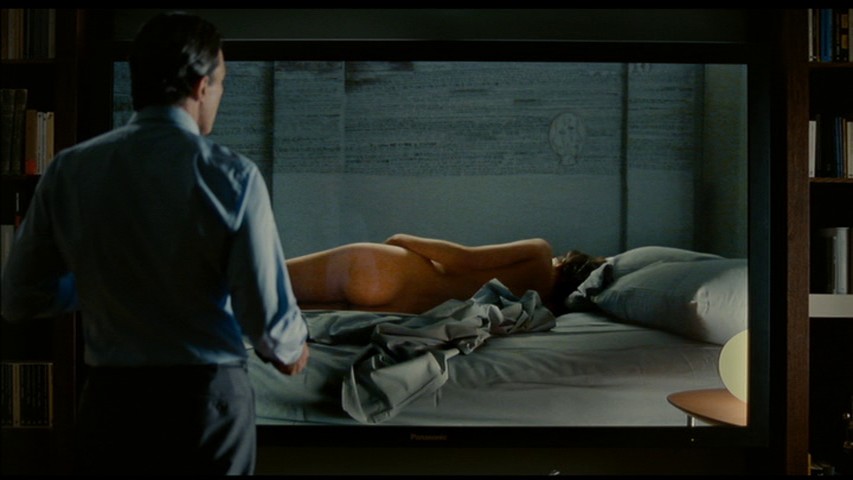
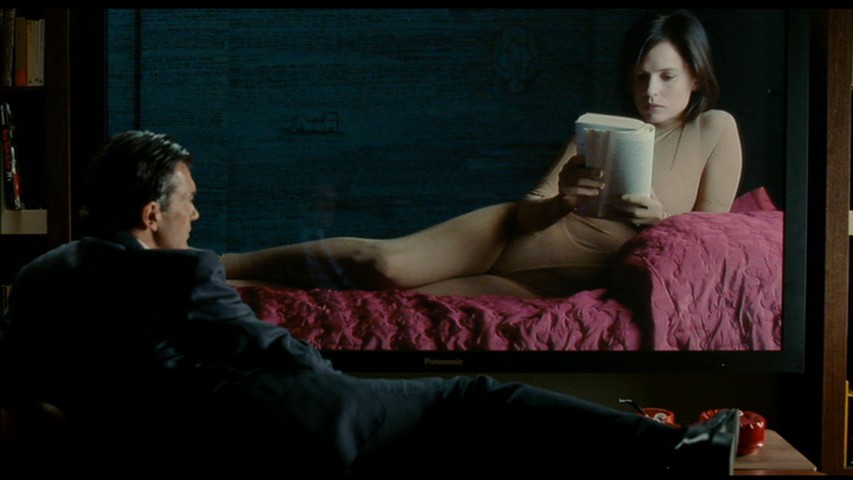
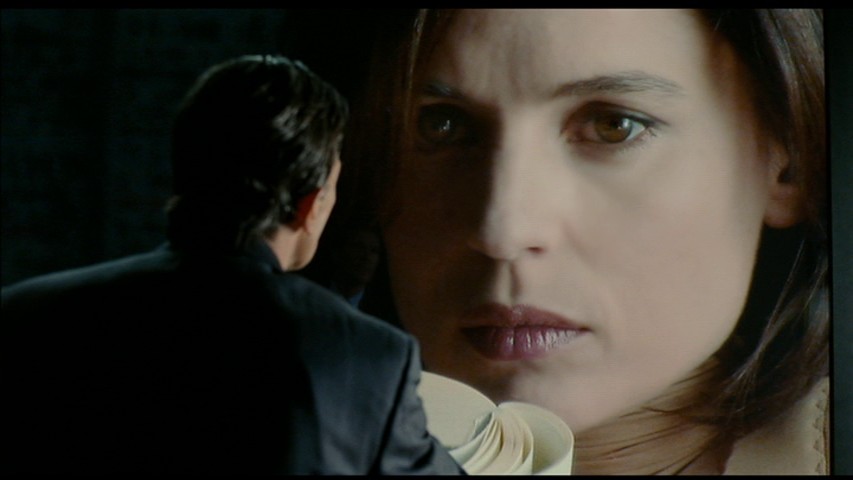
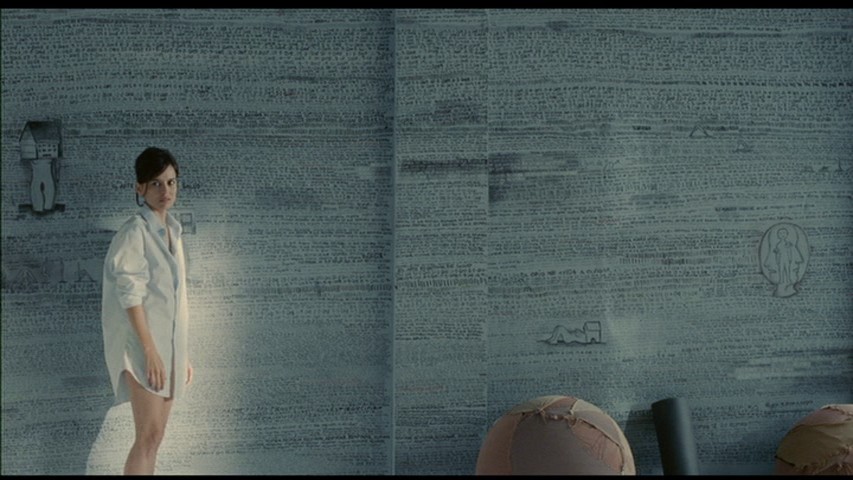
(33) The Skin I Live In (2011, Pedro Almodóvar)
(Just a special note that of all the films on this list, this is the one blurb that I would HIGHLY recommend you NOT read until you see the film; part of the power of this film is in not knowing what is coming!)
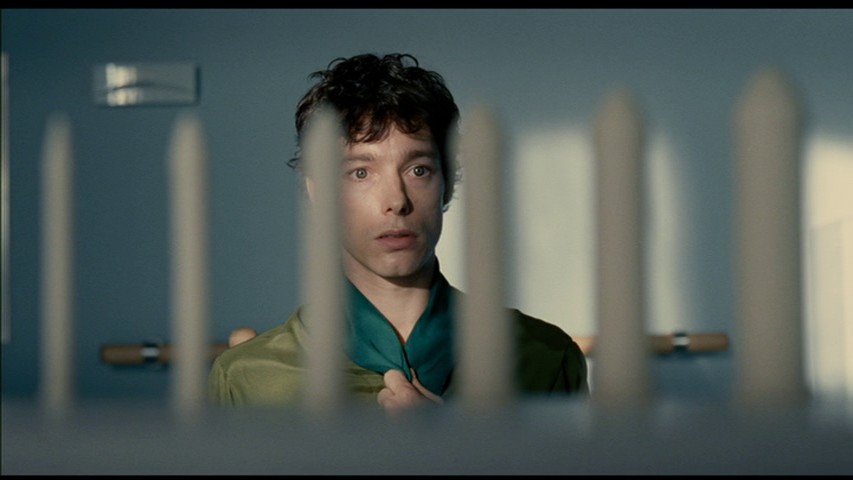
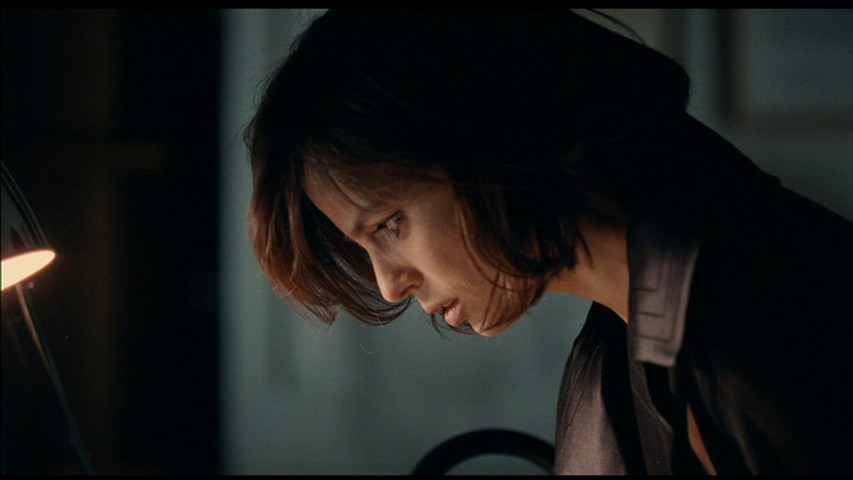
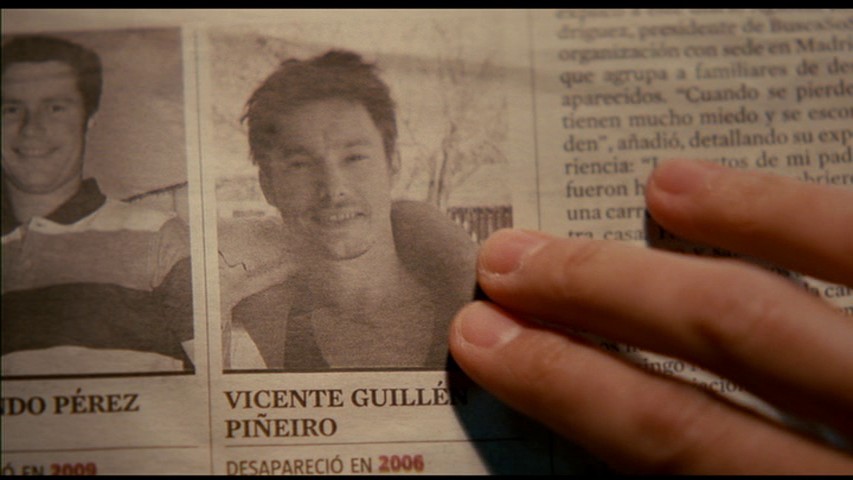
So I must confess that I really wrestle with this film and the controversies surrounding it, especially in terms of at least how some (many?) in the transgender community feel about it. The crucial part of this controversy stems from the core part of the plot, how Robert Ledgard (Antonio Banderas) avenges his daughter’s, Norma’s (Blanca Martínez Suárez), rape by kidnapping Vicente (Jan Cornet) and then transitions him into a woman. In this context, we get what we have gotten so many times in transgender representations, making transgenderism something associated with something that is disturbing and bad. In other words, Vicente’s punishment for raping Robert’s daughter is transgenderism, transgenderism then becoming synonymous with the worst horror possible.
I totally think this view of the film is valid.
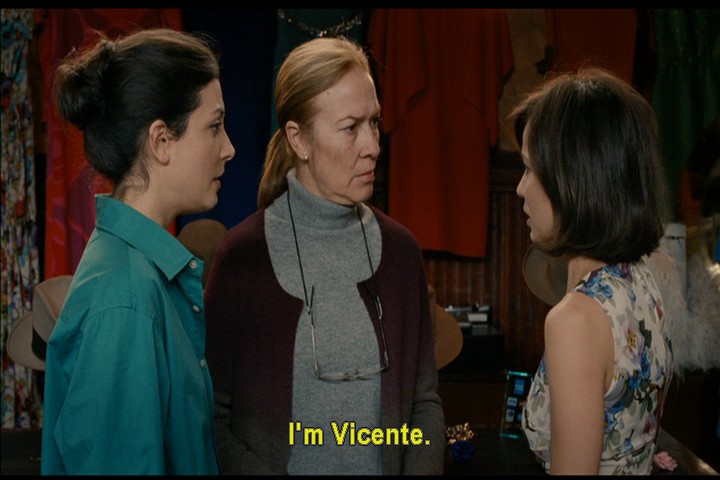
However, I think the opposing view – held by some (many?) in the transgender community – is also valid, that the film does something remarkable, give us – give cisgender individuals – a way of feeling how transgender people feel, feel what it is like to be trapped in an assigned sex/gender that doesn’t cohere to the the sex/gender of our choice. Almodovar is careful to be clear that while Robert can transform Vicente physically, he cannot change Vicente’s identification as a man, as Vicente, not Vera. In other words, the horror of the film is not transgenderism itself but the horror of being trapped in a sex/gender that isn’t who one is. And that is a horror that transgender people suffer from every day until they are allowed to be the sex/gender they identify with, not what they were assigned.
The film’s deepness doesn’t end there. Almodovar layers the film with deep elements, including castigating toxic masculinity ideologies (patriarchy, hypermasculinity, phallocentrism, sexist sex/gender norms), the men in the film all having a predatory nature, Zeca (Roberto Álamo), Vicente and especially Robert, whose “mad scientist” nature includes believing he can play God and do as he pleases to other people. In this way, he becomes an allegorical figure, representing toxic masculinity men who think they can control and dominate Others. That Vicente/Vera seems to be a woman throughout the film, the film also becomes a narrative about how men control and dominate women’s lives, to the point of controlling their bodies, robbing them of their sovereignty.
The inversion of Vicente from predatory man – though I must add, not so predatory that we are willing to sympathize with him – to victim also informs another incredibly deep element in the film. Vicente violates Norma but then is violated in turn. By Robert violating Vicente over and over again, and add in Zeca’s rape of him, Vicente, and by extension all toxic masculinity men who have sutured themselves into his narrative, must experience what it feels like to be on the other end of the spectrum, be an Other who is seen as inferior, a body to be exploited for toxic masculinity men’s self-centered desire.
I must just add one other extremely disturbing element. Initially, Robert kidnaps and transforms Vicente to avenge his daughter’s rape – though it must be said that he almost certainly had an ulterior motive here, an excuse to carry on his experiments on a human body – but eventually, unfathomably, falls in love with Vicente/Vera. He gives Vicente the visage of his deceased wife, making it hard to not fall for her, but it is still bizarre that he would forget that Vera is Vicente, the man who raped his daughter. But then this gets at yet another deep element in the film, how when one gets sex reassignment, they in effect are that changed sex/gender. In other words, Robert falls for Vera, not Vicente, at least in his mind, another way of importantly normalizing transgenderism.
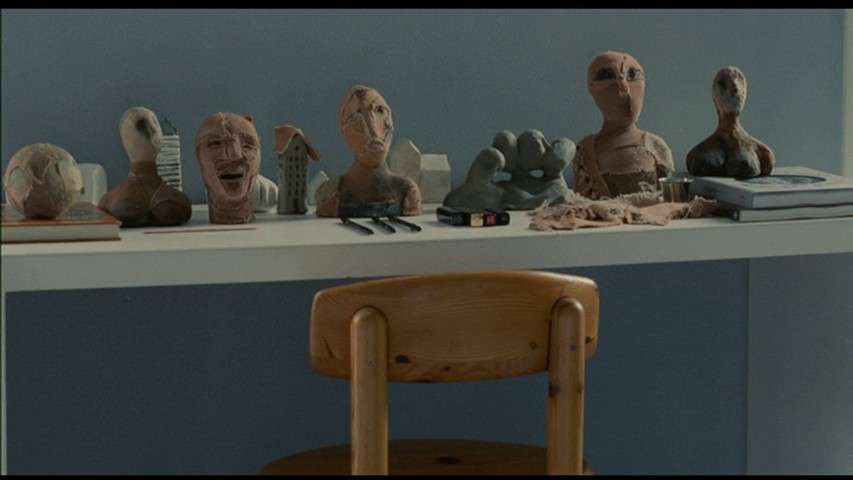
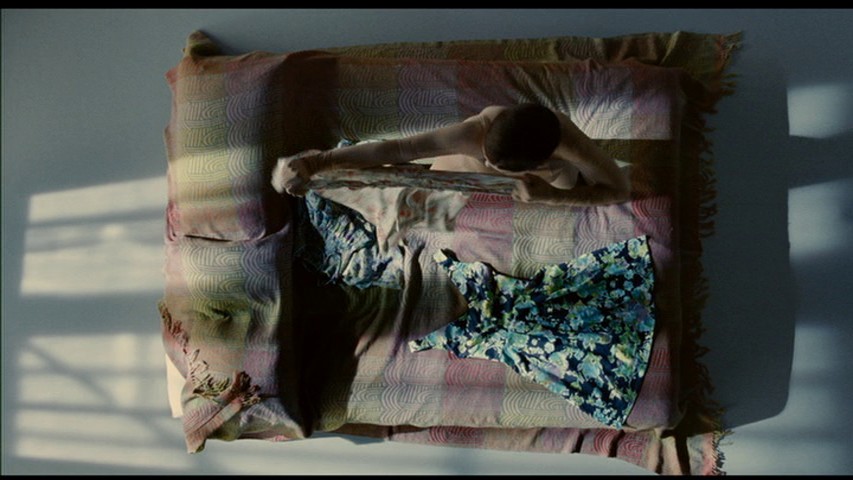
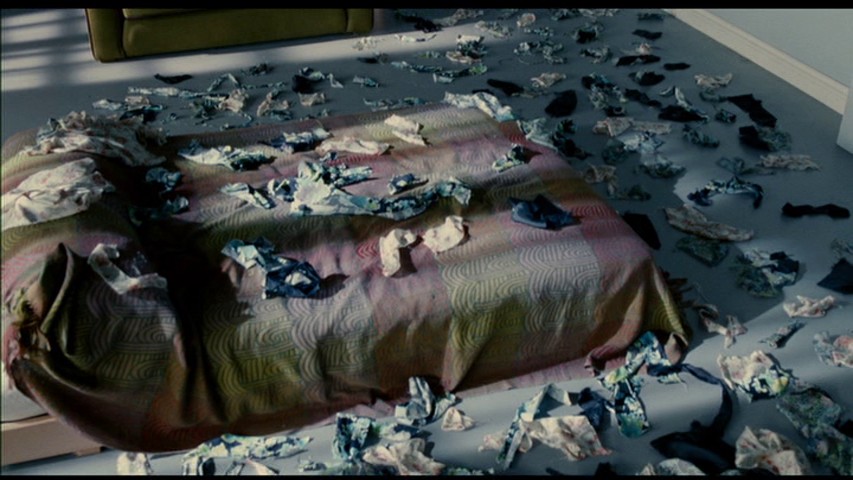
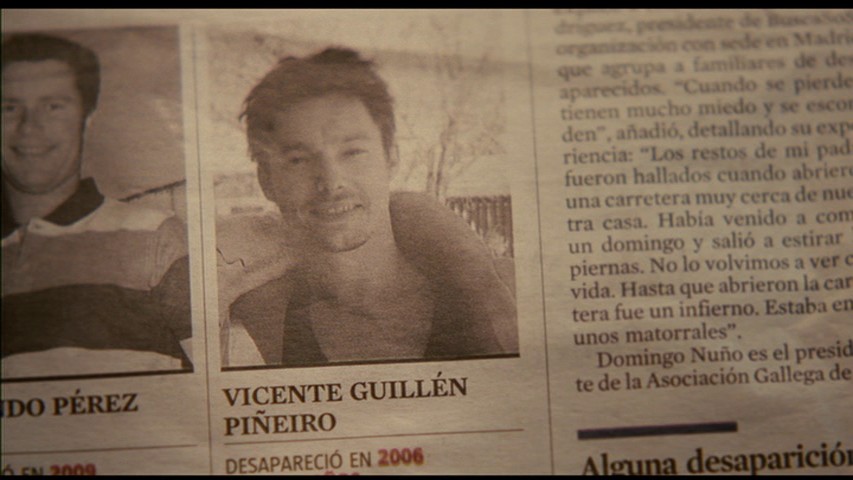
(32) Berberian Sound Studio (2013, Peter Strickland)
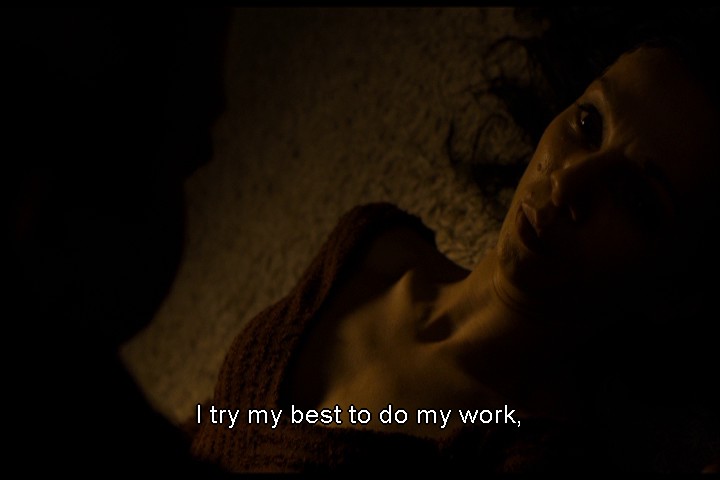
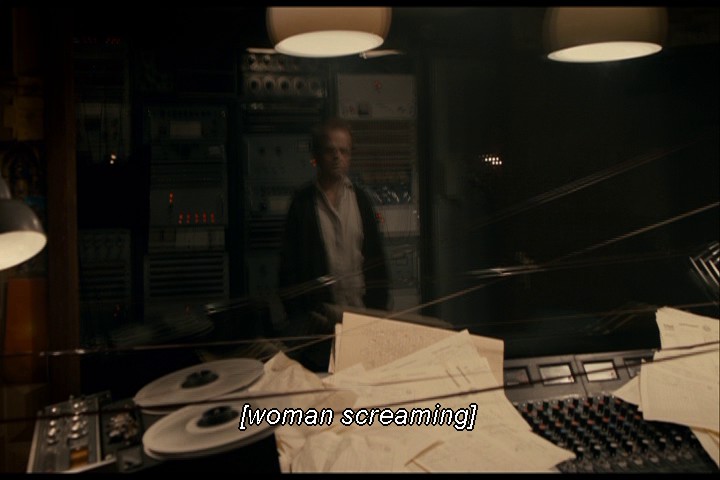
First, let me say that Berberian Sound Studio is not an easy watch. Indeed, I would go along with those who describe the film as experimental, the film breaking from a seamless narrative, especially in the last half hour. In this (experimental) context, the film isn’t easy to watch for another reason, because its focus is not on anything really tangible, and here I’m referencing how we never see clips from the film in question and we get a whole lot of focus on filmmaking tools, production equipment and story boards. Furthermore, the film is not a conventional horror film, but really a slow burn psychological horror film.
In other words, this film is not for everyone. Indeed, I didn’t even like the film the first time I watched it. It was only the second viewing when I really analyzed the film that the film came into power for me.
Now, I must confess that I still haven’t made sense of every element in the film – I’ll do a deeper dive and longer blog post on the film at some point – but I think I get the core commentary that filmmaker Peter Strickland is getting at, and it is deep!
To begin, the film is both a homage and a scathing critique of Italian giallo films. Though I have seen my fair share of giallo films, I am no expert on the sub-genre. But I know them well enough to understand that Strickland is especially focusing on toxic masculinity misogynistic violence against women though his application of this element is not just relegated to giallos but could be applied to at least one facet of the horror genre in general.
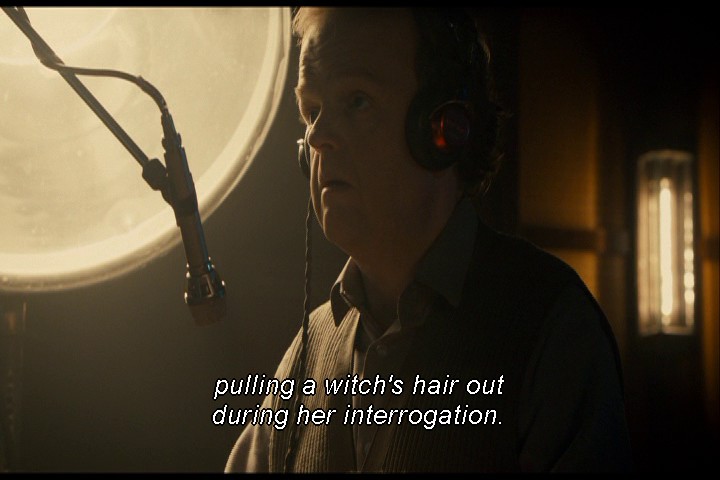
That is, Strickland creates a really complex narrative structure connecting the creation of a film about “witches” being horribly tortured and killed and real world (sexual) harassment by two men, the producer, Francesco (Cosimo Fusco), and the director, Santini (Antonio Mancino). In terms of the former (film about “witches”), though we never actually see any scenes from the film, we hear and read about elements in the film, including horrifying torturous acts such as “a red hot poker on [a witch’s] vagina.”
In terms of the latter, Francesco constantly harasses the actresses in the film, at one point disgustingly saying about Silvia (Fatma Mohamed) that she has “poison in those tits of hers.” Moreover, it is made clear that Santini uses his position of power to coerce women to have sex with him.
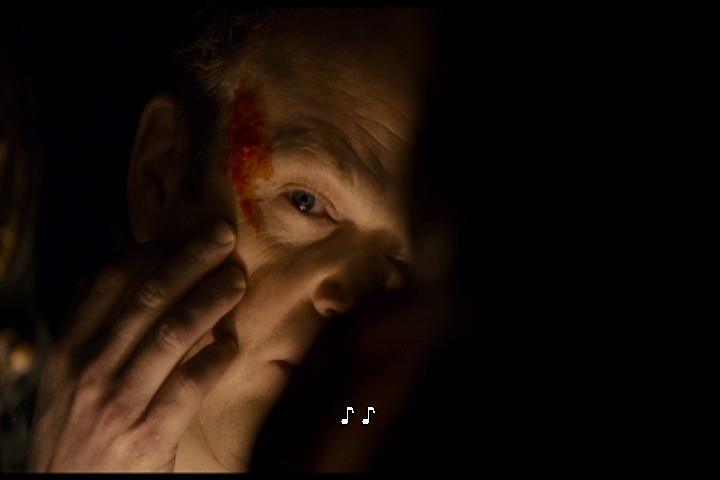
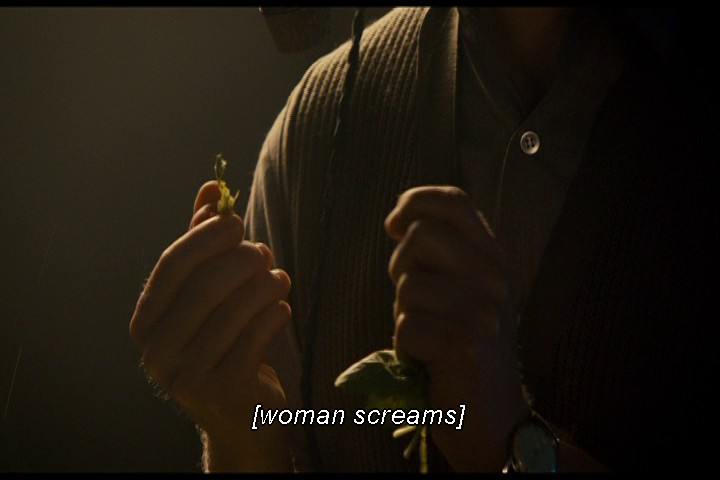
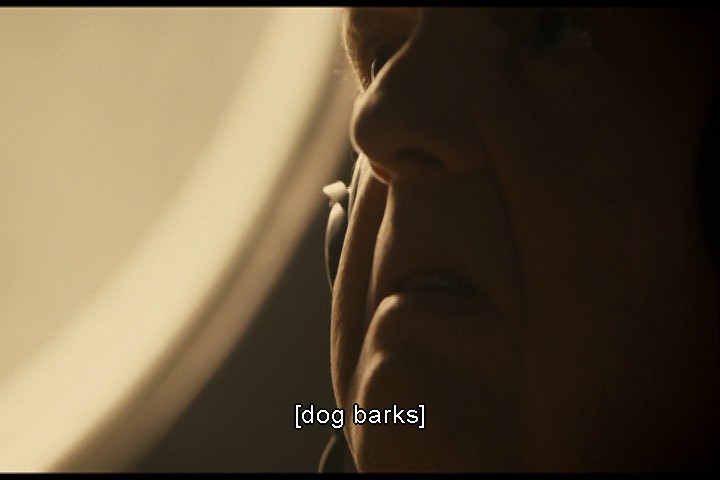
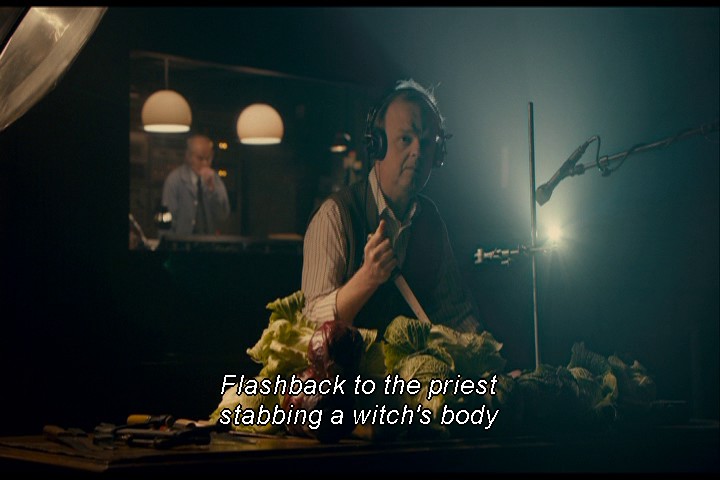
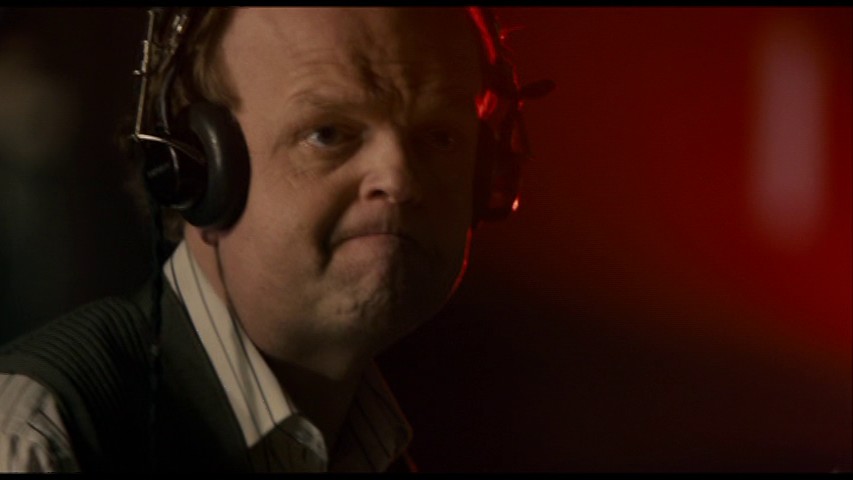
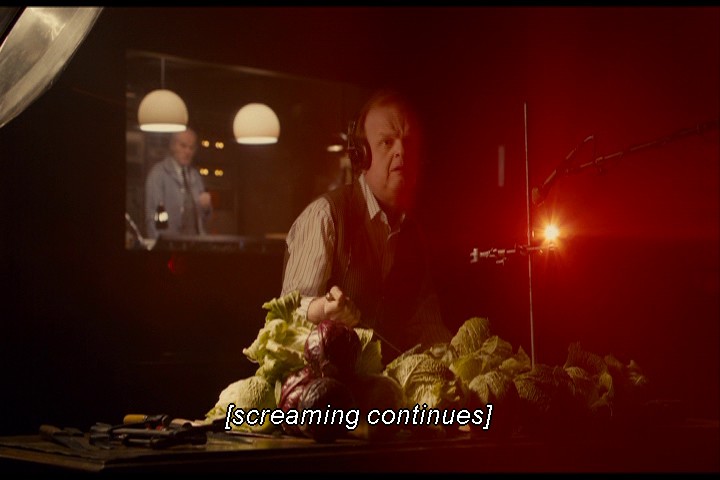
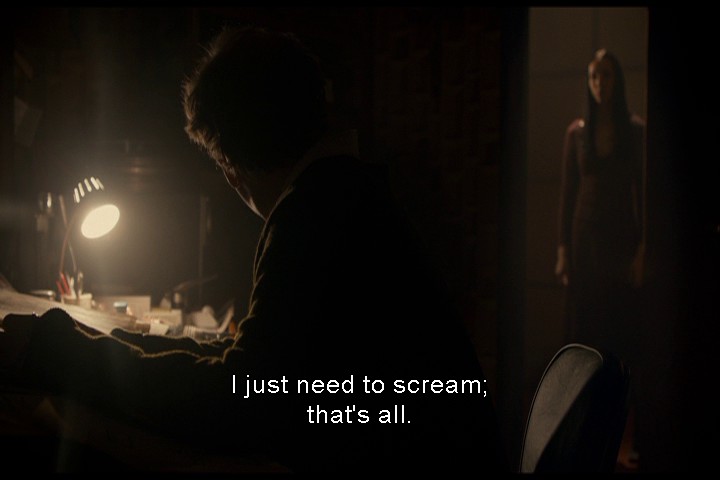
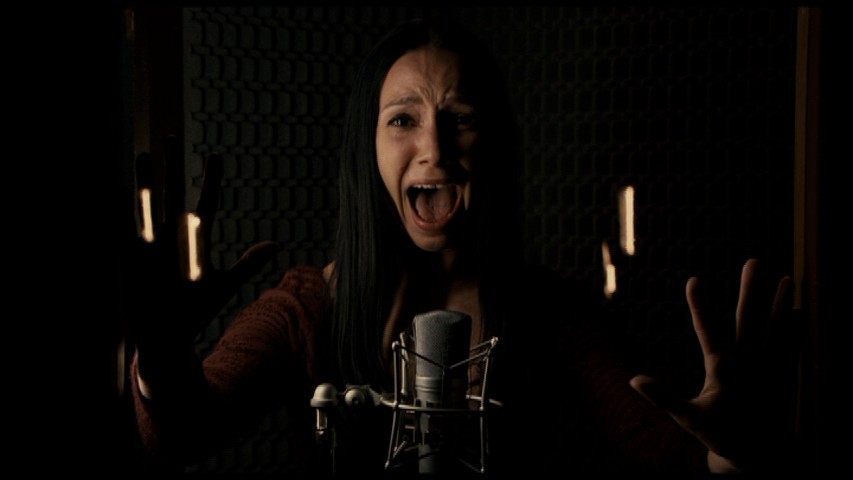
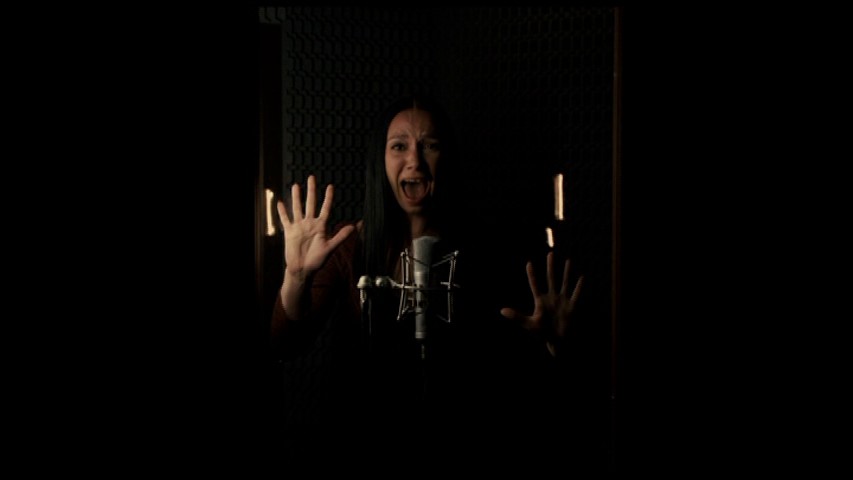
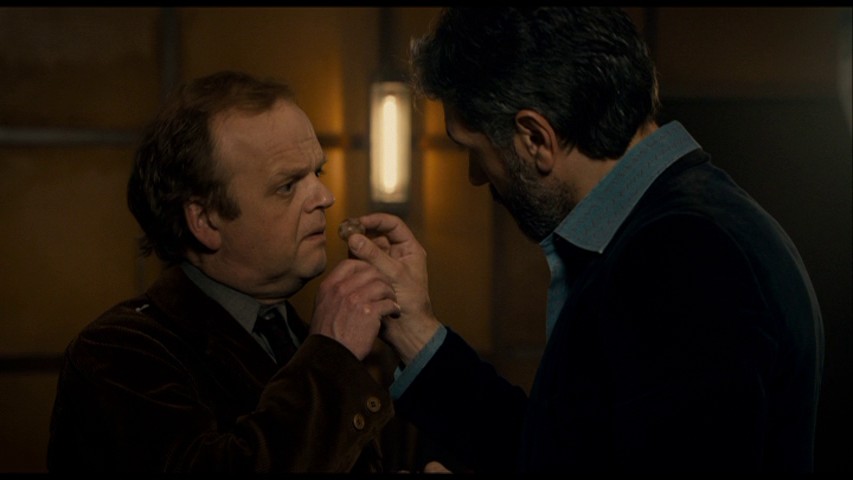
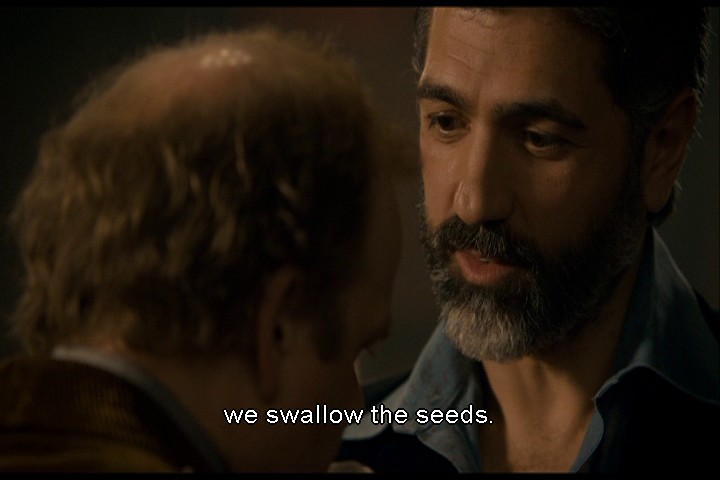
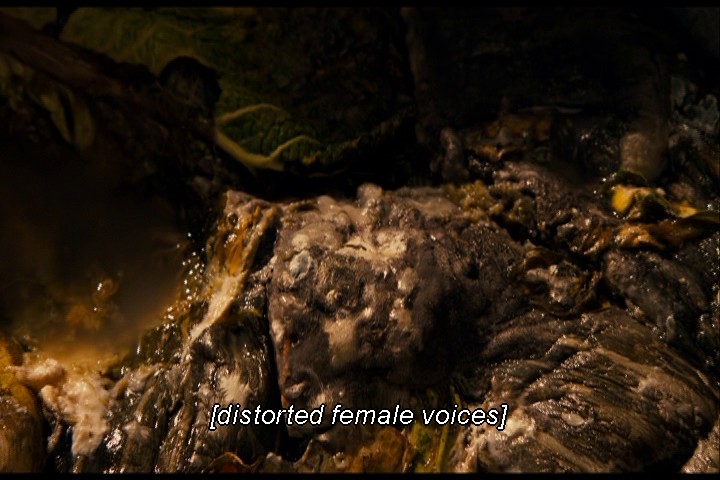
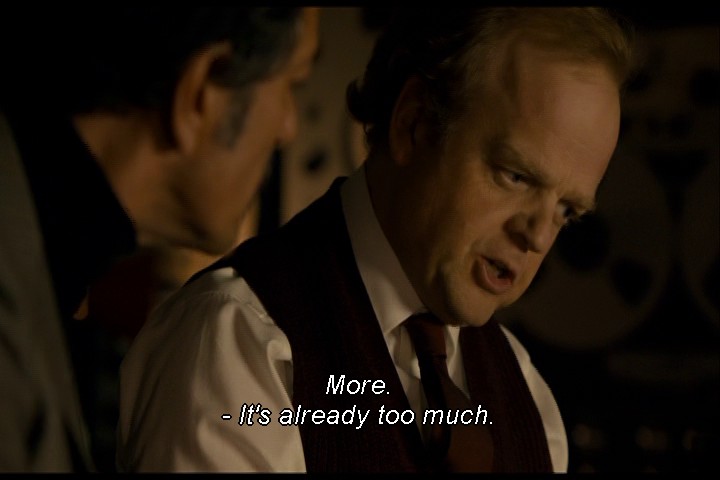
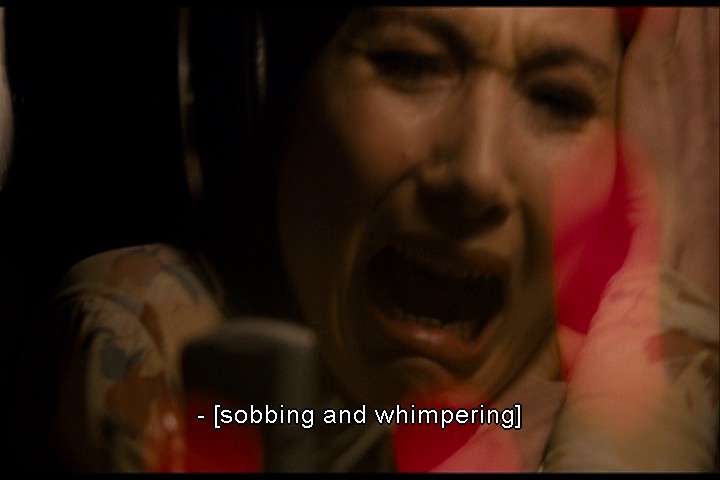
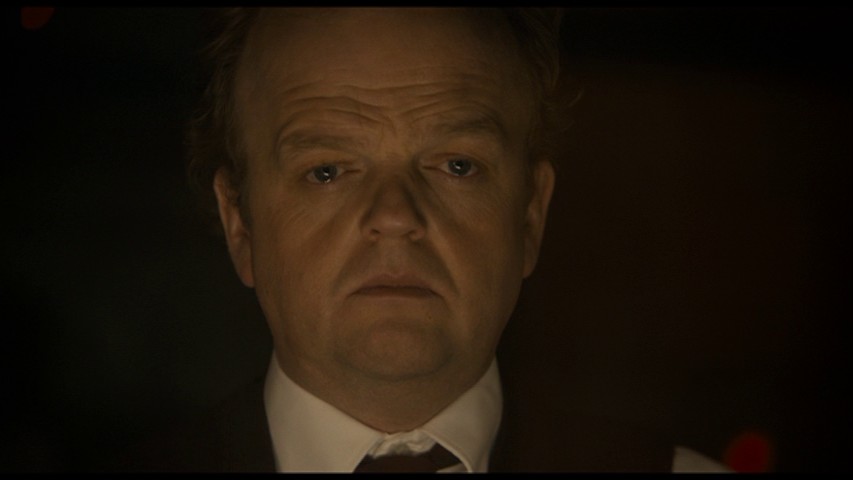
Perhaps the most telling device the film uses is in how it uses sound to create really interesting and complex metaphors. Most notably, we get a couple of moments when Gilderoy (Toby Jones) creates sound effects (stabbing a cabbage, etc.) followed by the sound of a woman screaming, the effect being that he is not just producing sound effects but causing the scream (see below for more). In this way, the commentary seems to be that these films contribute to violence against women. More pointedly, the effect of this on Gilderoy, a mild-mannered, soft spoken, gentle man (he saves spiders!), is a portrait of the disintegration of the self (see below for more).
For more of my thoughts on this complex film, see the images below:
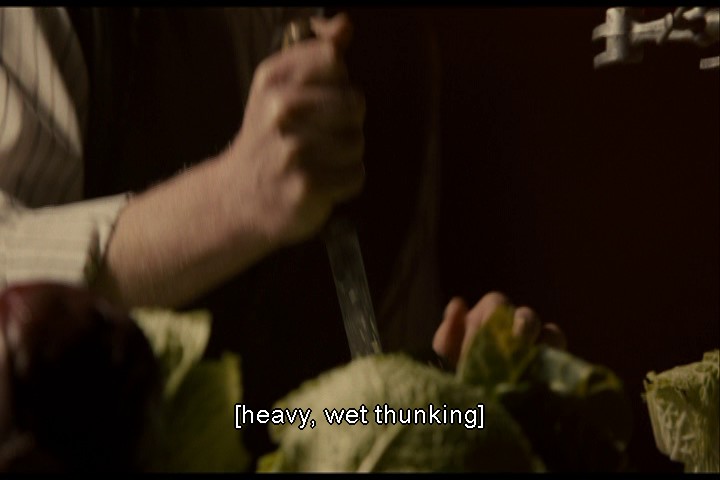
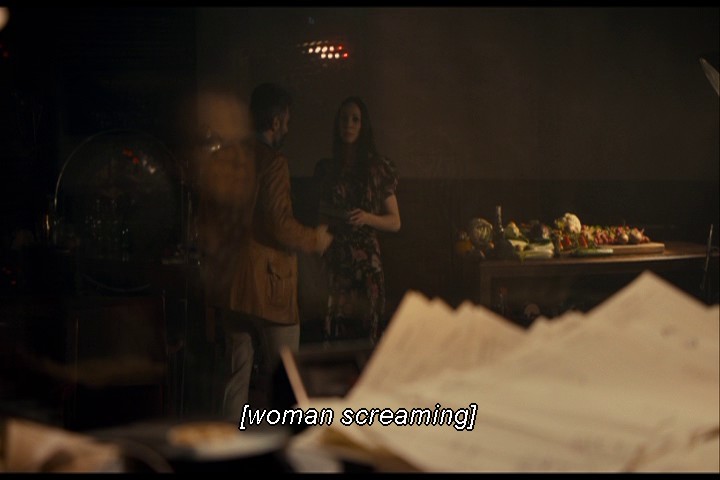
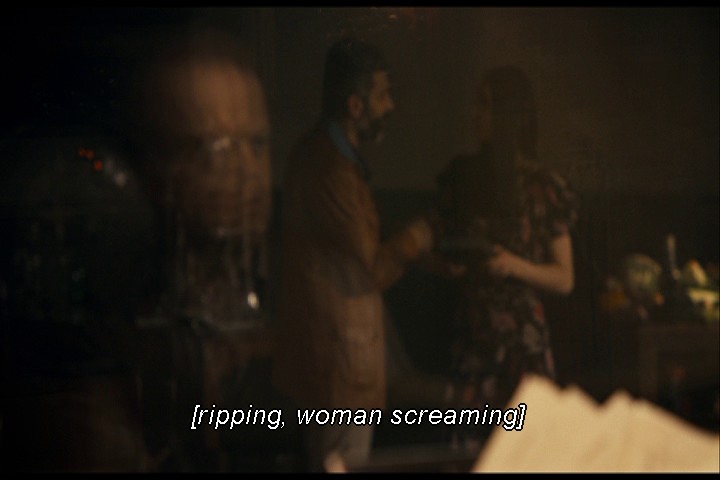
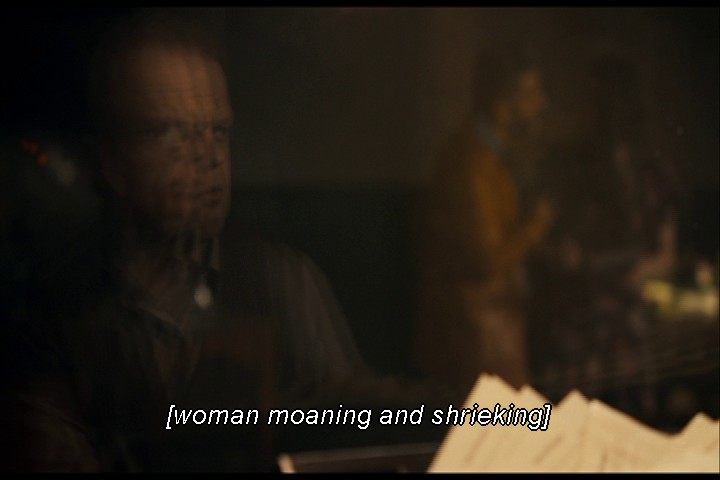

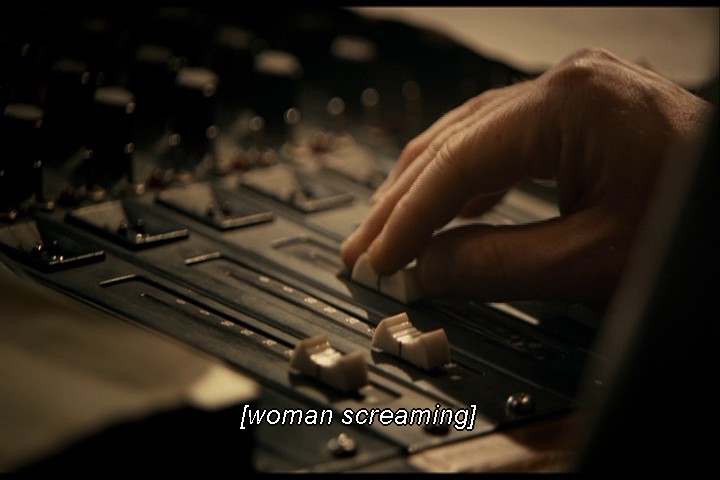
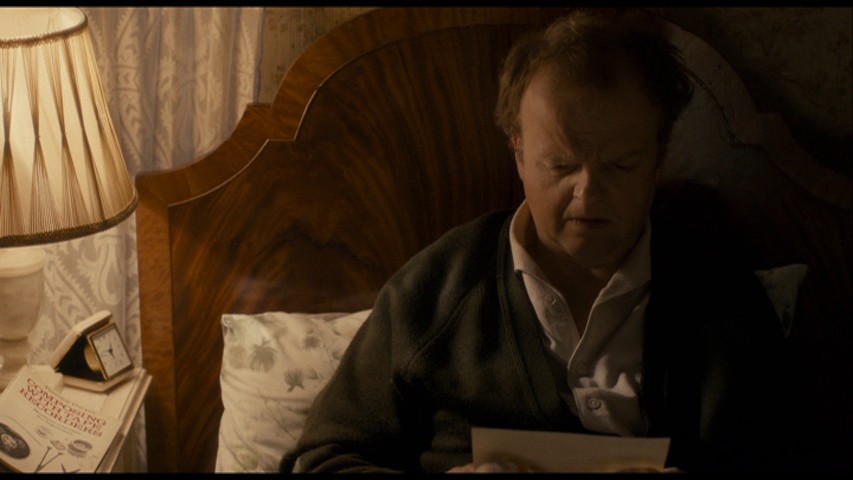
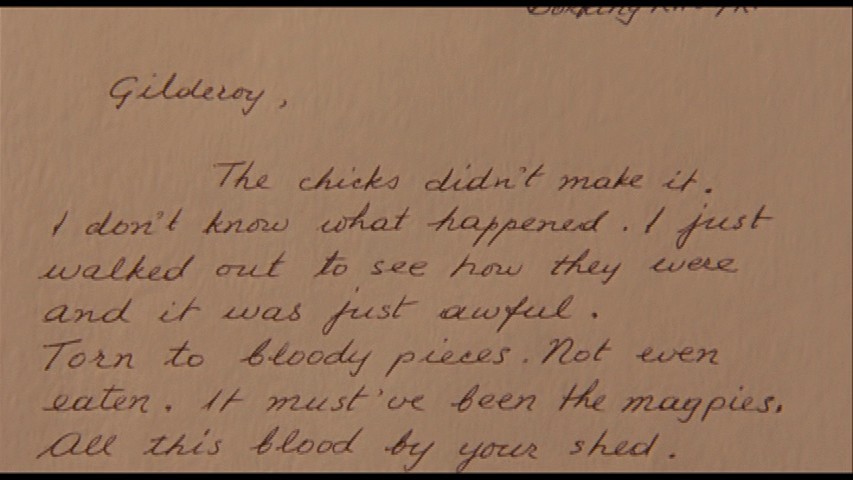
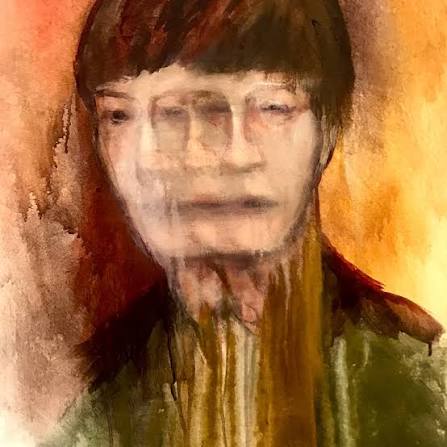
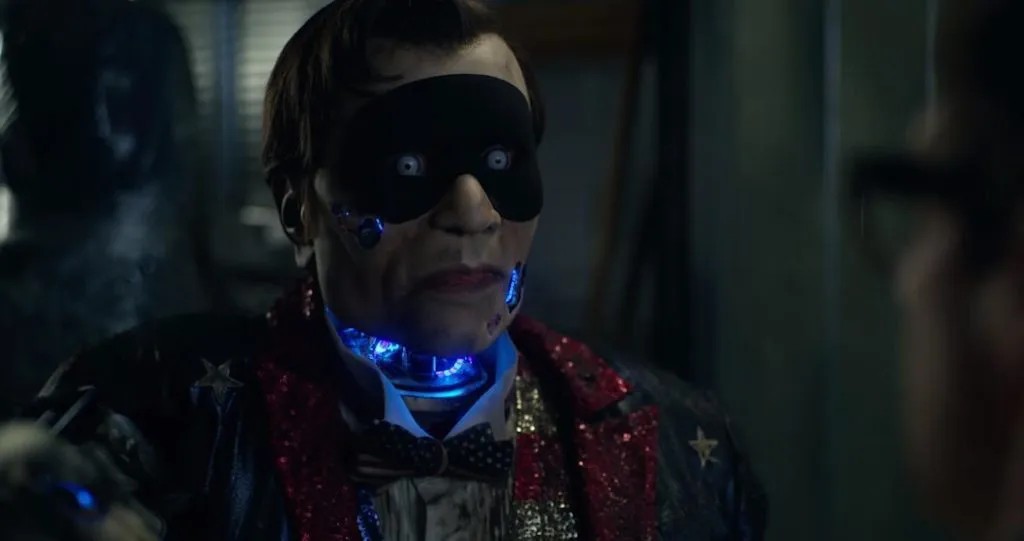
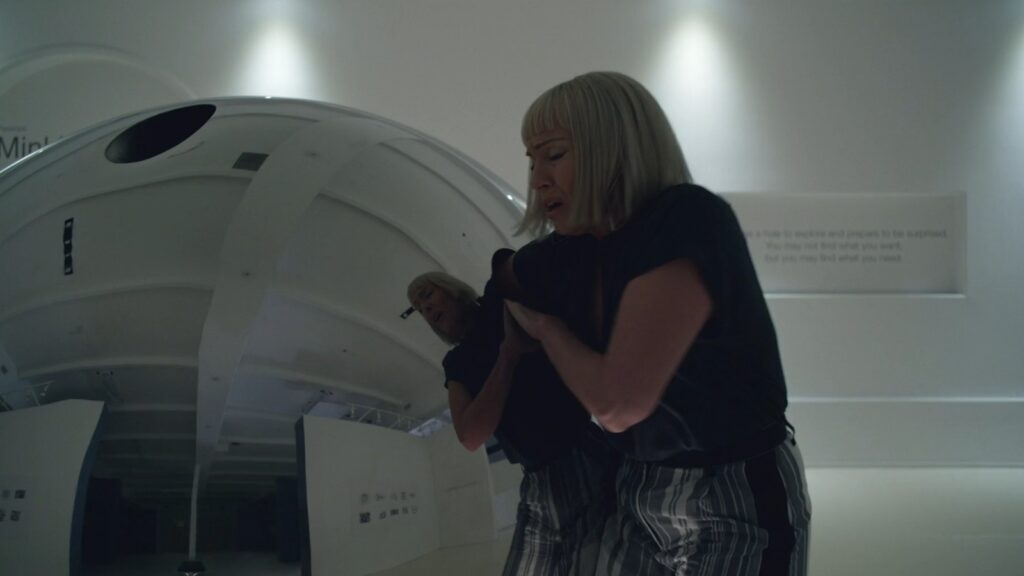
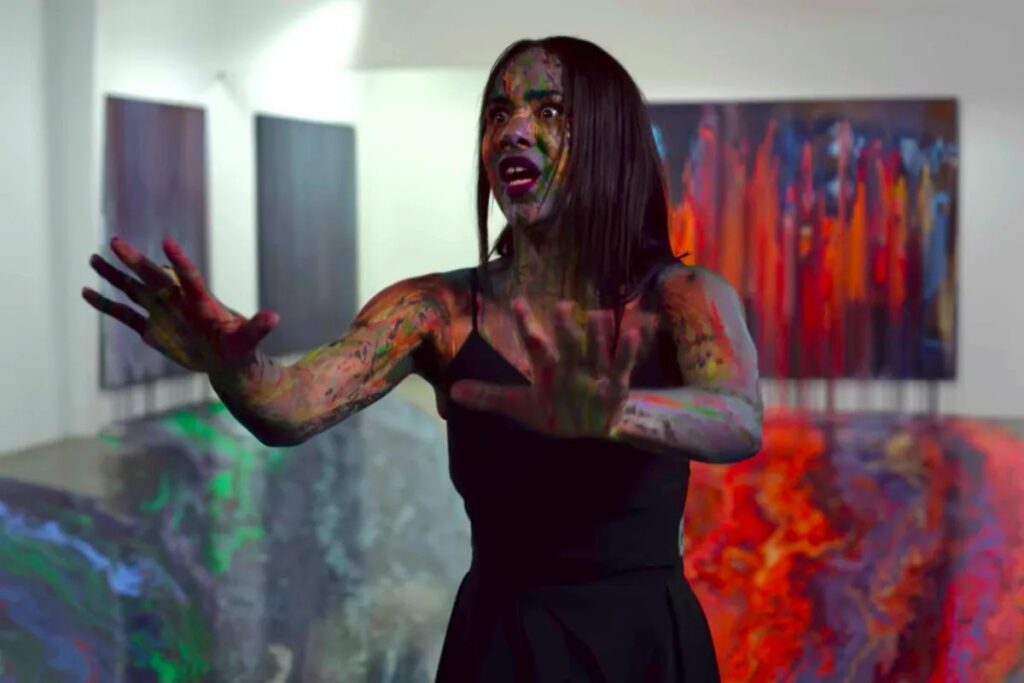
(31) Velvet Buzzsaw (2019, Dan Gilroy)
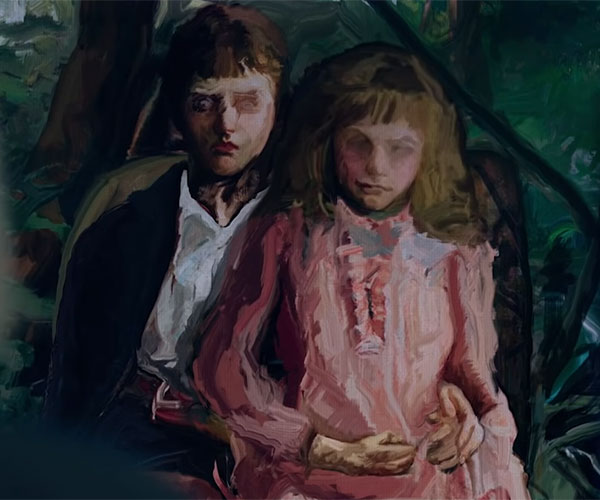
I must say that I am a little surprised that this film hasn’t gotten more love. Personally, I just love this film, both for its deepness and its inventive plot, making the “monster” the “spirit” of a dead artist, though I would extend that to say the “spirit” of authentic art itself.
By “authentic art,” I mean art that is created as a personal expression, free from the expectation of monetary and celebrity expectations. The focused artist, Ventril Dease, is the core illustration of the “pure” artist, an individual who only created art for himself, presumably as a coping mechanism for his interior torment, though I must say that at least some of Dease’s art also seems to speak to the human condition in some form or another. Along with Dease, we get at least two other artists who at least shift their potential to be commodified to be authentic artists: Damrish (Daveed Diggs) ultimately eschewing the commodified Rhodora to stay with his “collective,” presumably a group of artist making art for the right reason. And Piers (John Malkovich), who has sold his soul to the commodified art world, but who we see at the end, drawing figures in the sand, suggesting he has come back to his joy of creating art for art’s (human) sake, not material reasons.
Of course, the obvious deepness of the film is in how most of the key characters are wholly compromised by their mercenary self-interests, making art purely about themselves, commodifying art, both for making lots of money but also to boost their egos.
The even deeper implications of the film are how this commodification of art commodifies, or objectifies, people, both the people who are doing the commodifying and the people they engage with, commodifying them in turn. We especially see this with Morf (Jake Gyllenenhaal), who wholly embodies this commodified way of thinking and being about virtually everything he encounters. We especially see this when he attends a funeral, Morf, still in “critic” mode, unfathomably criticizing the color of the coffin! Of course, for all these commodified individuals, people’s value largely or perhaps even wholly is dictated on their commodification worth, negating their humanity. In this way, the allegorical value of the film is enormous, as it reflects not just its intended target (the art world), but how so much of the world is dictated on this very thing, the commodification of just about everything, which, in turn, creates an objectifying-dehumanizing way of thinking and being in general.
I also want to touch on how the “return of the repressed” works in the film. Dease’s spirit possesses his art, apparently stemming from putting his blood in his work, which speaks to authentic artists, who in effect put themselves in their art. Importantly, though, it isn’t just his work that is haunted but all commodified art. If we think about how the very act of commodifying art is a kind of killing of it, killing its (spiritual, artistic, enriching, personal) essence, then the “return of the repressed” becomes clear: Commodified art is dehumanized art, Dease’s spirit then becoming a monstrous (distorted, shadow) permutation.
Apparently, Dease’s spirit doesn’t kill people who view his art authentically – who have a (spiritual) connection to the piece – but rather kills those who can only see in the work a means to an ends, fame and fortune. This act of commodification is in effect a sociopathic act, and such an act breeds sociopathy/psychopathy in turn, in whatever form that takes. Tellingly, at least three of the figures killed (Gretchen/Toni Collette, Jon Dondon/Tom Sturridge, Josephina/Zawe Ashton) become part of an art work, punctuating both how they are commodified/objectified/dehumanized individuals and victims of the very “monster” they in effect created.
Perhaps the most telling killing is having that hobo art installation (“Hoboman”) kill Morf, speaking volumes about yet another deeper implication, Morf dismissing an art piece about the human condition (“Hoboman” speaking to a class consciousness narrative and how people/working class are seen as purely exploitable and disposable), dismissing it just because apparently it has been done before. In other words, Morf can only filter art pieces through his commodity lens, not the human element of it. By being the means to his end, (I will go into “Hoboman” in more depth at some point, a very interesting symbol in itself!), “Hoboman” becomes the “superhero” figure he represents (in his artistic representation, he becomes the “champion” of the working class), literally becoming what art can potential be, the “dangerous” act of resisting the very upper class that tries to silence them.
Finally, I just have to comment on the ending moment when Rhodora Haze (Rene Russo) is killed by her own “Velvet Buzzsaw” tattoo. Interestingly, at the end, Rhodora gets rid of all her art, knowing that it is now truly “dangerous,” the art itself becoming a radical resistance to what amounts to capitalistic interests arrayed against any form of humanism. But what she can’t do is remove the art tattoo on her neck, a tattoo she got decades before when she was part of an “anarchist” music group called “Velvet Buzzsaw.” The tattoo represents a time when Rhodora was an authentic artist, creating anarchist music that was presumably meaningful, reflecting her belief in an actual philosophy. The tattoo also represents not just a past self but a sign of her betrayal of her own self, the tattoo in the present no longer representing something meaningful but rather a commodification of art that once represented something cutting edge. In other words, if we think of the tattoo now representing the pure commodifier Rhodora, then the tattoo means something entirely differently, Rhodora seeming to be “velvet” (soft, smooth, elegant) but who is actually a cutthroat (mercenary) “buzzsaw.”Lots more to discuss with this film, but I will come back to a more detailed analysis in a future expanded blog post on the film.
(30) Fido (2007, Andrew Currie)
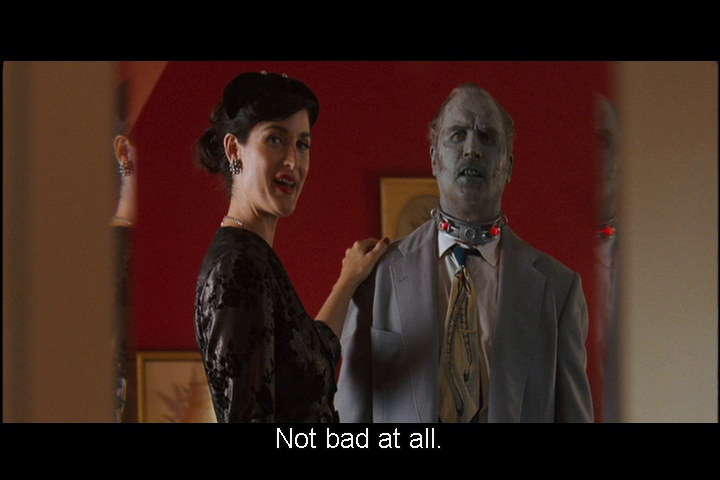
This is my personal favorite zombie film, a horror-comedy film that is as much satire as it is – in some genuinely disturbing zombie moments – horror/zombie film. Like the vampire trope, the zombie trope has been used creatively for numerous allegorical meanings, the most famous of course being George Romero’s Dawn of the Dead (see part 1) and his commentary on how consumerism (American ideology) makes zombies of us all. In Fido, Currie ingeniously complicates this allegorical vision by creating a very strange setting that is both a future world (a zombie outbreak has happened and Zomcon, a quasi-corporate-government entity, has created containment communities – “wild” zombies roam outside the containment fences – where “collared” zombies are domesticated into conspicuous slave labor) and, most inexplicably, a past 1950s sensibility. In creating this alternative universe setting Currie can use the zombie trope for great (multifaceted) effect, both a satiric commentary on 1950s ideology and present day issues (for one thing, the zombies are stand-ins for 1950s Others, e.g., African Americans and Latinos). Truly, a film that is both deep and entertaining!
I have so much more to say about this complex film, but I will come back to it in a full length blog post.